
While the ongoing conflict in the Middle East has pushed energy prices higher and prompted a downgrade to the global growth outlook, New Zealand remains well positioned to outperform other advanced economies through the shock, according to the Colliers May Monthly Research Report.
Updated forecasts from the International Monetary Fund suggest New Zealand’s economy will grow at an average rate of 2.3 per cent per year over the next five years.
That is faster than most comparable developed economies, such as Australia, the USA, UK, and Japan.
Not only is New Zealand forecast to grow faster, but the country’s economy is also forecast to achieve this growth with lower inflation.
Start your property search
Hamish Fitchett, National Director of Research & Economics at Colliers, says New Zealand’s economic composition is helping it withstand the global slowdown.
“Our strong primary sector, combined with more accommodative interest rate settings, means New Zealand is expected to grow faster than many other advanced economies through this period,” Fitchett says.
“That relative outperformance makes New Zealand an attractive destination for capital at a time when investors are increasingly focused on stability as well as returns.”
While confidence has softened following the oil shock, Colliers’ latest investor confidence survey shows the reaction has been far from uniform across the country.
Of the 13 commercial property markets surveyed, six continue to report net positive confidence that the sector will perform well over the next 12 months.
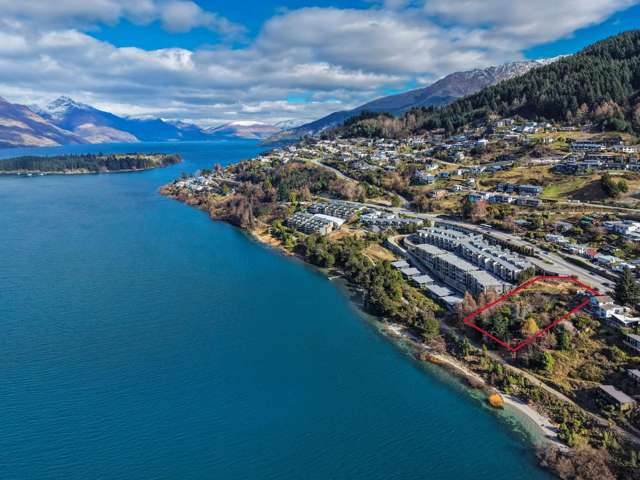
Queenstown remains the most confident market and actually became more confident in their expectations of future activity over the past quarter.
Meanwhile, Christchurch and Hamilton also continue to show positive sentiment, supported by strong regional economies and population growth.
“The first response to any global shock tends to be confidence,” Fitchett says.
“What’s notable this time is that confidence remains positive in a number of regional markets, even as uncertainty has increased globally.”
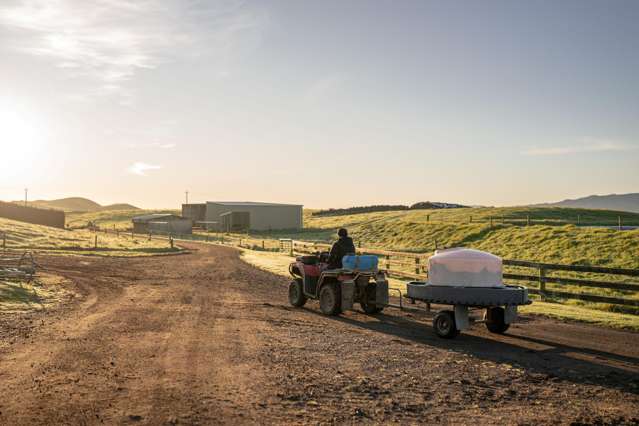
Regions with large dairy and agricultural sectors have been among the strongest performers.
Fonterra’s multi-billion-dollar payout has flowed into provincial economies, lifting spending, supporting employment, and reinforcing investor confidence across several regional centres.
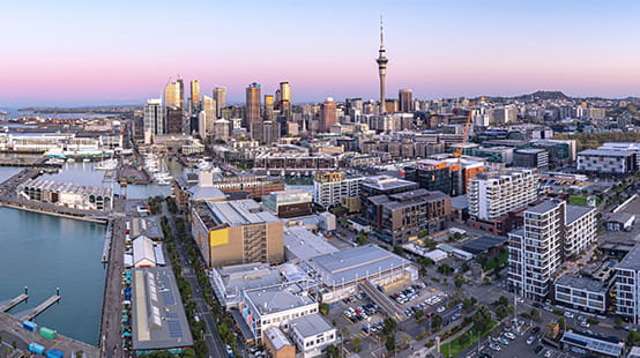
In contrast, confidence has dipped more sharply in Auckland and Wellington, where commercial property markets have higher exposure to international capital.
Fitchett says those same characteristics could support a quicker rebound.
“These are the markets most closely linked to offshore investment flows.
“If New Zealand’s economic resilience plays out as forecast, Auckland and Wellington are likely to be among the first to benefit from renewed international interest.”
The report also highlights the growing role of regional economic strength in shaping both population movements and commercial property demand.
Canterbury and Otago stand out as regions combining strong labour markets with high levels of net internal migration. As people move into these areas for work, demand follows for office, industrial, and service-related commercial space.
“When people relocate, jobs and business activity follow.
“That translates directly into demand for commercial property, whether it’s workplaces, logistics facilities, or retail and services that support a growing population.”
Canterbury illustrates this trend clearly. The region recorded positive net internal migration over the past year and an 8.5 per cent increase in the volume of commercial property sales over the same period.
By contrast, regions experiencing net population outflows, such as Southland, also saw weaker commercial sales activity.
Colliers’ research suggests this dynamic is reinforcing a long-running theme in New Zealand’s property cycle, that regional markets with diversified economies and strong primary sector exposure are increasingly competitive with larger urban centres.
Despite the global uncertainty, Fitchett says the medium-term outlook remains constructive.
“While confidence has softened, it hasn’t collapsed, and in around half the markets we survey, investors still expect a good year ahead.
“For investors able to look through short term volatility, regional New Zealand is offering opportunities that compare very favourably with other advanced economies.”
- Supplied by Colliers