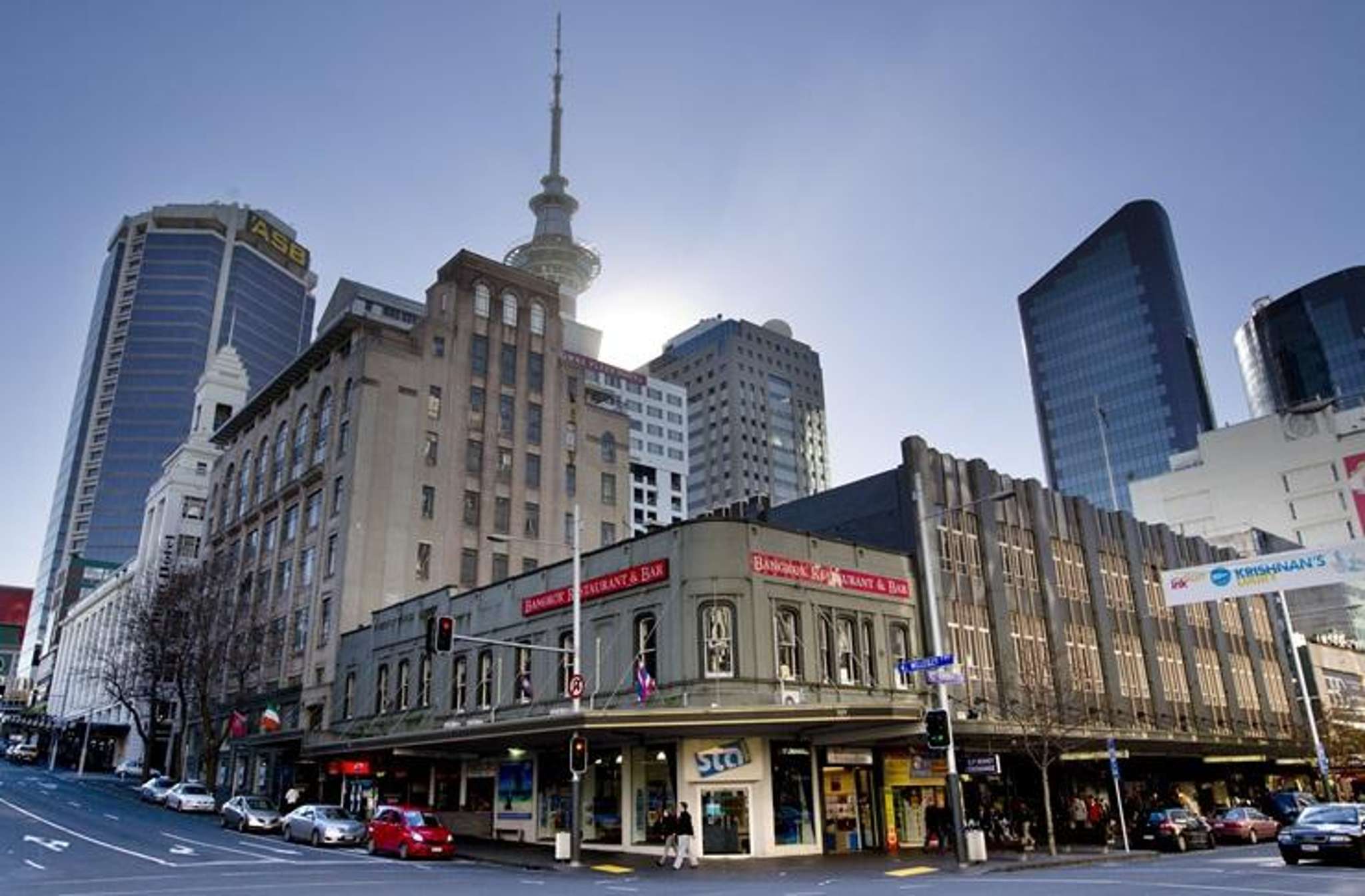
- The Smith & Caughey building is for sale after closing last year, ending 145 years of history.
- The closure in July resulted in nearly 100 job losses and an auction of store fittings.
- Falling sales and low foot traffic on Queen Street were key factors in the decision to close.
Auckland’s historic Smith & Caughey building, home to the famed department store for 145 years, is on the market and already attracting strong international interest.
Start your property search
The store closed last year amidst much sadness, the loss of almost 100 jobs and the auctioning off of fittings, furnishings and surplus inventory, including Santa’s sleigh.
JLL New Zealand has now officially launched the marketing of the Queen Street landmark, which the company says is a defining moment in the $10 billion transformation of Auckland’s midtown precinct.
The site spans 253 to 261 and 263 to 267 and is adjacent to Te Waihorotiu Station, the underground Central Rail Link station, which is due to open this year.
Todd Lauchlan, JLL New Zealand managing director, told OneRoof that the once-in-a-generation offering at the epicentre of Auckland’s midtown revival had been getting a lot of interest from local and international investors.
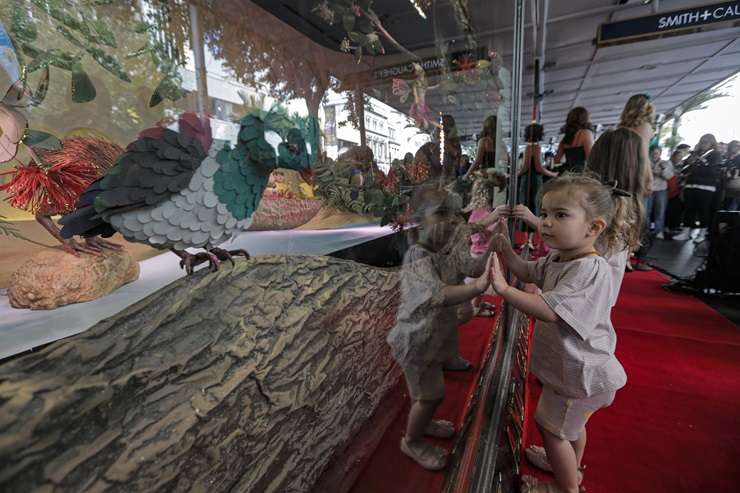
An excited child enjoys the unveiling of Smith & Caughey’s Christmas window display in 2024. Photo / Alex Burton
“It’s a beautiful old property that has got a lot of history in the hearts and minds of Kiwis.”
The property, comprising multiple interconnected buildings across three titles, was in a great spot with the city rail station nearby.
Midtown was taking off with “a hell of a lot going on”, including the opening of the Radisson RED Hotel, the transformation of the old McDonald’s site into student accommodation and the refurbishment of Bledisloe House, the former Auckland Council-owned building.
“I think people are feeling that Auckland’s back. There are a lot more events at the weekend. I think there’s just a general feeling that part of midtown is really going to benefit, and that’s before we saw the station open.”
Interest in the Smith & Caughey building was coming from all markets across the world, Lauchlan said.
Discover more:
- Legendary Auckland music venue where Lorde made her debut hits the market for sale
- 'Nasty' fuel price shocks and deserted open homes: what the Iran war means for house prices
- South Auckland's 'worst do-up' in 15 years heads to auction at $400k reserve
“A number of them have had investments in the past or have current investments here, but also [there are] quite a few new groups looking at the project, which is exciting.”
A number of people had been involved with historic property redevelopments in the past. “They've done projects in Australia, or they’ve done projects in other gateway cities around Asia, or Europe, where they’ve stepped into a historic property and in some cases put boutique hotels or delivered high-end retail.
“I think there’s plenty of options on that site that really can leverage the Smith & Caughey brand and the history, and obviously it’s a large land-holding so there’s lots of different component pieces that I guess can be brought to the market in different ways.
“That’s where we’re finding the interest is most engaged, as they’ve already got experience doing projects like this in other markets.”
There was also very strong local interest from developers and investors.
A whitepaper on the midtown revival, by Chris Dibble, JLL New Zealand’s head of research and strategic consulting and colleagues, said the site was at the nexus of the future pedestrian flow from the City Rail Link, bus corridors and retail spine.
“A visionary project could incorporate a mixture of flagship ground floor retail, premium character office space, luxury residential apartments, service departments, and/or a hotel, creating a vertically integrated asset with diversified income streams that captures value from every part of the 24/7 urban cycle.”
The whitepaper also said the heritage character was an irreplaceable asset.
“The opportunity lies in leveraging this, potentially through facade retention or restoring key internal spaces, while integrating new, efficient, and high-value floor area.”
Such a hybrid approach would create a best of both world’s product that commanded premium rents and stood apart from generic new-builds, the paper said.
The character and location also made the property an ideal candidate for a luxury boutique or lifestyle hotel.
The paper went on to say the transformation of midtown was no longer a future concept; it was happening now: “The convergence of billions in public and private investment has created undeniable momentum.”
The marketing Information Memorandum highlighted New Zealand as a safe haven for capital.
“Offered for the first time in 142 years, this generational asset represents the most significant redevelopment proposition in Auckland’s CBD for over a decade.
“The opportunity is underpinned by three core pillars: its irreplaceable history, its strategic location at the epicentre of a $10 billion transformation, and the asset’s unprecedented scale unlikely to be replicated in Auckland’s CBD again.”
A historic heritage overlay applied to the Mahoney and Lippincott buildings, which were protected for their historical significance, physical attributes and aesthetic value.
“Development is severely limited, with demolition of the primary structures unlikely. Any development must preserve the existing historic frontages along Wellesley Street West and Elliott Street,” the IM said.
A 100% Interest in Smith & Caughey’s Queen Street was being offered by way of International Expressions of Interest, closing on April 21, unless sold prior.
- Click here to find more properties for sale