- The war in Iran has caused oil prices to spike, leading to panic buying of petrol.
- Real estate agents are prepared for potential fuel shortages, using technology to manage contracts remotely.
- Experts say the situation may impact buyer behaviour, with higher petrol prices influencing housing decisions.
The war in Iran has sent oil prices spiralling, with panicky Kiwis buying up petrol cans and the Government outlining the country’s four-level fuel alert system, which ranges from getting prepared to a worst-case scenario of severe curtailment.
Start your property search
That brings stark reminders of the Covid alert system – which launched six years ago to the day – when a different threat from abroad caused havoc at home.
The housing market saw prices rise to giddy heights and then plummet. Now the struggling market heads into traditional headwinds of not only winter but a looming general election, with already hurting households increasingly worried about more inflation and rising living costs.
Measures like possible petrol rationing are giving rise to new concerns around the abilities of agents and buyers to even get in their cars to get to open homes.
Industry bosses spoken to, however, were not yet overly concerned, saying the lessons of Covid had prepared them for shocks.

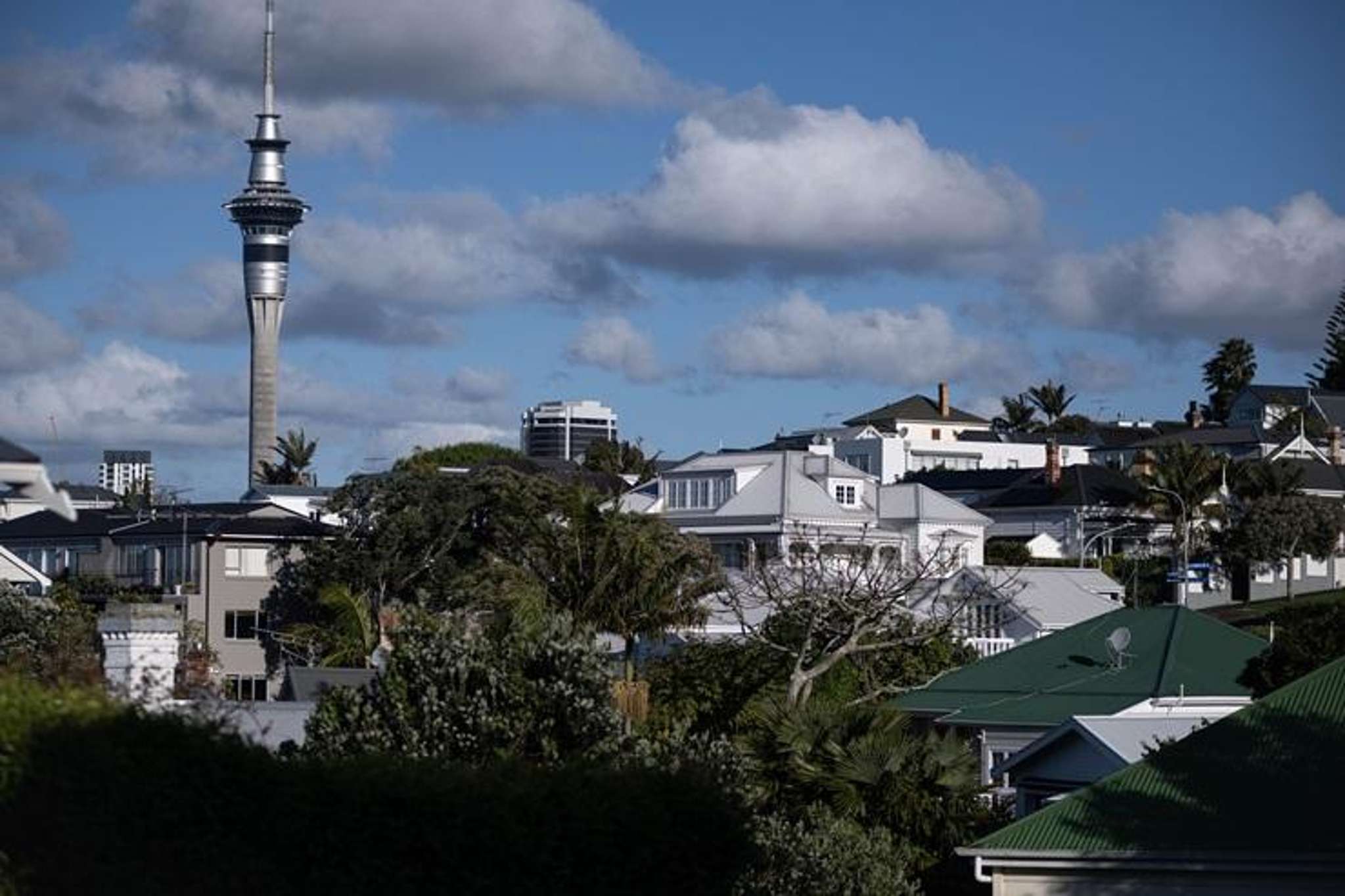
Auckland’s housing market has been fairly subdued since prices tumbled from their post-Covid highs. Photo / Fiona Goodall
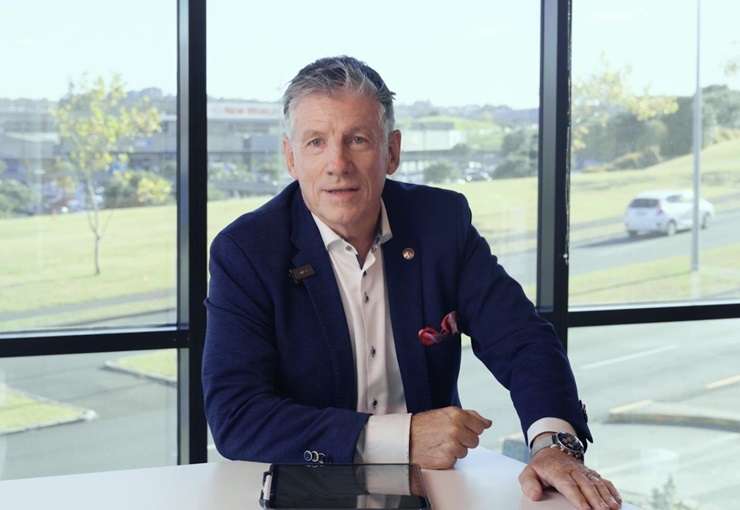
Harcourts Cooper & Co owner Martin Cooper: He urges Kiwis not to panic and points to Covid-era tech that will keep the market ticking along if fuel is scarce. Photo / NZME
Martin Cooper, managing director of Harcourts Cooper & Co on Auckland’s North Shore, told OneRoof agents were already well-equipped to cope with all manner of crises, including possible fuel shortages.
“Our team all cope with doing contracts over Docusign. Normally, it would be, get in the car, go back and forth, back and forth and back and forth. We’re actually a lot greener than we ever used to be because we use technology in our business.”
Cooper’s main message on the war was “this too will pass”. He said that since he sold his first house as an agent back in 1983, there had been crisis after crisis.
At that time, Sir Rob Muldoon was the Prime Minister, and there was a price and wage freeze.
“It took six weeks to get finance on a property, if you could. Interest rates were at 7% average, then in 1984 the Labour Government came in and [implemented] ‘Rogernomics’.
“Interest rates went from 7% to 22%. People dealt with that, and then we had the share market crisis of 1987. People dealt with that, and then we had the Gulf War of 1991 and a fuel crisis back then, and then we had the GFC global issues of 2008.”
The first Covid lockdown began six years ago and was followed by interest rates rising from 2.95% to 8% and a cost-of-living crisis.
The economy had begun to recover, but now America had attacked Iran.
Discover more:
- Tony Alexander: Why the Iran war isn't Covid round two for NZ
- The 20 suburbs where buyers are paying pre-2020 prices
- Iconic roadside castle up for grabs on Auckland's border
Cooper said people should continue with what they could control, such as finding homes and getting on with their lives.
“All through my real estate career, there have been reasons and excuses not to take action, not to improve the home you live in, not to make decisions and live your best life, and all based on things no one here in New Zealand can really control.
“This too will pass, but it’s nerve-wracking, and if you’re a news watcher, it’s scary; it’s horrific.
“But everything was going to go to hell in a handcart because of the war in Ukraine – that’s been going on for four years now.”
Cooper said while people were generally resilient, he did expect some buyers and sellers to slow their decision-making, given that 2026 is also an election year.
“There’s always a segment of the population, whenever there’s any calamity or turmoil or crisis, they hesitate.”
Tom Rawson, Ray White Manukau co-owner, said the Government’s fuel alert system brought back memories of Covid.
The system felt like a warning of restrictions to come: “If I know the Government well enough, they signal and signal and signal, and then they do.”

Auckland real estate agent Michael Boulgaris: “Last weekend was the first week in my real estate history, in 38 years, I had no one turn up to any open homes." Photo / Supplied
But Rawson said he was not putting together a contingency plan for agents at this stage, saying many worked in local offices in their communities. “We’ve got people that ride bikes to work, so I don’t think we’re so impacted yet.”
Higher petrol prices could buy into an already increasing trend of buyers looking to buy closer to work as Aucklanders were sick of sitting in traffic on their way to and from work.
“The next time they fill up and it’s gone from $100 to $150, plus the traffic to get there is an hour away and an hour to get home, so maybe (there will be) some more quality of life decision-making along with costs being the final straw.”
Rawson hoped the work-from-home trend would not take off again as people had returned to the office. It was important for agents to be able to be mobile and “get belly to belly with people and transact.
“It’s so important now, after having that couple of years of not seeing people so much, to see people. It would be sad to go back to not seeing people for a period of time.”
Rawson had not heard of sellers deciding to hold tight and said it was business as usual for his offices.
He added that the lessons learned from Covid had lifted their game. “We definitely know how to communicate effectively. Covid initially had a lot of speculation – widespread misinformation – and our team all looked at different areas for information.
“We kind of narrowed it down and controlled internal communication around what was happening, alert systems and what you could do and couldn’t do etc, so rather than speculation we only went with industry facts.”

Bayleys head of insights Chris Farhi says the RBNZ "would be quite quick to stomp things out if they started to go crazy again”. Photo / Fiona Goodall
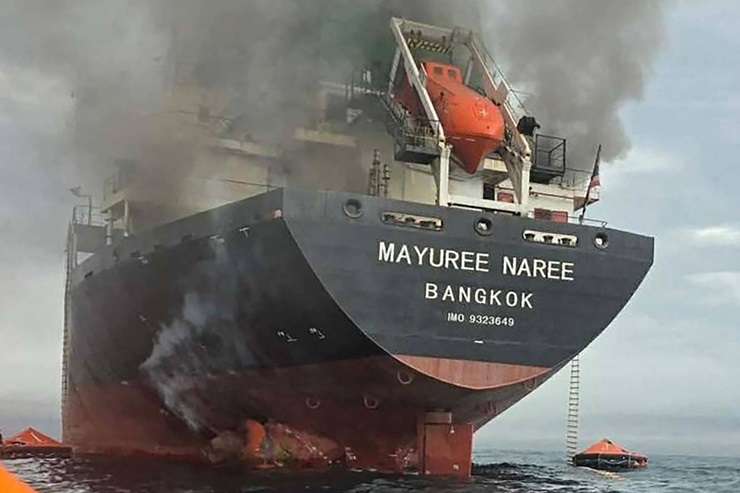
Smoke rises from a Thai bulk carrier near the Strait of Hormuz after an attack. The Strait - vital to global oil supply chains - remains closed as a result of the war. Photo / AFP
Michael Boulgaris, who sells luxury properties in Auckland, owns horses and joked he could ride them to properties if he had to.
But while not worried about petrol, he is nervous about real estate in his market, saying he’s seen “For Sale” signs for properties above $3m coming down in Auckland.
“Last weekend was the first week in my real estate history, in 38 years, I had no one turn up to any open homes – five, six open homes,” he said.
“I spoke to a lot of agent friends and said, ‘What’s going on?’ Everybody under $800,000 or $900,000, some had up to 25 groups, but anything expensive, people are smart – they just sit back and watch and hold.”
Boulgaris said there were too many global frustrations going on, so people procrastinated and those with money decided it was safer in shares or the bank: “When you’re dealing in millions of dollars, why would you want to sell and lose millions of dollars?
“I think until this Trump thing settles and the war, people, if they don’t have to sit there anxiously waiting for the phone to ring for a buyer, just bide their time.
“But I’m saying to owners, you know, with billions of people out there, you only need one buyer, and if you’re not exposed, the buyer will buy someone else’s property, so you have to stay on. It’s a tough call for the owners.”
Chris Farhi, head of insights at Bayleys, said even if the Government raised the alert levels, there would still be some ability to operate. Banning vehicle usage would be “pretty out there”, but the systems from Covid, such as remote viewing and remote auctions, were already in place.
Several “what if” scenarios were at play, he said, including what the Reserve Bank might do with the Official Cash Rate. Australia’s Reserve Bank had just hiked its cash rate to 4.1%, but New Zealand could potentially lower its own rate – currently at 2.25% – if the situation warranted that, and that could lead to more house buying.
“Say the situation escalates and we start to see proper impact on the economy, like slowdowns in production and that type of stuff, we might then see the Reserve Bank put through some lower interest rates to stimulate the market, and then that might then provide the conditions for an uptick in activity in the housing market.
“The other view could be that the issue boosts inflation, and that might negate the arguments for lower interest rates.
“It really depends on exactly how things start to track – whether the issue is more about the economy and production or whether the issue is more about inflation.”
Farhi did not foresee a repeat of the housing boom, which took place after Covid, when interest rates were ultra-low for an extended period. “I think the learnings suggest we are less likely to see such an extreme and widespread stimulation put through.”
The Reserve Bank and the Government “would be quite quick to stomp things out if they started to go crazy again”, he said.
While Covid had been an extreme testing environment, the start of the Ukraine war was a useful reference point around oil price rises, Farhi said. “Ultimately, because that became contained relatively quickly to that specific area, the market just pushed through the concerns.”
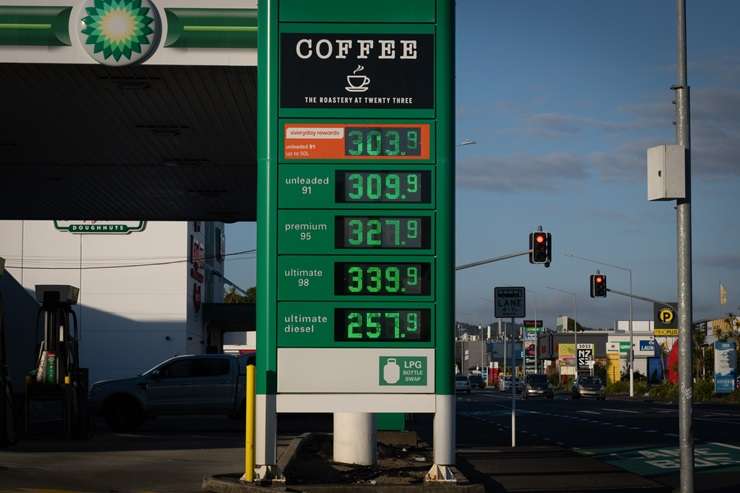
Petrol prices have already spiked as a result of the war and petrol stations around the country have seen evidence of panic-buying. Photo / Michael Craig
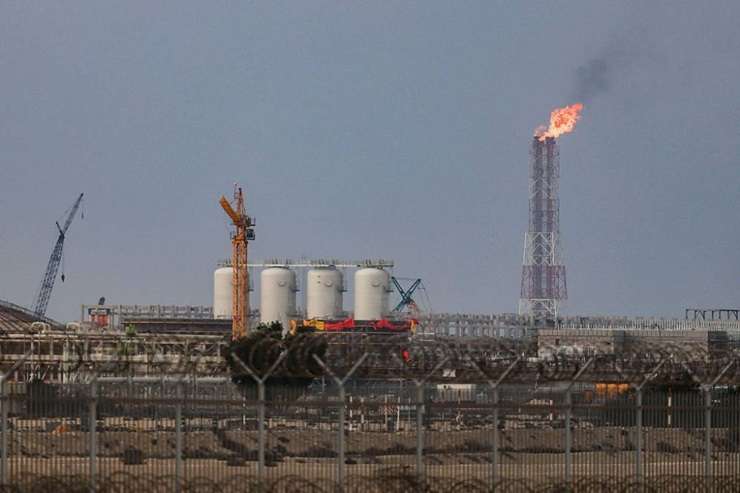
Ras Laffan, in Qatar, has been targeted by Iranian missiles. Iran’s threats to hit fuel infrastructure in neighbouring countries, following hits on its own gas field at South Pars, are putting pressure on energy markets. Photo / Getty Images
New Zealand had also introduced tools, such as debt-to-income ratios, that would keep a check on people overspending on housing.
Buyer decisions around where to live could swivel again, Farhi said. When Covid arrived, a lot of people headed away from cities, some to lifestyle blocks and holiday homes, but high petrol prices might change that.
“You might see more people really starting to think about central locations where they’re using less petrol to get around.”
Economists spoken to by OneRoof said Australia’s decision to hike the country’s cash rate did not mean New Zealand would do the same at the next announcement next month.
Jarrod Kerr, chief economist for Kiwibank, said the two countries were at different points of the economic cycle. “The Australians didn’t go through a recession like we did, so they’ve had a bit more inflation than us. You can look at both countries, and you can argue both sides, but I think the Australians handled the inflationary spike better than we did.
“Our central bank openly ran this economy into a severe recession, and I think that’s much worse than what the Australians did, which is kind of let things run, and they are in a position to hike now – they are hiking because the economy is in a better position than ours is.”
New Zealand consumers had been battling for years amid higher interest rates, council rates, food costs and now, “at precisely the wrong moment,” a spike in petrol which would stretch budgets further.
Kerr thought the Reserve Bank was likely to hold the OCR next month: “The Reserve Bank, I think, will play a straight bat and just say ‘look, we’re on hold, we will watch developments closely’.”
He also said the Iran war was the kind of shock that could, at some point, cause rates to be cut, rather than hiked. “I think most businesses, ourselves included, are preparing for this thing to escalate and to last for a long time. Price rises are one thing, shortages are another,” he told OneRoof.

Westpac chief economist Kelly Eckhold says New Zealand should brace itself for a “pretty nasty, negative shock to the economy”. Photo / Fiona Goodall
“If we find ourselves in a situation where there’s a shortage of oil or refined product coming here, then that’s very disruptive.”
Everyone was hoping that US President Donald Trump would pull out of Iran soon, and that the market would rally and oil prices would drop, but probably there would need to be a bit more “violence” in the financial markets before that happened, Kerr said.
“We need to see financial markets rampaging, we need to see the oil price lifting, and that will put even more pressure on him to pull out, so, unfortunately, I think it needs to get a little worse before it ultimately gets better and is ended.”
Westpac chief economist Kelly Eckhold said New Zealand was looking at a “pretty nasty, negative shock to the economy”. The character of the shock was different from Covid because it was not a health emergency, and as of now, the economy still had access to all the resources it needed.
But in four or six weeks, it could be a different story. Even now, there have been big cost increases that will have economic consequences. “Fuel prices, also shipping prices, are starting to rise. Insurance prices are starting to rise, logistics are becoming more difficult. We saw a lot of those things happen during Covid, and a lot of other things, like fertiliser prices, are rising for the agricultural sector as well.”
New Zealand was at the end of a long chain when it came to fuel supplies, he said, and the fuel shortage would likely start to strike home in the next few weeks.
Refineries would be seeing a cessation of imports from the Persian Gulf, and it took a few weeks for boats to get from the Persian Gulf to South Korea, Singapore and Japan.
“The last boats left to go there in late February, so we’re at the end of that logistics chain, so in the next few weeks, all those refineries are going to have some hard decisions to make about which customers they service and at which frequency.
“I don’t think that means we get cut off, but I think it’s very reasonable to assume that we will get less than we usually get.”
Australia’s Reserve Bank cited the conflict in the Middle East as one of several reasons for hiking its OCR, and New Zealand’s Reserve Bank would have to talk about a higher inflation outlook at next month’s meeting, Eckhold said, “because you would have to be blind not to see that’s going to happen”.
Eckhold expected the OCR to remain unchanged until the end of the year, but also said it was possible that if there was a change, it would be a cut rather than a hike.
Australia’s Reserve Bank’s decision had been a close one, with five for the hike and four wanting to hold off: “That tells us this is a very serious situation and that it is actually quite hard to be raising interest rates in this environment at this time.”
- Click here to find properties for sale