- US involvement in the Israel-Iran war has unsettled the housing market, affecting buyer and seller confidence.
- BNZ's Mike Jones revised house price inflation forecast to 2-4% due to global uncertainty.
- Higher petrol prices are impacting household spending, with economists urging caution and potential interest rate cuts.
The US involvement in the war between Israel and Iran has not helped New Zealand's housing market, with the almost daily shocks unsettling for buyers and sellers trying to figure out their best move.
Start your property search
Mike Jones, chief economist for the BNZ, has revised the bank's annual house price inflation forecast from 5-7% to 2-4%. “There's just a general uncertainty, and the global picture is something that's probably affecting demand in New Zealand,” he said.
A number of indicators highlighted the wobble in demand this year, and that was not in the script, Jones said. “We are supposedly in the midst of an economic recovery, which has certainly kicked off but has also seen a few speed bumps of late.
“Things are changing so quickly. It makes it very, very difficult to forecast, but you also don't want to be lurching around with every piece of global news either.”
Last week, inflation in New Zealand was edging outside the Reserve Bank’s target of 1-3% target, but that looked much less likely now, given that oil prices had been impacted by the war in the Middle East.
The more expensive fuel is, the less discretionary income there is, and that has an impact on spending and growth.
Trends mattered more than daily spikes, Jones said, noting that mortgage rates, the labour market, and housing supply were more important factors for the housing market.
People were jittery, however, which affected confidence, and confidence was a big influence on spending and investment.
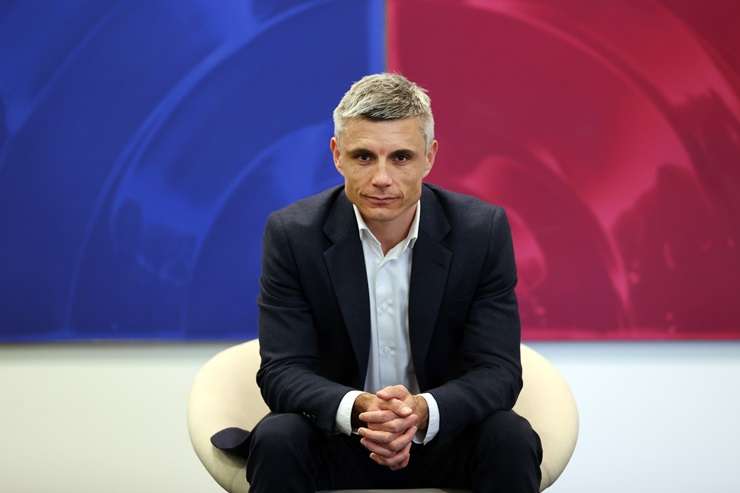
BNZ chief economist Mike Jones: "You don't want to be lurching around with every piece of global news." Photo / Fiona Goodall
“We were probably just starting to get going on this economic recovery, and then we've had some of these confidence shocks, and we're still figuring out what the impact of those might be," Jones said.
“I think for the average person, it's pretty hard to interpret. So much is happening.”
Jarrod Kerr, chief economist for KiwiBank, agreed that markets, investors, and households were nervous.
Households had been hit by higher food and energy prices, property owners faced rates hikes, and now the strikes in the Middle East had raised the risk of tankers being cut off.
Discover more:
- NZ's mansion angst: 'They don't want friends to know they've spent $20m'
- Heartbroken couple lose $660,000 after selling landslide cottage
- Former All Black’s iconic dome home finally finds a buyer
“It is a bad situation for households, sitting here knowing that petrol prices are likely to rise. It's the last thing you want to hear when you're already struggling to feed the family,” he said.
There was also a psychological impact from KiwiSaver falls. “It's not a nice feeling at all, so people tend to clam up a bit. They are forced to spend more on essentials and so, therefore, less on non-essentials, so they cut back on what they can elsewhere.”
Kerr described higher petrol prices as an extra tax on households. “We've been saying for a while that we've been crawling out of this recession. We're still crawling but it's just kind of elongating. It's kind of stretching out the recovery that we had hoped we would have.”

A US bomber conducts air refueling operations over the Pacific Ocean in April. The US deployed US stealth bombers to bomb Iran's nuclear facilities last weekend. Photo / US Department of Defence
He feared the Reserve Bank was adopting a wait-and-see stance, similar to other central banks, and might pause rather than cut the OCR next month. “I don't think that's the right approach but it feels like the Reserve Bank is saying to us ‘We may pause in July, we won't cut and we will wait for August’, whereas my argument is, if you need to cut, you cut it as soon as possible so it feeds through the economy.
“If they pause, then the rate relief that we'd put into our forecast will be delayed and that doesn't help the housing market.”
While interest rates were more comfortable than a year ago, they were not at levels that would get people excited, and Kerr said he would like to see them in stimulatory territory to get the housing market going.
A best-case scenario, he said, would be a peace deal in the Middle East, a resolution to the Ukraine conflict, and US President Donald Trump dialing back on his tariffs, but any or all those things happening were unlikely.
“Unfortunately, our central scenario is that things are pretty awkward for a while. Global growth is likely to be much slower than what it could be as a result of all these things.”
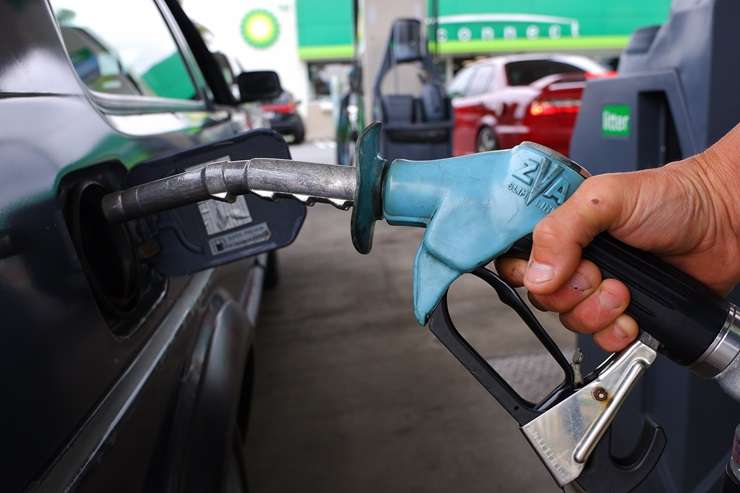
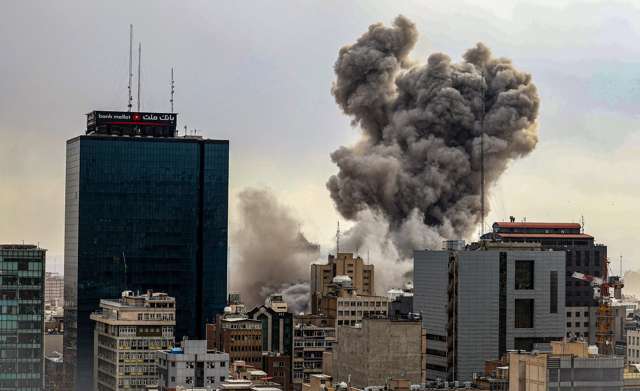
There are fears that the Iran-Israel conflict will have a detrimental effect on petrol prices. Photo / Getty Images
Westpac’s chief economist Kelly Eckhold, writing in the bank’s weekly economic commentary, said it looked as if a pause in easing cycles was on the cards.
“While there may be a few wobbles underway for the economy in Q2, the March quarter outcome was more solid than the RBNZ expected, hence the starting point for the economy will be one of slightly less excess capacity.
“But the real swing factor is the inflation outlook. Assuming our forecasts are close to the mark, then the RBNZ won’t see inflation peak until October when the Q3 CPI data are released.
“Until then, they will be on tenterhooks, wondering whether, and by how much, CPI inflation will breach 3%. They will reasonably wonder what businesses and consumers might make of it all and whether inflation expectations rise further as we move through 2025.”
Westpac had still pencilled in an easing for the August Monetary Policy Statement, but Eckhold questioned if the Reserve Bank would be “watching, worrying and waiting” for the rest of 2025.
“Perhaps so. There’s certainly plenty of scope for global uncertainties to overshadow the growth outlook in coming months," he said.
“But we should also remember that uncertainty is a transitory factor that will ultimately pass.
“The strong level of the terms of trade and especially the low level of interest rates, held at current levels for long enough, will be more persistent influences on New Zealand’s growth and inflation trajectories.”
It would take time to assess implications of the US entering the Iran-Israel war, and worst-case scenario included a global supply shock if energy supplies were threatened.
“Better scenarios are ones where the conflict ends more quickly and, as in Top Gun’s Maverick, the key protagonists jet off into the sunset.
“More reasonably, there may just be a period of calm if the Iranian’s response is not deemed excessive. Our best guess for now is the RBNZ will be watching, worrying and waiting to see how this all plays out.
“Certainly, it’s difficult to take any proactive actions in the face of this sort of uncertainty.”
- Click here to find properties for sale