- An energy expert suggests borrowing $90,000 for green upgrades could be the cheapest way out of the energy crisis.
- Rising fuel prices due to the US-Israel war on Iran have increased interest in green loans and electric vehicles.
- Rooftop solar and electric appliances offer significant savings, with banks offering low-rate loans for sustainable options.
An energy expert says borrowing $90,000 to go green could be the cheapest way out of the looming energy and fuel crisis.
Start your property search
His statement comes as two New Zealand banks are seeing an uptick in enquiries in green loans in recent weeks.
The US-Israel war on Iran has resulted in dramatic increases in fuel and energy prices. Concerns are growing that the global economy faces a “doomsday scenario” if the region’s oil and gas sites are damaged and Iran fully closes the vital Strait of Hormuz, through which 20% of the world’s oil supplies flow.
In New Zealand, the Government is weighing up its options as petrol prices hit $4 a litre in certain parts of Auckland. Rising energy bills were already a concern before the conflict, and there are fears that they will hit new highs in the months ahead.
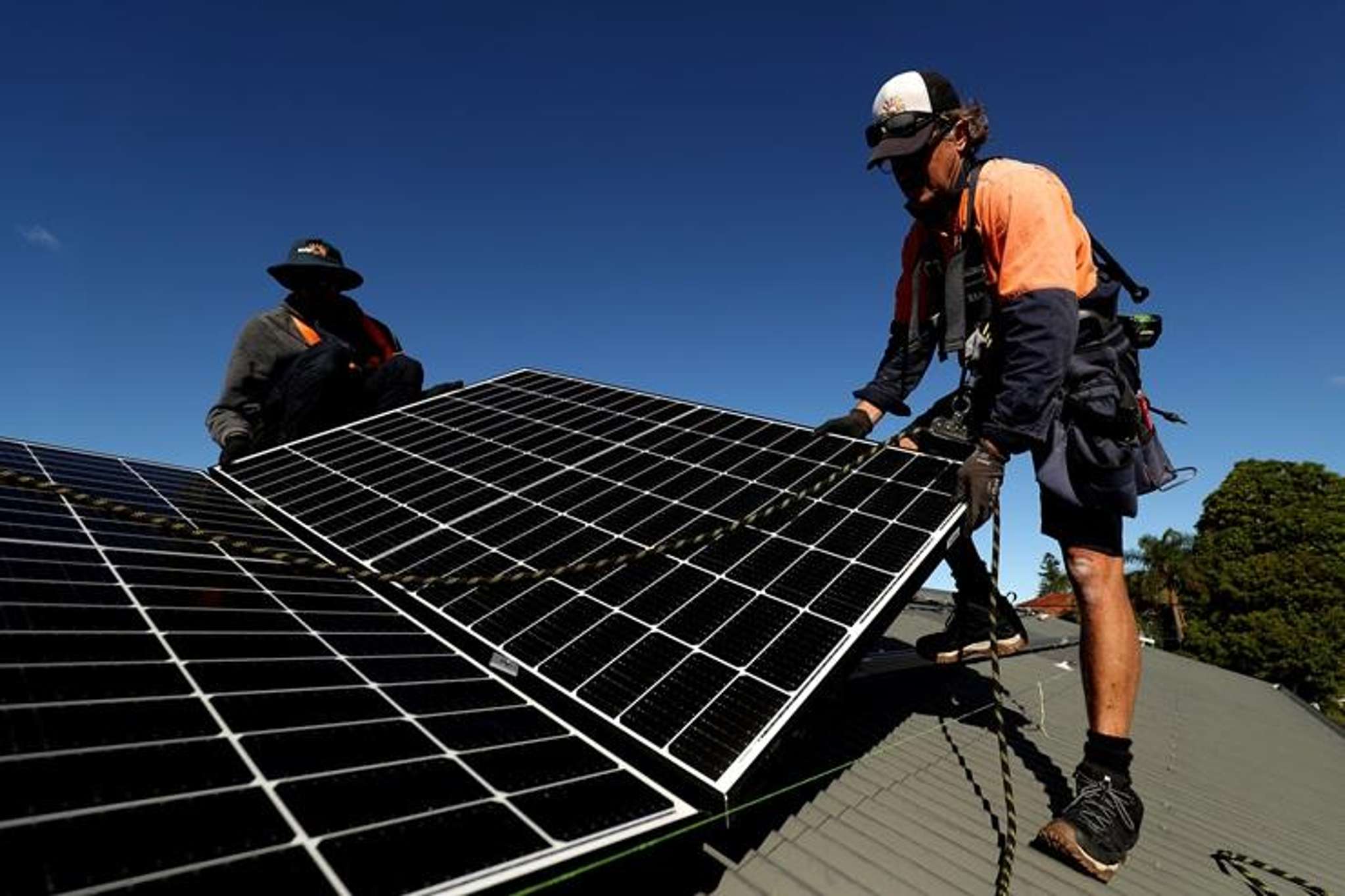
Rewired Aotearoa chief executive Mike Casey estimated Kiwis would need to spend around $90,000 to make almost everything in their homes more sustainable. That would include switching out gas appliances, including a heat pump water heater ($8000) and cooktop ($2000), installing rooftop solar ($18,000), getting a battery ($10,000) and buying an electric medium SUV ($55,000).
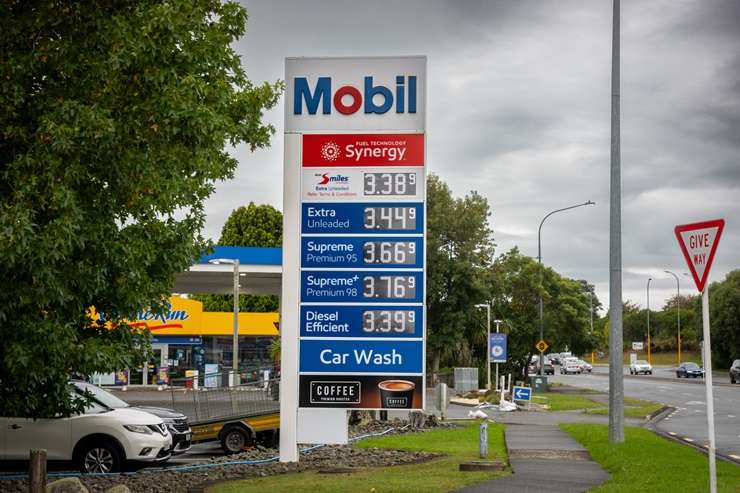
Petrol prices in New Zealand have been creeping closer to the $4 a litre mark since the start of the Iran war. Photo / Michael Craig
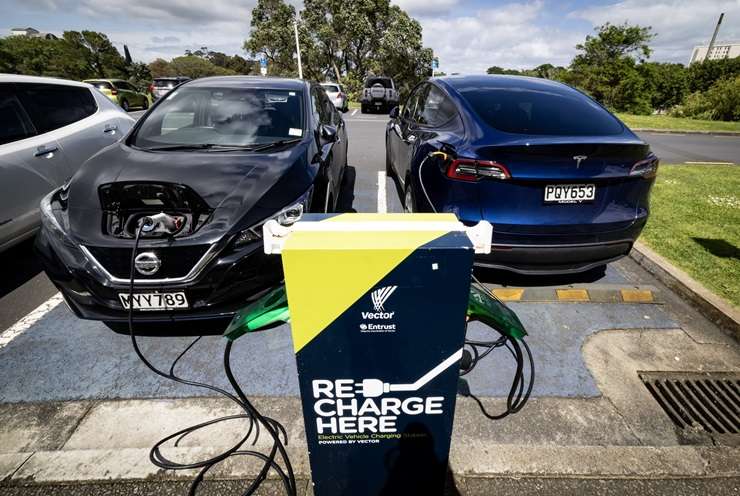
Car dealers have noticed an uptick in enquiries for EVs since the outbreak of the war. Photo / Jason Oxenham
That was a lot to stump up, but the savings on power and fuel bills would be considerable – at least $4700 a year, Casey argued. Even those adding to their mortgage to finance the work would save more than $3000 a year over the life of their loan.
Some of the major banks offered higher-equity borrowers loans with 0%-1% rates for a limited period to help fund some of these sustainable options. But even borrowing at a rate of around 5.5% still made financial sense, Casey said.
“Always look at rooftop solar. If you’ve got a spare $20,000 on your mortgage, you are probably 95% better off taking that money out and putting roof-top solar on your roof because you will save so much money doing so.”
He also advised replacing gas appliances with their electric equivalent. “One thing that we know for certain is that solar on the roofs of New Zealand homes is an absolute economic slam dunk. It almost doesn’t matter if you have gas in the home, or how many people you’ve got or how much energy you are using, because there are retailers buying it back off you.”
Discover more:
- Tony Alexander: The golden rule when the world's on fire - nobody knows anything
- NZ's house of fun for sale: Thousands of toys in home where playtime is never over
- Bargains for $100K-plus: Coastal town where homes are cheaper than Auckland deposits
Casey said the Iran conflict would drive interest in electric vehicles. “Probably what this Iran situation has done has made people want to move to electric vehicles a lot sooner. But my theory is that by 2040, every machine in a home will be electric. You will still have fossil fuel cars, but they will be antiques, they will be people’s prized possessions because it just doesn’t work out economically for us to continue to do our daily commutes in fossil fuel vehicles.”
Robert McLachlan, a professor in applied mathematics at Massey University, said the number of people installing rooftop solar panels had risen by 60% a year over the last three to four years. “Only 2% or 4% of houses might have solar, but if this surge continues, it’s going to be very noticeable – you will be seeing them everywhere,” he said.
A PV rooftop solar system might cost $10,000 to buy and install, but the energy cost savings were over $1000 a year, he said. “There’s no question it stacks up.”

Smoke and flames rise at the site of airstrikes on an oil depot in the Iranian capital of Tehran. The US-Israel air strikes on Iran began a month ago. Photo / AFP
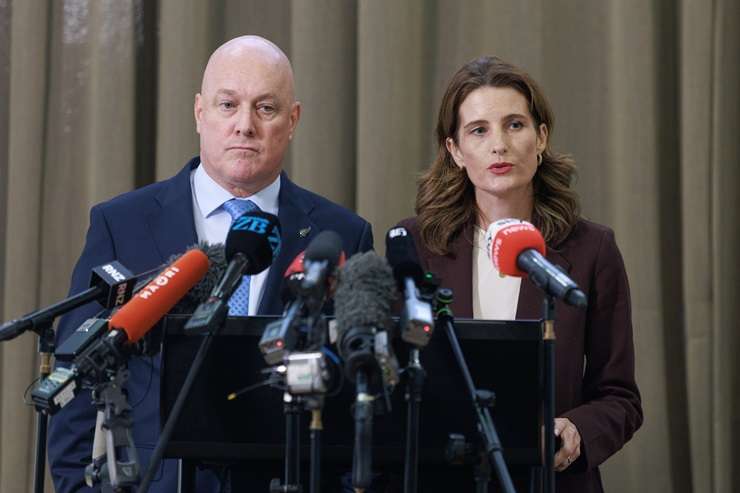
Prime Minister Christopher Luxon and Finance Minister Nicola Willis announce the Government’s fuel assistance package. Photo / Mark Mitchell
McLachlan, whose work centres on climate change and the environment, said the conflict in the Middle East would likely result in more sales of electric cars (they currently make up 3% of New Zealand’s vehicle fleet).
“Frankly, it’s a mystery to me why more people aren’t doing it. A second-hand EV really doesn’t cost any more than your equivalent petrol car.”
McLachlan, who owns a 2018 Hyundai Ioniq, said EVs were “superior” because they were cheaper to maintain and operate. “I can see why everyone is freaking out. Just imagine if there really is a supply shock where you literally can’t go and buy any. OMG it will be a massive unrest,” he said.
“The quicker we can make this transition happen, there’s no question. It’s just a win-win.”
Turners Auto Retail chief executive Greg Hedgepeth said the company’s dealerships had seen a spike in interest in EVs in recent weeks. Some of the big banks also reported a lift in green loan enquiries.

BNZ says more customers are using its green loan to make their homes sustainable than to buy electric cars. Photo / Alex Burton
ASB reported a 33% rise in the number of customers taking out an ASB Better Homes Top Up loan since the war had broken out. There was also a 46% increase in customers visiting its Better Energy Calculator.
BNZ head of sustainable finance partnership Alex West said there was initially a lot of demand for electric cars when its green loan first launched, but more customers were using the loan to make their homes more sustainable.
“Renewable upgrades like solar panels continue to draw more interest as more customers look for alternative ways to power their homes, although we have not seen a noticeable spike in enquiries in the past few weeks.”
BNZ Head of Sustainable Finance Corporate and Institutional Business Adam Coxhead said the savings in many cases comfortably outweighed the cost of financing rooftop solar.
“... when most of the electricity generated is used on‑site, solar can materially reduce power bills from day one.”
Coxhead said there was also growing interest from business customers who wanted more certainty over their energy costs and less exposure to volatile electricity and gas prices.
New Zealand Green Building Council chief executive Andrew Eagles said solar and hot water heat pumps “absolutely” paid off for households, but for some, the upfront investment was too great.
The bank-based green loans only benefitted those with substantial mortgages, he said, which meant lower-income and older households were often locked into high-cost electricity because they couldn’t afford to upgrade. “Economics is not the barrier. Access to finance is.”
- Click here to find properties for sale