ANALYSIS: Over the next seven weeks, I have a string of presentations to make around the country and for most of them I will start by running through a list of reasons why our economy has grown 1.8% this past year and is likely to grow almost 2.5% over each of the next two years. Then I’ll run through a second list of reasons why there won't be a post-recession boom as happened after the recessions of 1990/91 and 1997/98. In fact, we almost certainly will not reach the 4.1% growth rate eventually achieved in 2015 after the post-GFC recession ended.
On the growth list, we have the following:
First, and most importantly as an education point for the folk unfamiliar with what has traditionally driven our economy and will continue to do so, an upturn in farm incomes. Prices are very good for our dairy, red meat, and Kiwifruit products and with the world increasingly demanding protein, we are well placed for farm sector growth over an extended period of time.
Second, interest rates have been at growth-stimulating levels since the middle of last year and are likely to still be on the accommodating side until maybe the middle of 2027.
Start your property search
Discover more:
- Tony Alexander: Where agents are seeing the steepest house price falls
- ‘Sell it or we will’: $1 auction as lender turns the screws
- 'Pizza economics' billionaire sells beachfront estate for $40m
Third, there is good growth in our tourism sector now underway – mainly driven by Australians, less so by the pre-Covid booming market of China.
Fourth, there is good growth in foreign student inflows with more to come as the Australian political parties compete for votes with deepening promises to cut back on almost all types of temporary migrants.
Fifth, there is a lot of infrastructure work to be done around the country.
Sixth, the Kiwi dollar has weakened, and that is good for exports generally.
Seventh, there is good growth in the number of consents being issued for dwellings, though the transition of recent strong growth to actual construction may take a tad longer than we have become used to.
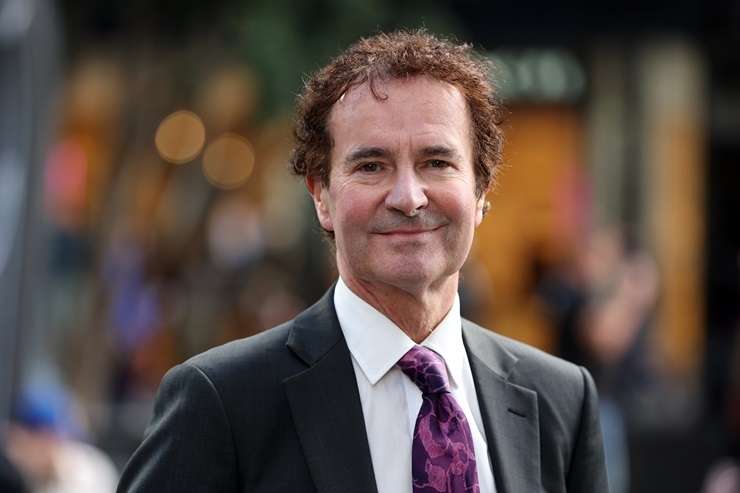
Independent economist Tony Alexander: "There is a risk that the peak for the official cash rate is closer to 4.5% than the 3.25% pencilled in by the Reserve Bank." Photo / Fiona Goodall
For good measure, I should throw in the improving business plans for capital spending along with the promises to spend more money being liberally sprayed around by political parties looking to buy our votes with our own money and the money of our descendants.
But then there is the list of reasons why we won’t boom.
The first item here is the growing risk that inflation will be a lot harder to get under control than our central bank has predicted. Forecasting falling inflation while growth is accelerating and resource availability is declining is a brave call. This means there is a risk that the peak for the official cash rate is closer to 4.5% than the 3.25% pencilled in by the Reserve Bank and the 3.5% expected by most analysts.
Second, it looks like the cyclical upturn in migration this cycle is going to be pretty minor. That leads to restraint number three – minimal growth in house prices this cycle. That means little extra consumer spending coming from feelings of rising wealth.
Fourth, it may be that farm incomes are growing strongly – but so too are farm costs, and that will tend to restrain the flow-through of spending from our farm operators.
Fifth, there are many negative shocks underway which could become worse in intensity and/or duration. These include the war between Russia and Ukraine, war in the Middle East, the impact of AI in terms of job disruption, AI-assisted cyber-attacks, rising electricity prices, and the risk of a collapsing AI equity bubble.
There are risks also from bird flu, El Niño, the US President, and of course the rapidly approaching general election. At this stage, it is impossible to know what the multi-headed coalition beast will look like once the votes are counted. In particular, it is impossible to know ahead of the election which policies promised by the parties who form the government will in fact come to fruition as part of the coalition agreement.
Basically, our economic outlook seems okay, but there is no boom ahead, and bumps will continue along our economic path.
- Tony Alexander is an independent economics commentator. Additional commentary from him can be found at www.tonyalexander.nz