- Mortgagee sales are rising, with 313 properties identified so far this year.
- Home owners and developers face losses after high interest rates, falling values and changing circumstances.
- Banks and advisers help some borrowers avoid forced sales, but impaired credit can hinder borrowing.
Home owners who bought at the height of the market are enduring "heart-breaking" losses, as rising costs leave them unable to hold on to their properties.
Start your property search
The number of mortgagee sales is growing, with the total for 2026 on track to be the highest since 2020, new figures suggest.
So far this year, 313 properties have been identified as mortgagee sales; with more than half of them (169) in Auckland. Last year there were 387 mortgagee sales, and the year before 238.
Kristine King, chairperson of property law at the New Zealand Law Society and director of DK Law, said owner-occupiers and developers were doing it tough.
“There are some really sad people out there.”
King said mortgagee sales captured only part of the distress in the market, noting many more struggling home owners had sold before their lender was forced to step in.
Her law firm had recently worked with several clients – mainly young couples in Auckland and Wellington – who had bought a townhouse or apartment off-the-plans in 2020 and 2021 and were now struggling to pay the mortgage.
“It is really sad that some young couples, they’ve come through and settled, to obviously find that with changing interest rates and sometimes changing personal circumstances that they actually can’t afford what they’ve signed up to in terms of the ongoing obligation or rates.”
Those couples were then forced to sell, only to discover in the softer market that their properties were worth significantly less than they had paid. She knew of one couple who had sold for $250,000 less than the value of their mortgage.
King urged stressed home owners to talk to their bank before they missed a mortgage repayment. “Clients go to sell and are essentially looking at a distressed position; they just find they have insufficient funds to repay the mortgage,” she told OneRoof.
Discover more:
- Fastest market in New Zealand: Where homes are selling in as little as 10 days
- Ultra-cheap home loans are gone - how much mortgage pain lies ahead?
- Historic Invercargill mansion relisted for sale after massive price cut
“In those cases, we work very closely with the banks to avoid a mortgagee sale, and in those cases we’ve been very lucky to negotiate with the banks, and they have essentially written off the balance.
“A lot of people look at it and say these banks are so horrible and these mortgagee sales, but we also see the flip side where the banks have been incredibly understanding of personal circumstances.”
She noted that many of those affected would also have impaired credit records, making it extremely difficult to secure a mainstream mortgage for years to come.
King said some developers were also doing it tough. “My developer clients have lost everything, like everything, and it’s so heartbreaking. When you have grown people in your office, and they are crying, and through no fault of their own – maybe they couldn’t sell things or a contractor went into liquidation, and sometimes it’s accumulative – but there are some really sad stories.”
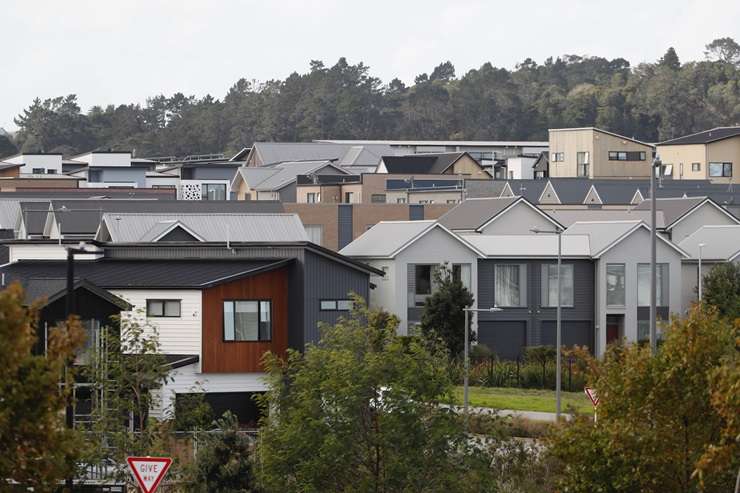
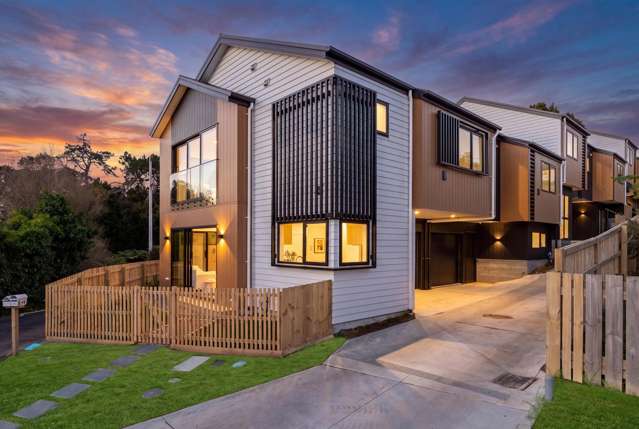
Some of those who bought at the peak of the market are now struggling to meet mortgage repayments. Photo / Fiona Goodall
King said that in many cases banks persuaded or “put significant pressure” on developers to sell before a property reached the mortgagee sale stage, helping to avoid GST complications. One tell-tale sign was a listing marketed as a “bank-assisted” or “lender-assisted” sale.
ANZ head of customer financial wellbeing Carl McCullough told OneRoof that some of the bank’s customers had found themselves in “some very difficult situations”.
“We find that people are impacted by a number of factors, including a change in employment – that might be loss of job or changing job for some reason, illness, relationship changes and things like that impact on people’s ability to meet their ongoing mortgage payments.”
McCullough said the bank had a whole team set up to help people who were struggling, noting that the number of people they were dealing with who were facing hardship was “pretty flat”.
“We do get people who miss payments, and we try and get them to ascertain the best way forward and how we can support them getting back on track.”
First, the bank would look at how it could structure the loan and whether extending the term or going interest-only could provide enough relief. If that still didn’t work, the bank might agree to defer repayments for a short period.

Valocity senior research analyst Wayne Shum says the market downturn makes it harder for home owners to sell before the banks step in. Photo / Fiona Goodall
“The last thing we want to do is go to mortgagee sale, so we will explore all the options we’ve got. And in fact, if we start a mortgagee sale process we will still try and solve the situation before having to go through to completion.”
Loan Market mortgage adviser Vijay Gounder said he had been able to help some clients avoid a mortgagee sale by arranging second or third-tier lending to consolidate all the debts while they got everything back on track. Once they were sorted, they usually returned to one of the main banks.
He said forced sales often played out over several months. “It’s not like the rates go high and all of a sudden the mortgagee sales happen – it’s quite a big process. So, the rates went high, the customers might have been fixed for one or two years, and when they come off the fixed rate they go, ‘Oh s***, I can’t afford these repayments any more’. Then they might go on that six-month-long repayment holiday, and then they might go to a mortgagee sale, which is another three months.”
Valocity senior research analyst Wayne Shum said selling in the current market was hard. “During the boom, you could sell without being forced to because the market was hot.”
Shum said Auckland’s higher number of mortgagee sales was likely linked to the city’s prolonged housing downturn and rising unemployment. “It’s not just 2026 – it started in 2024, and there’s just a lagging effect.”
- Click here to find properties for sale