ANALYSIS: Over the past year, average house prices in New Zealand have fallen by 0.4% after lying flat the previous year, rising 0.2% the year before that, and falling 6.8% in the year to July 2023. As things stand, prices are equal to where they were in March 2023 and 28% ahead of March 2019.
When might they start rising again at a rate above 4% a year? To answer that, look at the places where that is already happening: Southland’s average house price is up 6.3%, Queenstown’s 7.1%, Canterbury’s 4.1%, and West Coast’s 13%.
What factors are in play for these locations?
For Southland, Canterbury and West Coast, higher dairy incomes are relevant. This tells us other places like Waikato (down 0.4%) and Taranaki (down 3.7%) may show acceptable price rises soon, although for Taranaki the knocking back of the energy sector will be a constraint for a while.
Start your property search
For Queenstown, the higher dairy sector incomes will be indirectly relevant because it has always been one of the locations favoured by the farmers who have done particularly well. Other locations that have played the same role, including parts of Tauranga, are likely therefore to see some price pressure soon.
All four South Island locations and Queenstown in particular have seen their economies boosted by the recovery in the tourism sector. This perhaps implies some firming up of prices in other parts of the country with strong dependence on the tourism sector (Dunedin prices are already ahead 2.4%).
Discover more:
- Tony Alexander: What the latest OCR hike means for mortgage rates and house prices
- Auckland’s house price rail map: What homes cost around every train station
- Has the housing market wipeout scarred a generation of buyers? Slump's shake-up revealed
Good affordability for young buyers, retiring people looking to free up some capital, and investors looking for yield can also help explain strength in Canterbury, West Coast, and Southland (affordability has not been a word used positively in relation to Queenstown for quite a few decades now).
The point I am attempting to get across is this. Changes in true underlying economic fundamentals are rising to the fore as drivers of house prices, overriding the role played by investors over the last three decades or so. So, if you have a positive view on what your regional economy will do in the next five years, it seems reasonable to expect that there will be some acceptable growth in average house prices.
If, however, you have a negative view (Wellington City), then it would be rather brave to expect much in the way of price action until a catch-up period of price growth becomes due. Speaking of Wellington, there was a large period of catch-up price growth which commenced in 2015 after Auckland house prices had almost doubled while Wellington saw zero growth over eight years.
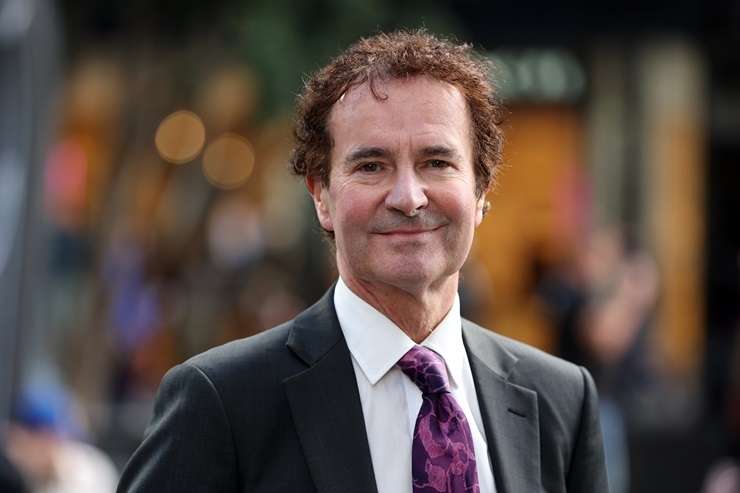
Independent economist Tony Alexander: “For Southland, Canterbury and West Coast, higher dairy incomes are relevant. This tells us other places like Waikato and Taranaki may show acceptable price rises soon.” Photo / Fiona Goodall
But with average price gains around the country now lower than before, the period during which a region’s prices might sit flat before looking well overdue for a catch-up is likely to be a lot longer than before.
If you don’t reckon you have a feel for what a region’s economic outlook might be as you contemplate where price gains could be okay in the near future, then there is an alternative. You can look at the population growth projections from Stats New Zealand.
Keeping in mind that the areas with the largest population growth also tend to have the largest growth eventually in dwelling supply, you might want to rank areas by those population projections. For instance, Stats NZ projects that Auckland will grow 39% between 2023 and 2053 versus Hawke’s Bay at 18%, Wellington Region at 14%, and Canterbury at 33%. Wellington City’s population is expected to grow just 10%, Christchurch 25%, and Dunedin 12%. Just go to www.stats.govt.nz and search for “subnational population projections”. Enjoy!
- Tony Alexander is an independent economics commentator. Additional commentary from him can be found at www.tonyalexander.nz