ANALYSIS: As had been widely expected, the Reserve Bank cut the Official Cash Rate by another 0.25% to 2.25%. This is well below the peak of 5.5% the cash rate reached during the fight to bring down inflation, and the central bank notes in its accompanying Monetary Policy Statement that there are signs that the economy is beginning to recover.
However, while the bank members only debated leaving the cash rate unchanged or cutting 0.25%, most emphasis appears to have again been placed on the volume of spare capacity in the economy – meaning high unemployment. It is expected that this spare capacity will help inflation fall away from the current 3% towards the mid-point of the target band at 2% by the middle of last year.
For good measure, the Reserve Bank noted downside risks to growth in China, the risk of disruption in equity markets should optimism about AI prove unfounded, the risk that consumers remain cautious in their budgeting, and an expectation of only mild rises in house prices from here on out.
Start your property search
None of these things is particularly surprising, and most have been mentioned before. However, what does stand out to those of us who delve deeply into the entrails for these rate decisions was the frequency with which upside risks to inflation were mentioned.
For instance, the Reserve Bank noted that the economy’s sustainable economic growth rate is now probably only 1.5% a year, courtesy of our low productivity growth. That means a risk that inflation appears with only mild growth in the economy.
It noted that household inflation expectations and business pricing intentions are running at above-average levels. It specifically noted a risk I have also been highlighting: that when growth returns, businesses will seek to quickly rebuild crunched margins by raising selling prices.
Discover more:
- Tony Alexander: Three forces shaping the housing market’s next move
- Christian couple’s life-size ark finally sells after getting $1.5m price tag
- Homeowners could get up to $15,000 as ANZ boosts its cashback to 1.5%
The bank also noted the increasing politicisation of central banks offshore and the risk that this will result in higher and more persistent international inflation. And for good measure, it noted upside growth risks from Fonterra’s return of capital to farmers and the possibility that people react more strongly to interest rate cuts than currently expected.
In the end, five of the Monetary Policy Committee members voted to cut the cash rate 0.25% and one voted to leave it unchanged. The best way to read this alongside the risks already noted is that it would take something highly negative to hit the New Zealand economy for interest rates to be cut any further.
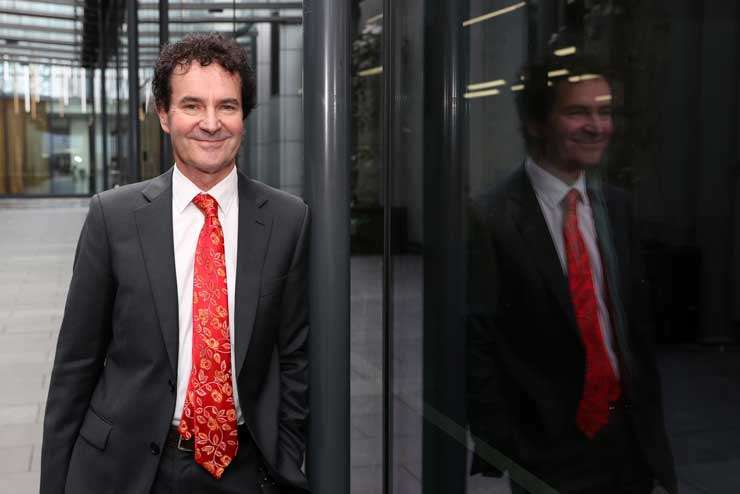
Independent economist Tony Alexander: "It is reasonable to embrace a view that we have reached the bottom of the interest rates cycle. But that does not mean that rises now start setting in." Photo / Fiona Goodall
It is reasonable to embrace a view that we have reached the bottom of the interest rates cycle. But that does not mean that rises now start setting in. As the central bank heavily emphasised, our economy has a lot of spare capacity. The question is how quickly it will get used up through 2026 and 2027 as growth gets driven upward by a wide range of factors. These include higher farm incomes, the lagged effect of low interest rates, more tourists, more foreign students, increased infrastructure investment, increased house building, cyclically recovery household spending, business investment, and inventory rebuilding.
Speaking personally, if I were borrowing at the moment, I would be happy to fix my mortgage interest rate for a period of 3-5 years – probably the latter. But these are very uncertain times still – especially offshore – so I’d give serious thought to splitting across a couple of terms just to spread the risk.
- Tony Alexander is an independent economics commentator. Additional commentary from him can be found at www.tonyalexander.nz