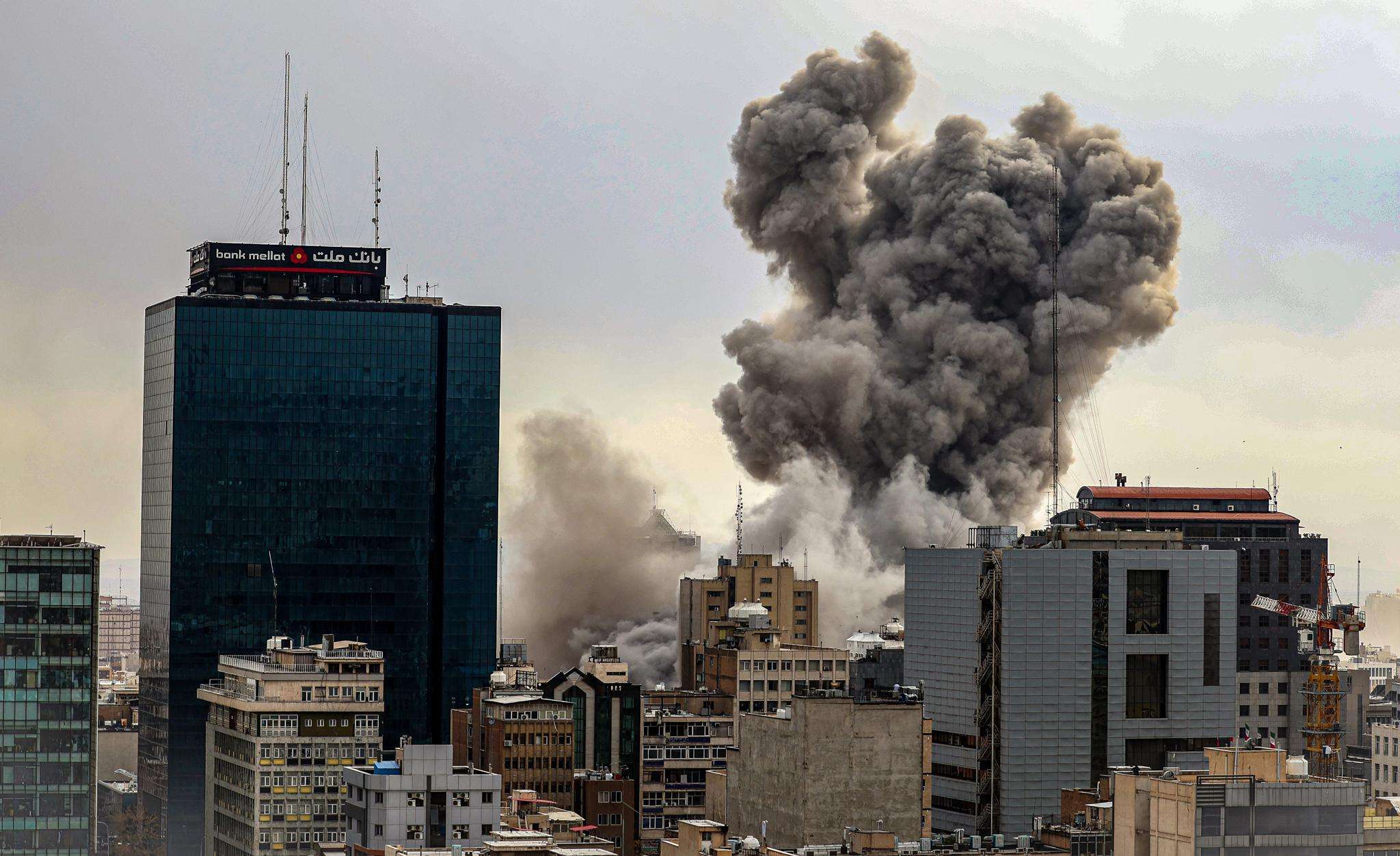
- Economists don’t expect the Middle East conflict to affect house prices or mortgage rates yet.
- Higher oil prices may impact consumer spending, adding downside risk to households facing inflation.
- Prolonged conflict could undermine confidence, but no major changes to forecasts have been made.
Economists don’t expect the war in the Middle East to affect New Zealand house prices - yet.
Start your property search
While the experts believe the US-Israel attacks on Iran are bringing new uncertainty to the global and domestic economy, and that the risks of turmoil are real, they stopped short of revising their forecasts for the housing market.
Economists from Kiwibank, Westpac, BNZ and Cotality did not think the conflict would shift house prices or mortgage rates in New Zealand.
Kiwibank chief economist Jarrod Kerr told OneRoof that financial markets typically overreacted in the early stages of a geopolitical crisis, but then would settle into new patterns. He advised Kiwis to stay cool with long-term investments, such as housing.
“When the Ukraine war kicked off, we were all really worried, and then it just became the norm, unfortunately,” he said.
However, Kerr did note that the longer-term impacts of major geopolitical events were often underestimated. A lot of New Zealand exports went through the Middle East, and there would be disruptions, combined with uncertainty about the endgame: “Is it going to end in six weeks, six months, six years?”

Kiwibank chief economist Jarrod Kerr: “The Reserve Bank should be able to look through near-term volatility." Photo / Supplied
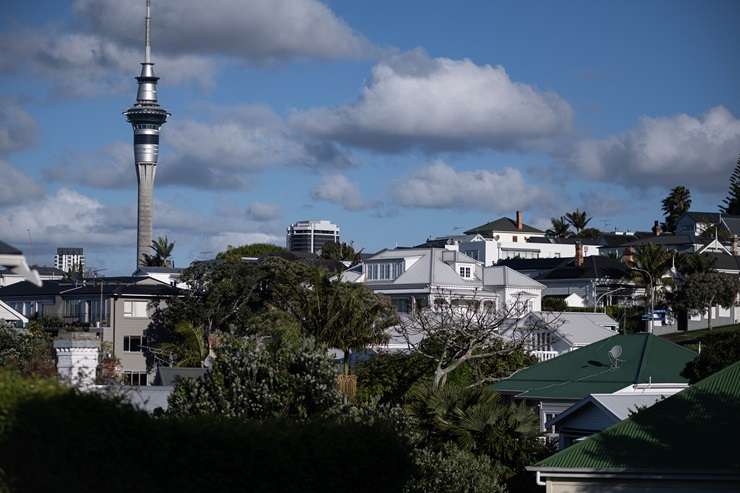
A prolonged conflict, however, could dampen New Zealand house prices and demand in the wider economy. Photo / Alex Burton
Kerr did not expect a direct impact on property prices from the conflict itself, saying a more immediate effect would likely come through higher oil and petrol prices, which acted as a tax on consumers in an already weak household spending environment.
“That’s actually adding some downside risk to households who are just facing yet another spike in inflation, which limits their disposable income, which limits their ability to spend money elsewhere, so this isn’t helping at all,” Kerr said.
Kerr did not think the conflict would lead to an earlier-than-expected rise in the Official Cash Rate. “The Reserve Bank is trained and should be able to look through near-term volatility. If anything, it’s making matters worse for households and argues for more caution on behalf of the Reserve Bank rather than tightening.”
Kerr said wholesale interest rates might lift slightly amid the uncertainty but expected them to come back down. “I don’t see big moves in mortgage rates on the back of this,” he said.
Discover more:
- Tony Alexander: Who's calling the shots when there are nearly 36,000 homes for sale?
- 'Can you save us?': Agent races against the clock to sell home before mortgagee auction
- Revealed: The 20 suburbs where buyers are paying pre-Covid prices
But if the conflict dragged on, it could undermine confidence in the housing market by causing businesses and households to delay decisions. “It’s yet another potential reason why an investor in the housing market might go, ‘You know what, I’m just going to wait a few months’,” he said.
That mattered because housing fed into household spending and construction activity. “If house prices are going nowhere, that’s another thing that’s dampening households’ ability to buy stuff.”
The housing market was important to the New Zealand psyche, Kerr said, and if house prices don’t move for several years, people are less likely to move, renovate or extend, and anything that postponed these decisions would kill growth.
Westpac’s chief economist Kelly Eckhold said the uncertainty meant confidence intervals around forecasts had widened: “They’re always kind of wide anyway, but they’re even wider now.”

Westpac chief economist Kelly Eckhold says the best-case scenario would see the conflict resolved quickly, allowing energy prices and risk premiums to fall. Photo / Fiona Goodall
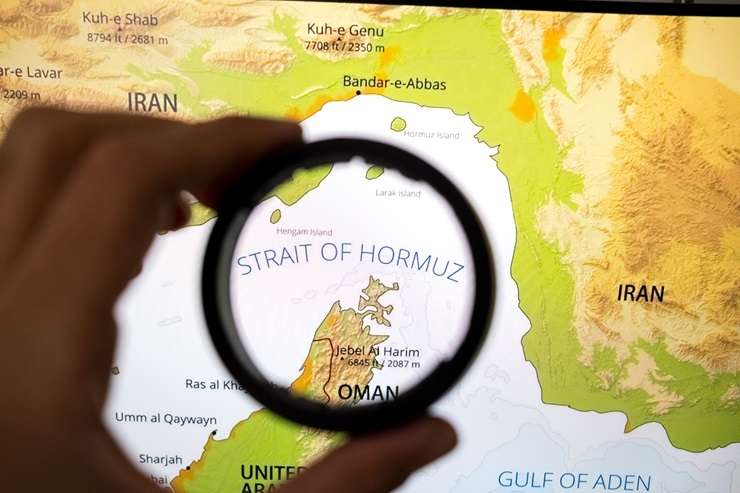
The Strait of Hormuz, near Iran, is a key shipping lane for much of the world’s oil. Photo / Getty Images
When economies were hit by energy-related shocks, from mild impacts to severe disruptions, there were a range of outcomes, he said. In the 1970s, 1980s, and the Gulf War of the early 1990s, large oil shocks were often associated with sharp falls in GDP growth.
“I don’t think there’s any call to cancel the recovery just yet but we do certainly see a situation where we are going to be dealing with higher inflation through petrol prices, perhaps other traded goods prices, for a while and possibly the potential we do get some weaker business sentiment as people internalise what they’re looking at on the telly every night.”
Eckhold did caution that the situation in the Middle East was much more serious than anything that had happened in the previous 12 months, including the US-imposed tariffs.
“The tariff thing was obviously quite hard-hitting at the time, but you could see a path through where reasonable people would have actually come to negotiations, and that's kind of basically what happened.”
However, the Middle East supplies a good proportion of the world’s energy and the Strait of Hormuz - one of the world’s key shipping lanes for oil - was currently closed. Prolonged conflict and disruptions to supply chain routes could have significant global implications. “I think there are certainly interest rates implications we have to think about,” Eckhold said.

BNZ chief economist Mike Jones: "It’s very early days, and we don’t know how long this conflict will last.” Photo / Fiona Goodall
One and two-year mortgage rates were increasingly likely to reflect a more measured economic recovery than might have been hoped for before, but Eckhold also called for calm. “I don’t think there should be cause for panic. I don’t think there’s any call to cancel the recovery.”
Economic indicators still pointed to growth continuing above trend, interest rates remained low, and agriculture was performing strongly. “It’s not as if we’re in a situation where we’re at the height of some kind of credit boom.”
The best-case scenario would see the conflict resolved quickly, allowing energy prices and risk premiums to fall and the positive outlook for the New Zealand economy to be restored.
The worst-case scenario would be a delayed recovery, with house prices continuing to move sideways or falling slightly.
BNZ chief economist Mike Jones said the Middle East conflict had injected a “lot of uncertainty” into the outlook, describing “pretty unsettling times”. But he, too, did not expect a large impact on the housing market unless the conflict escalated significantly or dragged on for a long period.
“It’s very early days, and we don’t know how long this conflict will last.”
If the conflict were prolonged, any housing impact would likely come indirectly through weaker economic growth and changes in interest rate expectations. “They are the fundamental drivers that tend to drive the housing market.”
For now, the BNZ had not changed its forecasts and was in a “watching, worrying, waiting mode” given how rapidly the situation was evolving. “If you start changing forecasts, you’re probably going to be changing them just about every day at the moment,” he said.
While uncertainty could lead to temporary impacts on the housing market, Jones said there was ultimately always a latent need for people to buy and sell.
Cotality chief economist Kelvin Davidson said the conflict was likely to have a familiar pattern of short-term inflation pressure followed by medium-term economic weakness, depending on how long it lasted.
In the near-term, he said, higher petrol prices and potential shortages or shipping delays could push inflation higher, and that was an unwelcome development given inflation was already at the top of the target band.
But over the medium-term, global uncertainty would likely slow economic activity, bringing inflation back down again.
What the Reserve Bank did in that environment was up for grabs, but central banks were well aware of the need to look through short-term inflation shocks that were beyond their control.
The key risks from the Iran war were less about oil production and more about potential disruptions to global shipping routes, which could echo supply-chain problems seen during Covid. Even so, Davidson did not think the conflict would have a major impact on New Zealand.
“Personally, I would make no different decisions off the back of that than what I would have done a week ago. In terms of the Reserve Bank, it’ll probably be much the same, not panicking necessarily but certainly keeping an eye on it.”
- Click here to find properties for sale