- Property coaches Steve Goodey and Nathan Broughton share strategies for winning property auctions, despite preferring to avoid them.
- Goodey advises doing homework, attending auctions and bidding last to create a psychological advantage.
- Broughton emphasises reading body language and negotiating outside the auction to avoid bidding wars.
Two of New Zealand’s leading property coaches don’t really like auctions, but they do know how to win them.
Start your property search
Steve Goodey and Nathan Broughton revealed the tips and tricks that have served them in auction rooms around the country.
Goodey, a Wellington-based property investor and coach, typically buys cheap properties with high yield, so he avoids auctions wherever possible. “I don’t like competing with people if I can help it,” he says.
However, buying under the hammer is sometimes the only option available. His advice for prospective buyers is to do their homework before stepping into the auction room. That means finding out from the agent who else is bidding and what buyer feedback has been.
Goodey also advises buyers to attend some auctions to get a feel for the auction process and the auctioneer.
“Just go and sit in the room and see what happens. Because an auction to auctioneers is a bit of theatre. Quite often, they are creating false enthusiasm. They know that the veins are popping at the top of your head, that you are quite nervous and that you’re spending a lot of money and that you are also trying to think of tactics and that you are motivated to purchase. They are playing on that.”
Goodey says that when he turns up to bid, he is discreet and doesn’t like to give much away. “I like standing at the back of the room because you can see everybody in the room and see who is twitching, who is nervous and who is putting a half hand in the air – all that type of thing.”

Property coach Steve Goodey: “The only way to win at an auction – winning meaning buying the property - is to be the last person to bid.” Photo / Supplied
He always refuses the offer of a bidding paddle or auction book to avoid tipping anyone off about which property he has his eye on. “Real estate agents will come up and go, ‘Which one are you interested in today, Steve?’, and I just say, ‘All of them, thanks for asking. Please step away from me’.
“The agent is not your friend. The agent is there to make you spend your maximum number, that’s the job they are paid to do, and they are there to work for the vendor.”
Goodey has a lot of different auction strategies, but one of his favourites is bidding last, after everyone else has run out of steam. “If two or three people go hammer and tongs with each other early on, you wait and come in right at the very end. They believe that you are just starting when they are ending. There’s a lot of psychology involved,” he says.
Discover more:
- Is the housing slump ending or just pausing? What the latest figures hint at
- No, Mr Bond, I expect you to buy: ‘007’ home shatters house price record
- 'Save me from myself' - Rundown manor that once hosted the Queen for sale
He’ll also, at that point, try to create the illusion he has lots of money. If his competition is going up in $1000 increments, then he might go up in $5000 increments to knock them out of the water.
“This is why I like to bid last at an auction. You can have 50 bids and seven people going left and right for a property, and they all come second to the last guy to bid. The only way to win at an auction – winning meaning buying the property – is to be the last person to bid. So, you don’t need to do 15 bids warming up to it, you just need to be the last guy standing at the very, very end.”
He also says bidders shouldn’t be afraid of taking control of the proceedings; they can ask the auctioneer if the property has met the reserve or request a reduction in the bidding increments.
“You can cut bids down. If they are looking for $25,000, you can go, ‘Look, I’ll go up $10,000’, and you can slow the bidding down.”
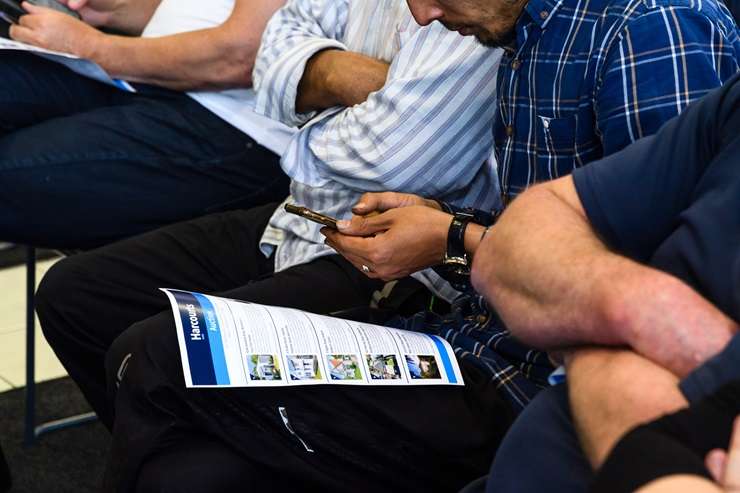
Auctions can be a nerve-wracking process for buyers and sellers, but they are also the most transparent method of sale. Photo / Getty Images
Christchurch-based Nathan Broughton also tries to avoid auctions if he can, telling OneRoof that the process often puts pressure on both the buyer and seller to do a deal on the spot. “I think it favours agents more than anything else,” he says.
When he does find himself in an auction room, his favourite spot is on the side. “I always stand at the side of the room so I can see everyone, see people’s body language, especially if you are competing with [owner-occupiers] because they will be nervous. You can read a lot about where someone’s mindset is by their body language and what they do.”
Broughton likes it when auctions pause for negotiations because often the most productive negotiations happen behind closed doors. “I’m pretty happy to turn and walk away, but the vendor is pretty keen to sell generally,” he says.
“But what I will always do is say – once we’ve reached a price that we are happy with – I will say, ‘This is my price here outside of the auction. I’m not going to go back in the room with it’.”

You may have fallen in love with the house you’re bidding on, but being too emotional at an auction can lead to overpaying. Photo / Ted Baghurst
He does this to remove the risk of someone reigniting a bidding war after he has made all the effort to strike a deal. “The chances are you go back in the room, and someone else is there going, ‘Oh yip, I’ll give you another $5K for that’, and then the auction is back on again.”
Ray White head auctioneer Sam Steele oversees more than 1000 auctions a year and has seen his fair share of bidding strategies.
“You see every type of person and every type of tactic and everything that’s successful,” he says.
His top auction tip is to put the competition under pressure by bidding quickly and strongly. “If you are bidding really quickly, every single time you will hold the highest bid. You don’t have to think about anything because you hold the highest bid and are in control. And if you’ve got someone against you who is having to have like a mini-conference every time they bid, they are having to make a potentially life-changing decision very quickly.”
Steele, who bought his own family home at auction, says placing larger bidding increments also seems to work, adding that dropping bid amounts, for example, from $20,000 to $5000, might be interpreted as running out of money.

GV Financial director Gareth Veale says bidders should always be prepared to walk away. Photo / Supplied
“So, trying to bid strongly up until your last moment and just be really, really strong and have that ability to show that you almost have unlimited funds because the moment you drop those bidding increments, you just give more encouragement to your competition again.”
Steele says sitting back until the end is one of the worst things a bidder can do because it gives their opponents time to get comfortable with the bidding process. “So again, you are actually making it easier for them, not making it more difficult.
“My reaction to anyone who says they are going to sit back and see what happens first is proactive bidding beats reactive hope almost every time.”
Christchurch mortgage broker Gareth Veale, director of GV Financial, says just because a property is going to auction doesn’t mean it will always sell under the hammer.
He recently had clients who bid $910,000 on a new build in Mairehau, in Christchurch, only to be outbid by a vendor bid of $1.04m. The property passed in and went into a deadline sale. His clients held strong at $930,000, and after the two parties went back and forth about six times, his clients’ offer was finally accepted.
Veale also warns people not to get emotional about the property they are bidding for. Doing so can lead to overpaying.
“You can fall in love with a place, but you’ve always got to know that there’s another property that will tick the same boxes just around the corner, it just hasn’t been listed yet. As long as you go in there and know what you are willing to pay.”
An auction can also help determine market value if multiple people are bidding, he says. “Whereas in negotiation or a deadline sale, you don’t get that insight – in the auction room, you can get that insight.”
- Click here to find properties for sale