1. A "good" rise in the unemployment rate
Data from Stats NZ last week showed a small rise in the unemployment rate from 5.3% to 5.4% in Q4 last year – clearly, not ideal. But if you’re a "glass half-full" person, there were still positives in the data. Most notably, employment rose, i.e. more jobs were created and filled. It’s just that the working age population got bigger, and also the percentage share of those people actively engaged in the labour force also rose, i.e. the participation rate went up.
In other words, labour supply rose faster than demand, and hence the unemployment rate increased, which is far better than a rise due to outright job losses. Indeed, you can also view a higher participation rate positively, too, as it signals more people who were previously discouraged from even looking for work are now feeling more optimistic.
All in all, we obviously want the unemployment rate to fall. And this may not happen to any significant degree until the second half of the year. This suggests the first half of the year could also remain pretty soggy for property values. But the jobs market turnaround will happen.
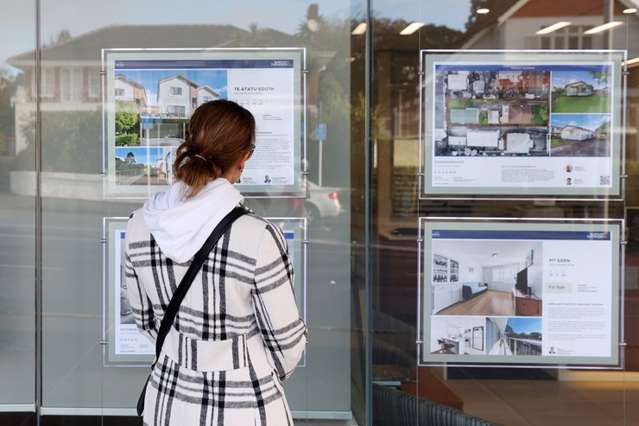
Start your property search
2. Property values going nowhere
Speaking of prices, the Cotality Home Value Index showed almost no change in January (technically a 0.1% drop in the national median to $802,617), but let’s call that flat). There are regional differences. Continuing to underperform are Auckland (-0.3%) and Wellington (-0.1%), but enjoying some growth are Tauranga (+0.3%), Dunedin (+0.4%), and Queenstown (+0.8%). By property type, houses and townhouses are faring slightly better than apartments.
The year ahead could stay fairly balanced. On one hand, lower mortgage rates and a better economy would tend to bolster property sales and values. But the physical stock of dwellings has risen lately, the mood remains cautious, and the debt-to-income ratio limits are sitting in the background.

Cotality chief economist Kelvin Davidson: "Lower mortgage rates and a better economy would tend to bolster property sales and values." Photo / Peter Meecham
3. A better year beckons for house-builders
Just touching on housing supply again, last week’s figures from Stats NZ remained positive. Just over 3100 new dwellings were consented in December 2025, around 25% more than in December 2024, and the sixth increase in the past seven months. This is clearly a change in direction, with the annual rolling total now up to 36,600, the highest since December 2023. It’s great news. More work for builders in the months ahead as these consents turn into actual projects, and, of course, more new supply should help to support housing affordability.
4. A big shift back to fixed mortgages?
On Tuesday this week, we’ll get Reserve Bank data on which loan types borrowers took out in December. There was a spike in people going with floating rates in November, in the run-up to the last OCR call for 2025. But with the clear signal at that meeting that rates have reached a floor, it wouldn’t be any surprise at all to see a big shift the other way in December’s data, with more people fixing their mortgages, and potentially for longer periods too.
5. More hints of a turn in the migration cycle?
Stats NZ will be releasing the December migration data on Friday. There have been hints lately that arrivals are slowly turning around and departures stabilising (admittedly at a high level). More of the same would be welcomed by landlords currently faced with flat-to-falling property rents, although it may be some time before pressure starts to build again on that front.
- Kelvin Davidson is chief economist at property insights firm Cotality