New Zealand's commercial property market is attracting a widening pool of offshore investors, with the conversation among global capital shifting from whether to enter the market to how much to commit, according to latest research from JLL.
The firm's Investment Perspective report shows commercial property transaction values reached NZ$4.50 billion in 2025 for properties of NZ$5 million or more, up 9.2 per cent on the previous year and extending a recovery now running across two consecutive years.
On the strength of recent deal activity, 2026 is shaping up to deliver another increase on that figure.
"Investors who once asked whether New Zealand deserved a place in their portfolio are increasingly asking how to size the exposure they already have," says Chris Dibble, Head of Research and Strategic Consulting at JLL New Zealand.
Start your property search
"First-time entrants continue to arrive too, broadening the investor base and adding to the depth of a market that is still maturing."
Over the last two years, offshore investors have accounted for close to NZ$1 billion in straight commercial and industrial deals across Auckland, Wellington and Christchurch.
These regularly represent between 10 and 20 per cent of annual sales activity and buying at average deal sizes nearly double those of domestic buyers.
That figure understates the full picture.
"Once you factor in joint ventures, percentage stakes, data centres, hotels, purpose-built student accommodation and development capital, the total offshore capital deployed runs to considerably more," Dibble says.
"Capital is arriving with intention."
The most recent example is one of the largest the market has seen.
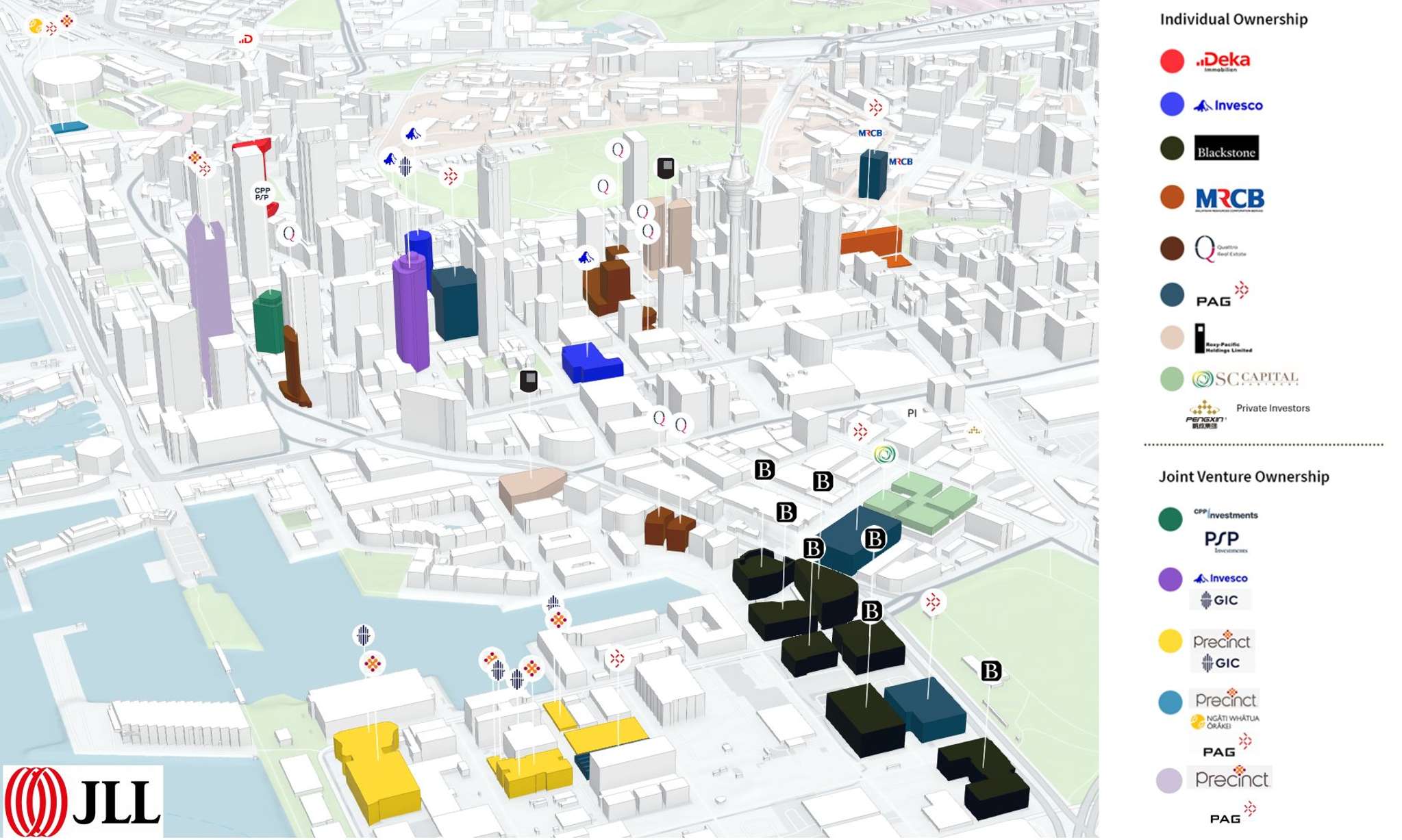
Asian fund manager PAG has agreed to acquire a 50 per cent stake in Auckland's PwC Tower from Precinct Properties in a deal valuing the premium tower at NZ$600 million, reportedly the largest single-asset office transaction in the country's history.
The acquisition remains conditional on Overseas Investment Office approval.
"A deal of that scale, in one of the most valuable office assets, is a clear signal of how offshore exposure to New Zealand is increasing," Dibble says.
A strong foundation
Dibble points to New Zealand's standing on global governance and transparency measures as central to the investment case.
The country ranks seventh globally for real estate transparency in JLL's Global Real Estate Transparency Index, and first for transaction processes and governance of listed vehicles.
"This describes a market where property rights are clear, contracts are enforceable, and the operating environment is predictable over the holding periods that matter to institutional investors," he says.
"Governance risk has a way of materialising at the point of exit rather than entry. New Zealand's consistency here is a material part of the case."
The tax settings reinforce it, with no stamp duty on acquisitions and generally no capital gains tax on commercial property held for investment.
Sector fundamentals
Industrial has led the recovery, though the near-term picture is more measured.
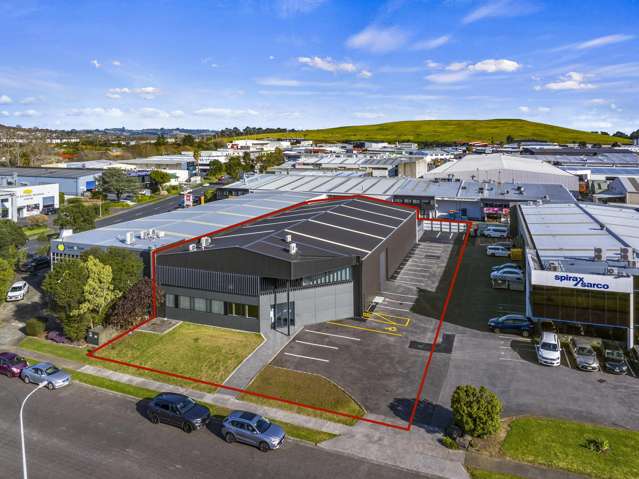
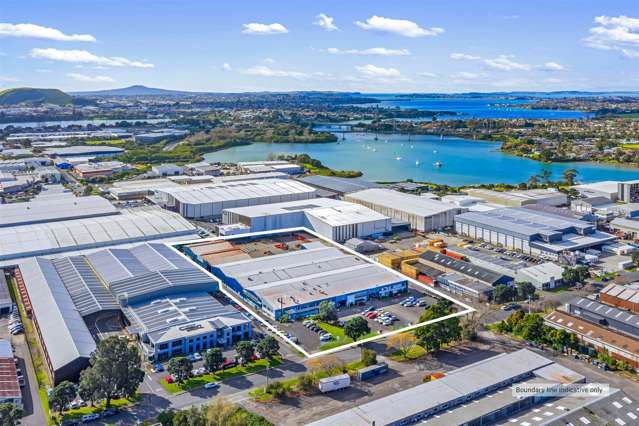
Auckland industrial vacancy has lifted 30 basis points to 4.0 per cent, now around 260 basis points above its mid-2023 trough, as the market absorbs a solid pipeline of new warehouse completions.
Even so, that rate sits comfortably below Sydney's 5.8 per cent and Melbourne's 5.2 per cent, and industrial assets accounted for more than half of all commercial transaction sales value in both 2024 and 2025.
"The structural land shortage in key precincts continues to underpin the long-term case, even as the sector works through the current wave of completions," Dibble says.
"That pipeline is lifting vacancy modestly, but it is also giving occupiers a broader range of quality options than they have had in some years.
"It is a measured picture rather than a runaway one, but for investors seeking durable income, the fundamentals remain well-supported."
That confidence is reflected in who is buying. Brookfield has established a significant presence through its NZ$1 billion joint venture with Tainui Group Holdings at the Ruakura Logistics Intermodal Superhub in Hamilton.
ESR, whose roots trace back to its Logos platform near Auckland Airport, has continued to add sites at Wiri.
Longer-standing arrangements are deepening too, with JP Morgan Asset Management's Industre Property vehicle, formed with Stride Property Group some years ago, continuing to build scale, and Mercer holding a NZ$252.7 million stake in Goodman's Highbrook Business Park.
Retail has proven more resilient than many expected, with transaction volumes reaching close to NZ$1.5 billion in 2025, and offshore interest a feature here too, particularly from Australia.
The Westfield portfolio is held in a long-standing joint venture between Scentre Group and Singapore's GIC, while Australian private investors including Precision Group, Angaet Group and, more recently, Fawkner Property have been active across well-located assets.
"Australian capital increasingly treats New Zealand retail as a natural extension of its domestic universe," Dibble says.
"It is drawn by familiar market dynamics, defensive income, and the relative scarcity of quality assets in dominant catchments."
Policy moving in the right direction
Reforms to the Overseas Investment Act became fully operational on 6 March 2026, replacing a multi-stage approval process with a single risk-based National Interest Test, with low-risk investments now targeted for approval within 15 working days.
The Active Investor Plus visa programme has grown rapidly alongside, with 609 applications representing a potential investment pipeline of NZ$3.57 billion as at March 2026.
A more accessible financing environment adds to the appeal, with the Official Cash Rate at a stimulatory 2.25 per cent and the New Zealand dollar, trading around 57 US cents, offering offshore buyers a further entry advantage.
"The names arriving for the first time sit alongside those already deepening their positions," Dibble says.
"That is what a maturing market looks like. The conditions that brought capital here are, if anything, more compelling now than when many of those positions were first taken."
- Supplied by JLL