- High-end real estate agents hope the foreign buyer ban will be lifted in the Budget.
- David Seymour and Andy Foster were mentioned by agents, but both denied any confirmed changes.
- Economists expect little focus on housing in the Budget, with current policies addressing supply issues.
Top of the wish list for high-end real estate agents for the May 22 Budget is the lifting of the foreign buyer ban, but there is no clear indication this will happen.
Start your property search
Rumours of the ban being lifted have swirled around the industry since March last year, with some agents telling OneRoof that politicians had directly told them a decision to reverse the 2018 Labour policy was imminent.
One of those who supposedly told agents the ban would be lifted was ACT Party leader David Seymour, but Seymour told OneRoof it was news to him.
“I’m frequently asked about this issue and appreciate lots of people would like to see a change,” Seymour said, via a spokesperson.
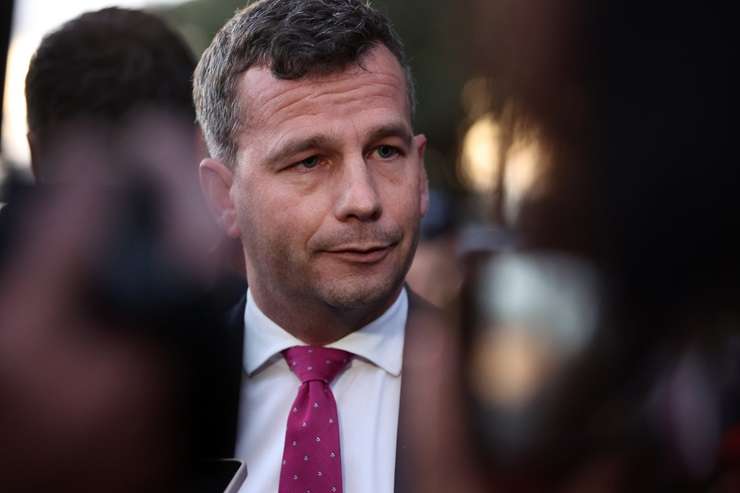
ACT leader David Seymour: “There is no decision I’m aware of, and that it’s wrong to speculate unless you know something I don’t.” Photo / Getty Images
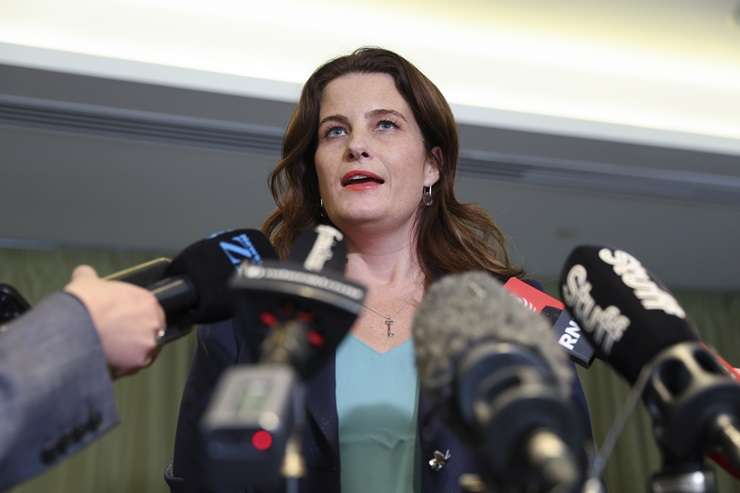
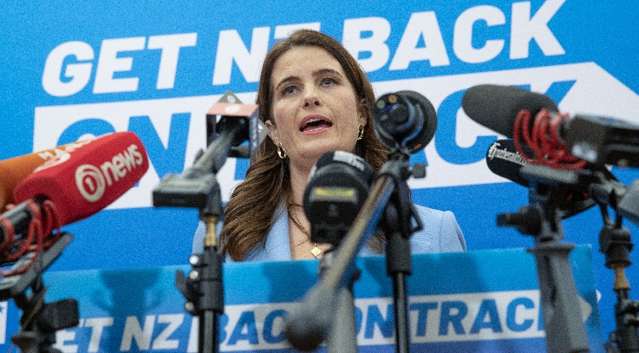
Finance Minister Nicola Willis isn’t “ruling things in or out ahead of the Budget”. photo / Getty Images
“However, every time I’ve been asked I’ve told them there is no decision I’m aware of and that it’s wrong to speculate unless you know something I don’t.”
Another politician named by agents is NZ First MP Andy Foster.
Foster, who is an ex-mayor of Wellington, told OneRoof: “I am aware of overseas interests in being able to buy top-end residential property (not talking the previously suggested $2m) and invest in productive business/business development, which IMO [in my opinion] is the real potential for NZ.”
However, in terms of any comment on government thinking, Foster referred OneRoof to relevant Government ministers.
OneRoof reached out to his boss, NZ First leader Winston Peters, who has previously objected to lifting the ban, but received no reply from Peters’ office.
Discover more:
- Tony Alexander: Reasons to be cheerful - but don't expect a boom anytime soon
- Cooks Beach baches for under $1m - entry-level holiday homes dropping in price
- Shortland Street star: 'I'm a single, fabulous woman - I no longer need this mansion'
OneRoof also approached Finance Minister Nicola Willis, however, her office would only say “the minister is not ruling things in or out ahead of the Budget”.
Steve Koerber, a high-end agent for Bayleys Remuera, in Auckland, has not heard the rumours this time, but said expectations of a reversal had been high among agents.
“I think certainly for the last two or three budgets every real estate agent’s wish would be for some relaxation of the foreign buyer ban,” he said.
Australia had recently introduced its own foreign buyer ban ban but only for two years, whereas New Zealand’s ban had no end date, he said. “I think for the entire economy, when you get people coming into the country who have got, say, $100 million, so they are worth $100 million, well, look at what they can bring with them – the skills, the contacts, the spending, the relatives, the business associates.

Experts think the Government will hold off announcing anything housing-related in the May 22 Budget. Photo / Fiona Goodall
“There’s just so much. It feels to me like we’re closed for business, we’re not open for business.”
Koerber did not think people at the lower end of the market would be impacted by a reversal of the ban, as there was a big disconnect in the economic environments of those markets. He thought a $10m-plus threshold would put the rest of the market at ease.
With Trump’s America losing some of the trust it once had, a lot of people with money might start to look elsewhere, he said, “so why don’t we invite a little bit more of it here?”
There could be an uptick in American interest, but there were tax hurdles for such buyers. “The American tax system is brutal. Every American who migrates out of America, lives elsewhere, has to put a tax return back through America. It’s one reason we never see a flood of American buyers down here.”
Cotality chief economist Kelvin Davidson did not think the Budget would focus on the housing market much at all. “It’s sort of functioning OK. We’ve got some supply coming through. First-time buyers are doing OK. There’s options for investors,” he said.

Cotality chief economist Kelvin Davidson: “I don’t think there are any obvious policy areas that are crying out for attention”. Photo / Peter Meecham
“I don’t think there are any obvious policy areas that are crying out for attention.”
The Government was already pushing hard on housing supply issues, such as introducing self-certification for builders, changing the Resource Management Act and looking at council processes: “They are already looking at the housing market in lots of other ways,” Davidson said.
As for the foreign buyer ban, there was an outside chance it could be relaxed because of the revenue it could generate through a stamp duty. The Government had already made announcements about wanting to attract foreign investment, so amending the foreign buyer ban would be logical.
“I mean, if they are about more generally getting some foreign capital into New Zealand with the golden visas and all that, it kind of seems a bit weird to say ‘OK, come to New Zealand, bring your money, bring your businesses, we want you here but oh, sorry, you can’t buy a house’.”
However, the Government could announce changes to the ban outside of the Budget, Davidson said. “Politically, they might want to announce that as its own thing.”

Infometrics CEO Brad Olsen says the “fiscal settings are pretty tight at the moment”. Photo / NZME
Tom Rawson, director of Ray White Manukau, has a different Budget wish list: he would like to see the Government help those at the lower end of the socio-economic scale into their own homes, though does not hold out much hope.
In the 1950s, the governing National Party allowed the sale of state houses to tenants, and cheap mortgages were available through the State Advances Corporation. Rawson said some thinking around those sorts of avenues would be “fantastic”.
“I’ve heard and spoken to so many people who bought houses through Māori Affairs and things like that back in the day,” he said.
“If we could convert a lot of our state occupants into their own homes – a lot of them never want to leave where they’re at – if we could somehow figure out a program where Housing New Zealand helps people own houses rather than provides roofs, that would be cool.

Some agents are hoping for more incentives for first-home buyers in the Budget. Photo / Fiona Goodall
“If they looked at how much rent they’ve accumulated from those houses over the years and kind of took it off the purchase prices of the properties, or something along those lines, to incentivise people to purchase and actually have an asset would be cool.”
Rawson said he had recently worked with some first-home buyers of Pasifika descent who had ambitions of purchasing a home, but the rules made it very hard.
“We were conditional with the family for almost 100 days and then they lost their job, had to get a new job, and that set them back another 90 days, because you need three months of steady employment before the banks will consider your income viable.”
In another case with a truck driver, the bank heavily reduced the amount of lending the person could afford on its test rate. “The uncertainty at the lower end of the economy makes it really tough, so they just go oh, f*** it, it’s easier to rent,” Rawson said.
“They are going, ‘oh well, we’ll just keep paying $1000 a week in rent rather than $1000 a week on the mortgage’. I would love to see more New Zealanders owning their own homes.”
Principal economist for Infometrics Brad Olsen was not expecting much in the Budget for the housing market aside from some possible “tinkering around the sides”.
“Given the fiscal settings are pretty tight at the moment, I wouldn’t expect that there would be a huge ability to do a lot.”
Infometrics would be looking for Treasury’s housing price forecast, and Olsen expected the slower pickup would be reflected there.
He was also interested in capital investment levels, and also investment in the likes of social housing, and what that might mean for build levels.
“We’ve seen in the private sector, they’re not building as much in recent times, and Government have really pulled back on their social housing commitment as well, so it’s probably a question of, is there expected to be more building and construction or not, and at the moment I don’t think there is a strong tone that it will necessarily pick up.”
- Click here to find properties for sale