Auckland’s rail network dates back more than 150 years, when the North Island’s first rail line was laid between Auckland City and Onehunga in 1873. And while development has been patchy over subsequent years, the network is about to get a significant boost with the opening of City Rail Link, which promises to shorten commuting times into the central city. Extensions of the southern line to new developments in Drury and Paerata will also bring the city closer together.
But what do the new stations and improved services mean for house prices?
The lines stretch more than 200km across the city’s western, central and southern suburbs, connecting 45 stations.
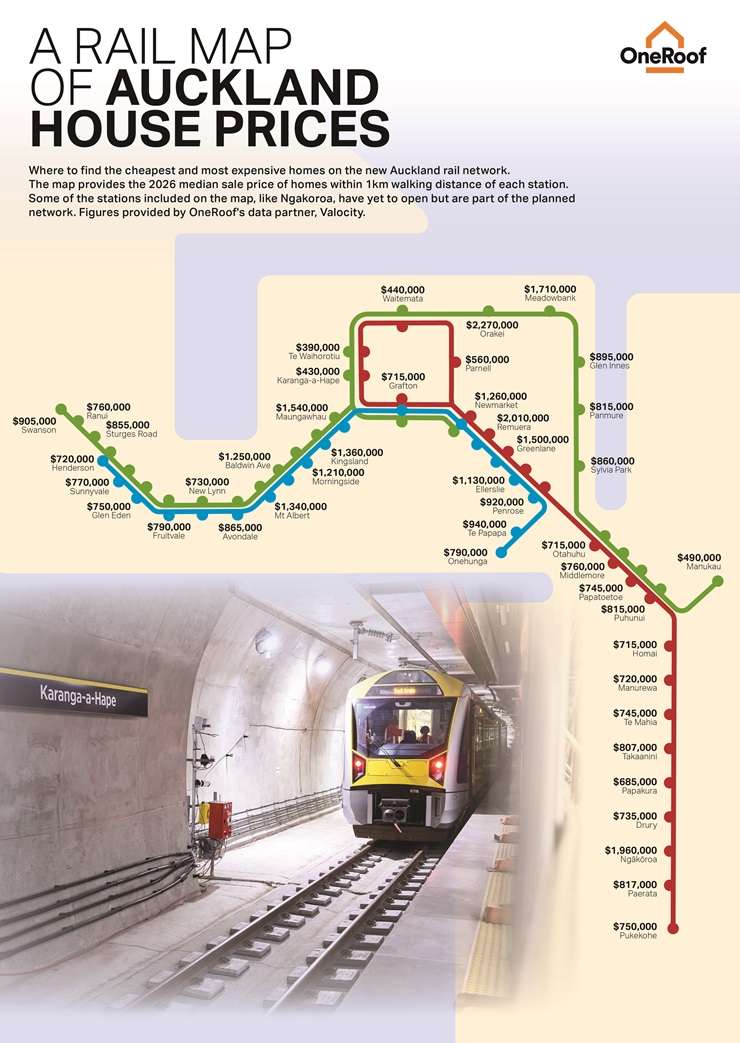
OneRoof and its data partner Valocity have reproduced the familiar rail network map but added the median sale price for 2026 for homes within 1km – a 20-minute walk – of each station. The data covers over 100,000 residential properties, including apartments, townhouses, units, houses, and lifestyle blocks.
Start your property search
Where stations are closer together, the variation in median prices is marginal due to overlaps in the properties examined. For example, the price difference for the CBD stations – Waitemata, Te Waihorotiu and Karanga-a-Hape – is between $10,000 and $50,000.
Artwork / Beth Walsh
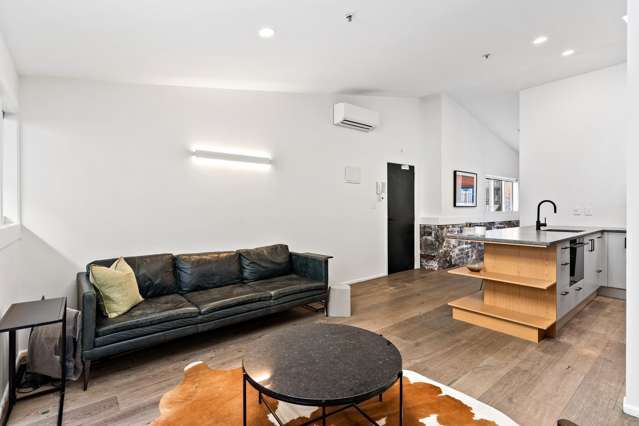
In other major cities, properties get more expensive the closer the stations are to the CBD. In Auckland, as the map shows, that’s clearly not the case. The three stations with the lowest median sale price are Waitemata, Te Waihorotiu and Karanga-a-Hape, all in the CBD. That’s because most of the homes for sale in the city centre are shoebox-style apartments or leasehold apartments.
Prices do jump considerably several stops out of the CBD, in Remuera and Orakei, where there are more high-value standalone houses. The median sale price in Orakei is the map’s highest, at $2.27m. Remuera is the next highest, at $2.01m. The two stations that are furthest from the CBD, Swanson in the city’s west and Pukekohe in the city’s far south, have median sale prices of $905,000 and $750,000, respectively.
The map also reveals some unexpected house prices around certain stations. Parnell’s median sale price in 2026 is just $560,000, a surprising figure for a suburb synonymous with multimillion-dollar mansions. The anomaly is largely explained by the station’s location. Its 1km catchment sits closer to the CBD than Parnell’s blue-chip streets, such as St Stephens Avenue, and captures a large concentration of leasehold apartments near the university and city centre.
OneRoof talked to agents along the rail network to get a sense of what the market is like in their patch. All thought the CRL was a positive and had come up in conversation with buyers, although opinions differ on whether or not it will boost property prices in the near future.
---------
City Sales agent Scott Dunn, whose patch covers properties near Waitematā (Britomart), Te Waihorotiu and Karanga-a-Hape, thinks investors will pounce once the CRL opens.
Globally, real estate next to train stations has increased in value, and he believes existing and new-build apartments will do well out of the new transport hubs. “Investors always like to research and get a jump on the market,” he said.
He believes the area around Karanga-a-Hape will benefit most, and if he were a buyer, he’d look at apartments near the Beresford Square entrance to the Karanga-a-Hape station.
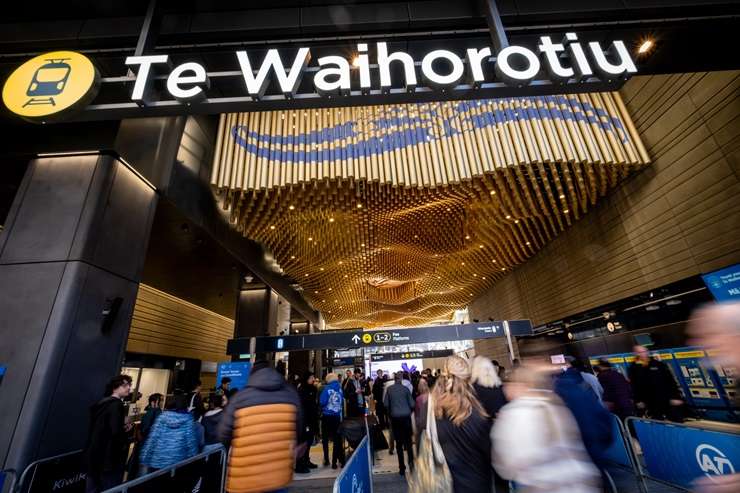
Homes around the new Te Waihorotiu station are some of the city’s cheapest. Photo / Alex Robertson
“The Britomart precinct is already really thriving. What has been struggling since Covid is uptown around Karanga-a-Hape. That’s where I expect it’s going to see the biggest lift because it opens up all the shopping, the bars and the restaurants. I work on K Road. I’m an ever optimist, so I think if there’s anything that could turn it around, it’s definitely the CRL.
“Once businesses in the city are thriving and there’s more stability with shopping and dining, it will become the destination that it was pre-Covid, and will attract people from the suburbs again.”
---------
Auckland’s inner-west suburbs are also looking like winners.
Ray White agent Tim Hawes said buyers in his patch already value proximity to the rail network – and the CRL’s new loop will speed up the commute. “It’ll be eight minutes from Kingsland and 12 minutes from Morningside rather than 20 minutes or 30 minutes,” he told OneRoof.
The promise of increased service – at peak, there will be one train every five minutes running through the city centre, and one train every 10 minutes for the rest of the network – will also favour homes in the neighbourhood.
“You’ve got what are already considered lovely, proximal, leafy suburbs through these areas and then you’ve got this extra connectivity. We are one of the more connected suburbs in Auckland.”
Buyer behaviour has already started to shift in anticipation of the CRL, and properties around the stations would attract a premium, he said. “As soon as there is more demand, then prices will go up. But not a sudden change. There has to be a trickle-down over a year to 18 months to two years.”
---------
Homeowners around Newmarket, Parnell, Remuera and Greenlane stations have a cohort of residents who are wedded to their cars. However, rail improvements and subsequent development around these hubs are likely to bring in more young people who want better public transport, Barfoot & Thompson agent Dermott Kelly told OneRoof.
The CRL may well change buyer behaviour in these established suburbs, he said. “We’ve got a lot of [Kiwis] coming back into the country. If you’re coming from London, you absolutely understand the importance of being close to a rail station. So I think it’s very, very good for values around those CRLs,” he said.
“Land is very expensive, thus car parks are very expensive. So, it means that a much younger generation can potentially afford to live in a place that’s much more accessible to the city where they might be working.”
For some local owners, the CRL and consequent development around the stations wasn’t a positive, Kelly said. “There’s concern from current owners around what used to be areas zoned single house or mixed suburban suddenly becoming mixed terrace housing. A lot of theoretical infill housing may be coming their way.”
Despite that, interest in properties close to stations in his patch was growing. “I would absolutely say if I’ve got a property for sale in an area not close to a railway station that’s similar to something close to a railway station, no question they’re going for the one close to the railway station.”
---------
Ōrākei, Meadowbank and Glen Innes train stations are already popular stations for commuters to both the city centre, Middlemore Hospital and further south. The connection to the hospital by train attracts doctors and other medical staff to Meadowbank in particular, Ray White’s John Lantz told OneRoof.
“Also, with private schooling, if they go from King’s prep to King’s College, that’s another [case] where the kids can walk to the train station. I know because my son went to King’s College. There were always a group of guys that would commute out to the college.”
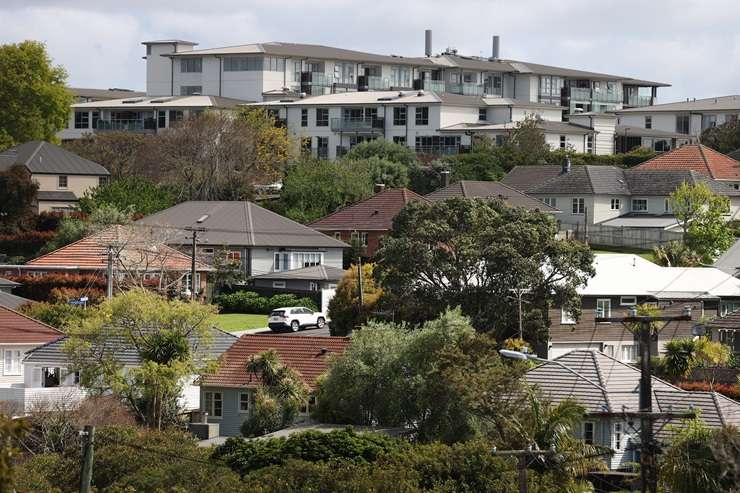
Meadowbank is popular with the city’s medical workers and is one of the city’s more popular suburbs. Photo / Fiona Goodall
He said the new CRL stations in the city would be hugely beneficial for locals who commuted to the CBD; however, parking around Meadowbank station in particular was already choked. “The back streets and the side streets are just jammed with cars now,” he said.
People did ask about the stations at open homes, Lantz said. The CRL was an “added tick box” for those commuting into the city centre.
However, he didn’t think the stations, or the new CRL improvements, would bump up prices in his catchment. “I don’t find that people will pay over the top for a property just because of [the trains]. I wouldn’t equate that as the same as getting into Grammar Zone or Meadowbank School zone, where they’ll pay. It’s a bonus for them to be near the train station, but you’ll rarely have several people competing for a specific property just on the basis that it’s close to the train.”
---------
Ray White agent Benjamin Neal isn’t convinced the CRL will significantly lift property prices around Panmure and Sylvia Park stations, but said Ellerslie could be a different story.
The first two don’t have a huge amount of residential housing for sale nearby, and the unitary plan has already driven intensification. However, apartments could pop up under Auckland Council’s Plan Change 120.
Panmure station has undergone a major redevelopment in recent years, becoming Auckland's premier bus-rail interchange with seamless connections to Pakuranga, Botany and Howick. It is also a key hub in the Eastern Busway project.
“I’ve had lots of customers whose requirements have been within walking distance to the train station. They don’t necessarily drive, and they’re looking for property within commuting distance of the city.”
Anecdotally, Panmure station appeared particularly desirable. “Panmure train station seems to just be high up the desirability radar in terms of the conversations I’m having with people looking to move into the area.”
Neal is more cautious about the CRL’s direct effect on property prices, noting that the area already has a relatively strong public transport network.
Ellerslie has a greater proportion of homes that are within walking distance of the station than the other two and could see more benefit. “I do think the CRL is of huge benefit to the wider Auckland area for public transport. I’m unsure how that’s going to reverberate in my local marketplace. Because public transport is a desirable aspect of it anyway.”
---------
Rail access is already a drawcard for buyers in Onehunga and the surrounding suburbs, and the improved connections from the CRL are likely to broaden its appeal, Bayleys agent Glenn Baker told OneRoof.
“The station there has been quite popular for buyers over the years,” Baker said, adding that the CRL was already coming up in conversations at open homes. “People love to be able to hop on a train with their coffee and open up their laptop or iPad and do whatever they’re going to do.”
He said the CRL is likely to change buyer behaviour by making Onehunga and Te Papapa viable for people who previously wouldn't have considered rail an option. “I think it will change buyer behaviour. They’re saying, ‘Oh, it’s great, it’s going to get a lot closer to my work. It’s certainly an option now whereas before the train wasn’t an option’.”
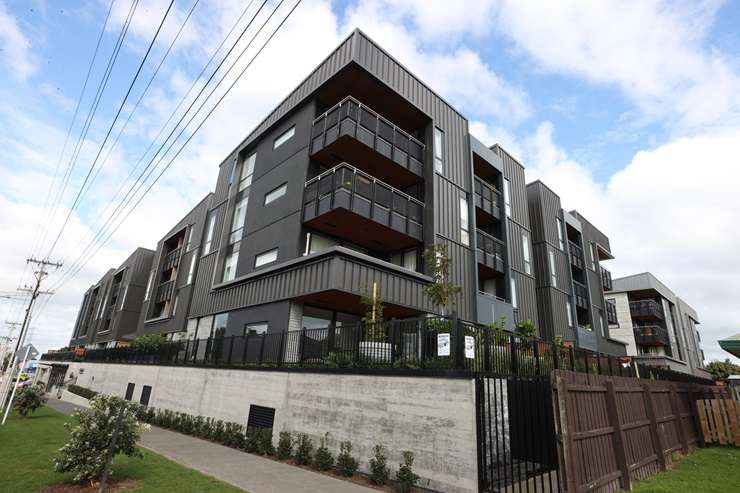
Fabric is one of several new apartment developments that have sprung up around Onehunga train station. Photo / Fiona Goodall
Developments such as Fabric and Onehunga Mall Club have already transformed the area around Onehunga station, while easy access to Go Media Stadium, the Southern Motorway and the airport remains a drawcard for buyers. New hospitality offerings, including Springs Tavern, have further boosted the suburb's appeal. Standalone homes are also generally cheaper than comparable properties in the inner west.
Baker said Onehunga was attracting young professionals and families looking for more space and a quieter lifestyle. “A lot of them are actually people with kiddies that are trying to get out of the slightly more congested areas.”
He added that it was possible to buy a house and room to park two cars in Onehunga, although thanks to the train connections many families were choosing to manage with one car and save money.
“We’re not in a market that’s going to see prices people start to pay through the roof because of that feature. But it does put more buyers into the mix that will say, ‘Look, if I buy here I can catch the train’.”
---------
Harcourts agent Gabriel Elkhishin told OneRoof that South Auckland was better connected than many people realised. He said the CRL, combined with other infrastructure upgrades and the new station and airport interchange at Puhinui, was a game-changer for the area.
The suburbs served by the southern hub stations are traditional first-home buyer areas and have good employment options in Manukau Centre and the industrial belt around the airport.

Harcourts agent Gabriel Elkhishin: “People are driving into Manukau, parking up for the day, and [the train] means they are sorted.” Photo / Fiona Goodall
“[Puhinui] is seen as a central hub for public transport,” he said. “With the reinvestment into the infrastructure for public transport routes, train stations and bus stops, it’s becoming a lot more popular for developers and home buyers who want affordability, want a bit of land, but have to work in the city.
“With all my open homes, [buyers are asking] ‘where are the bus stops?’, ‘where are the train stations?’, ‘how long does it take to get to them?’ You’re seeing it now with much busier train station car parks. So, a lot more people are choosing public transport. People are driving into Manukau, parking up for the day, and [the train] means they are sorted.”
---------
Bayleys agent Lyn Penney said first-home buyers dominated her patch. Because homes are cheaper further south, better commuting would make the affordability trade-off even more attractive. “It gives them [buyers] that ability to live a lot further away from the city centre, but it’s making the travel a lot easier.”
First-home buyers can find brand new three-bedroom homes in the early $700,000s at Karaka Village. In contrast, older homes in Papakura and Takanini can be found for around $550,000 to $600,000, potentially with some renovation required, Penney said.
She felt that the market around Takanini and Papakura stations would benefit the most from the CRL.
She said buyer enquiry and open home attendance had increased in recent months. “Whether that’s a direct reflection of the CRL or not, if it’s not, it’s certainly helping.”
She said that while there wasn’t a price premium for being close to a station yet, there could be in the future. “The CRL could potentially, over time, drive increases in those prices.”
She said if she had $1m to invest, she'd choose Papakura, partly because of its proximity to Drury and the expected growth there. “Purely on the fact of the growth that’s going to be in the neighbouring suburb of Drury. It’s certainly going to have, over time, that direct correlation to the growth in Drury.”
---------
For Drury property buyers, the arrival of rail is changing the equation: living further south no longer means accepting a punishing commute.
Barfoot & Thompson Pukekohe agent Luke Jupp said the new Drury and Paerātā stations were already influencing buyer behaviour. “People seem happier to move to these rural areas because they know that there’s good rail connections to the city,” he said.
Access to good transport links was increasingly important to Auckland buyers considering the area, but Jupp estimated only about 20% of buyers specifically mentioned the new railway when talking to him. However, he actively uses it as a selling point. “It doesn’t necessarily come up in talk with buyers,” he said. “But it’s definitely a huge feature I’m telling people.”
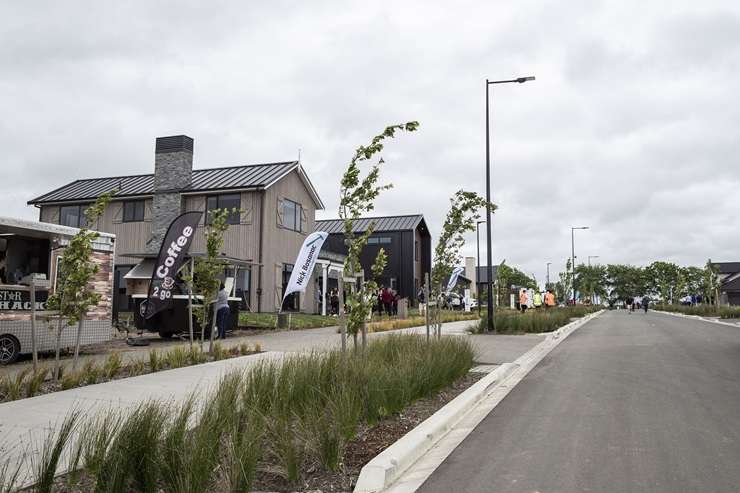
The new-build homes of Paerata Rise are popular with buyers looking for space and affordable options. The CRL and new station suburb are likely to increase interest. Photo Supplied
The rail investment is also helping underpin the transformation of Drury itself. Auckland Council expects the area to eventually have more than 25,000 new homes and around 62,000 residents. “This is going to be the fourth largest city in New Zealand in 30 years,” Jupp said.
The development pipeline includes new homes and large-format retail from 2027, followed by a town centre from 2032 with offices, civic spaces, shops and multi-storey apartments. Costco and Harvey Norman are among the retailers with conditional land agreements in the development, he said.
---------
Residents along the Western Line (which will become the East-West Line) will benefit from reduced travel times and new city-centre stations. Henderson to Te Waihorotiu (midtown), for example, will be 24 minutes faster, while the journey to Sylvia Park will be 20 minutes quicker than it is today.
Baldwin Ave and Mt Albert are middle-income suburbs, but most stations further west serve lower socioeconomic areas. The New Lynn interchange has already improved connectivity for many residents, with the CRL expected to amplify those benefits along the entire line.
Harcourts agent Fiona Li sees West Auckland as one of the biggest property market beneficiaries of the CRL, particularly because improved rail links make it easier for buyers to move further west in search of more land and better value.
“New Lynn [has already benefitted]. The transport hub improved the amenities and also access to the city. It [the CRL] will make it increasingly attractive to homeowners and investors.”
Buyers who cannot afford what they want closer to the city are already looking west, she said.

Harcourts agent Fiona Li: “If they want something with a little bit of bigger land, then they could go further [out west].” Photo / Fiona Goodall
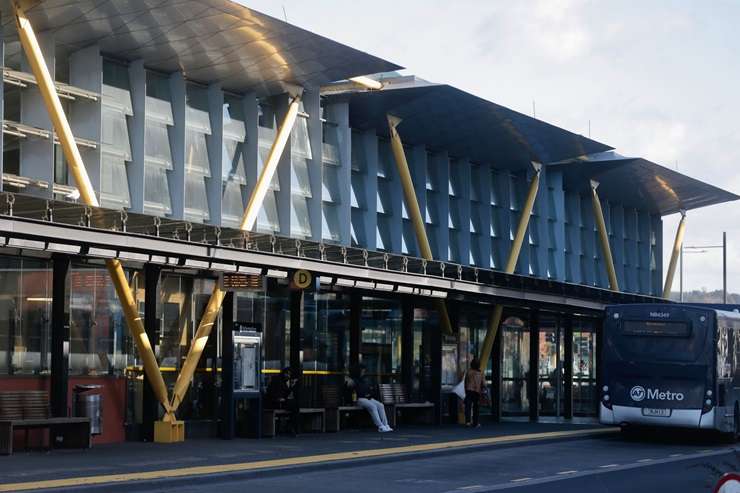
The infrastructure around the New Lynn train and bus interchange has already been a boon for the suburb. Photo / Alex Burton
“They were looking in the area closer to central, and then they find out it’s more expensive. They never have enough budget in the central area. If they want something with a little bit of bigger land, then they could go further [out west].”
The prospect of faster commutes was also influencing purchasing decisions, she said. “They just jump on the CRL, and then they don’t have to worry about the traffic. It’s only a short travel time to go to the CBD.”
Li said greater connectivity to the CBD could particularly benefit suburbs such as Swanson and Ranui. Buyers could potentially live in West Auckland and work in Manukau or South Auckland without a difficult commute.
She said the CRL could also change buyer behaviour by making lifestyle properties in semi-rural parts of Henderson and Swanson more practical for commuters, while opening up options for first-home buyers.
Li does not believe the CRL has yet been fully priced into West Auckland property values.
“I can see that [happening] slowly in the future. It will take time for people to get more information. Because you know how New Zealand is a bit slow to take things, you know, on board.”
- Click here to find properties for sale in Auckland