ANALYSIS: None of us knows how long the war in Iran will last, how high oil prices will rise and for how long they stay elevated, how much supply chains will be impacted, how much inflation here will be boosted, or how much our economic upturn this year will be affected by our collective worries. That means none of us can make any strong statements regarding how interest rates will behave this year, especially as we cannot know what the Reserve Bank will be thinking and whether or not their bias towards delaying cyclical monetary policy tightening still exists.
But then again, if you had taken advantage of the five-year fixed mortgage rates when they sat near 4.99% late last year, the interest rates outlook doesn’t matter. The same goes for those who might have locked in for three years at 4.75%.
What about locking in now for three years at about 4.99%? Is that a safer option than continuing to rollover, with one-year rates currently near 4.49%?
I’ve historically taken a conservative approach to interest rate risk management and have tended to favour fixing long, provided New Zealand is nowhere near the top of the interest rates cycle. We are not, and the tightening phase has yet to kick off.
Start your property search
So, if I were borrowing at the moment, I’d be inclined to fix for three years, though fixing two years at about 4.69% looks fairly attractive as long as you’re prepared to take the risk of rolling onto a rate much higher come early-2028, when the Reserve Bank is likely to have hiked rates.
Is time on your side to make this decision? Maybe not. In response to an anticipated rise in inflation, wholesale borrowing costs jumped this week by about 0.3% or so. Margins for fixed-rate lending for two years and beyond are now below average, and rate rises may be imminent – unless everything changes overnight again.
Discover more:
- Tony Alexander: Who's calling the shots when there are nearly 36,000 homes for sale?
- Money, politics and real estate: Who is Matthew Horncastle and why is he in the headlines?
- Iran war not a cause for house price panic in NZ - but oil prices could be a worry
What might put a stop to or slow wholesale rate rises? Data showing a solid dent to our economic prospects this year, of which I can offer the following.
Each month since June 2020, I have surveyed Kiwi consumers and asked whether they plan to buy more or less stuff in the next 3-6 months. In the middle of 2024, when our economy was shrinking by 2%, a net 42% said they would spend less. Later that year, as interest rates began to fall, a net 10% said they would buy more things. Then, in April 2025, as the reality of no boom set in, a net 20% said they would spend less. Late last year, sentiment turned again, with a net 20% saying they would spend more. February’s reading was even stronger, at a net 23%.
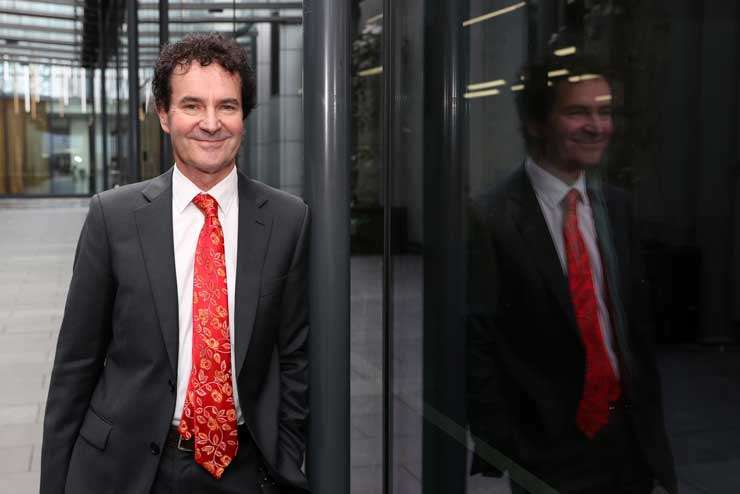
Independent economist Tony Alexander: "As a result of the Iran war, we have reined in our spending plans." Photo / Fiona Goodall
Now, following my survey from Friday, only a net 4% of Kiwi consumers say they plan to spend more in the next 3-6 months. As a result of the Iran war, we have reined in our spending plans, and that means the likely rate of growth in our economy this year is set to come in lower than previously expected.
How does one balance the reduced growth in demand against higher oil prices driving higher inflation? That is the Reserve Bank’s job to figure out as we go through the next weeks and months, and if I were running our central bank, I’d refrain from trying to provide any insight until the Middle East situation is a lot clearer. Hopefully, that will be the case when the next cash rate review is due on April 8.
- Tony Alexander is an independent economics commentator. Additional commentary from him can be found at www.tonyalexander.nz