- Properties under $500,000 are available in various regions, including Auckland’s wealthiest suburbs.
- Experts warn these cheap properties may have issues, such as cross-lease complications or remote locations.
- Buyers should conduct due diligence, considering factors like infrastructure, amenities, and potential property issues.
A surprising number of properties scattered around New Zealand could be picked up for less than $500,000 if they hit the market.
Start your property search
That’s even in the wealthiest Auckland suburbs, where many starter homes can set buyers back four times or more that amount – but experts advise caution as some very cheap properties might have a sting in the tail.
Analysis by OneRoof and its data partner Valocity of 1878 suburbs with more than 50 dwellings, identified 284 (15%) where half or more of the homes were worth less than half a million dollars.
Tiny towns in Southland, West Coast, Manawatu-Whanganui and Northland dominated the list, but Auckland Central featured strongly, too, with its studios and small apartments.
The research also found numerous options in Auckland’s priciest suburbs, including Herne Bay, Remuera, Ponsonby, St Heliers and Westmere.
Wayne Shum, senior research analyst for Valocity, pointed out that some of the cheaper Auckland properties could have issues and that low-priced homes in the more remote parts of the country might not have mains water and could be miles from amenities.
Some of the most affordable homes are also in some of the lowest socio-economic parts of New Zealand, such as Murupara, in Bay of Plenty, and Fordlands, in Rotorua.
Shum says absolute bargains might be bargains for a reason. For example, dirt-cheap Auckland properties are often historic hangovers from the 1960s and 1970s, such as “sausage” units in long blocks which are individually-owned and in cross-lease arrangements rather than unit titles, which can make it harder to get things done.

Valocity senior research analyst Wayne Shum: "Some of these [homes] are cheap for a reason.” Photo / Fiona Goodall
Many are likely to be super tiny, too, at 34sqm – that’s smaller than a standard double garage.
Shum says because units in older sausage blocks have often been sold individually, they are harder for a developer to purchase and replace with new buildings.
“Because it’s owned by eight different people and they’re all tiny units, it’s really difficult for somebody to come and say I’ll buy all eight or 10 and redevelop. The reality is that it’s not going to happen that easily, short of the building falling down.”
While units in good suburbs might still rent well, the cross-lease arrangements mean there is no sinking fund for repairs, and there could be arguments around which parts are common use versus exclusive use.
Discover more:
- Tiny town where houses cost less than $200K and everyone is welcome
- Ex-All Blacks coach Sir selling his spare waterfront apartment
- Shortland Street's bad boy swaps TV soaps for affordable housing
Shum also warns buyers to beware of more modern buildings in pricey suburbs with low price tags, saying they could be associated with issues from the leaky homes era, which plagued Auckland from the late 1990s.
Auckland Central had many tiny boxy student apartments, and the cheaper homes in other parts of New Zealand tended to reflect the economic condition of the location, including a lack of employment opportunities and amenities, plus the housing stock could be pretty old, he says.
People looking for cheaper homes might have to trade the petrol cost of a 40-minute drive to the supermarket against the home’s low price tag, and renovations to older homes could add up as well, but the end product might still not be worth that much: “You can easily over-capitalise.”
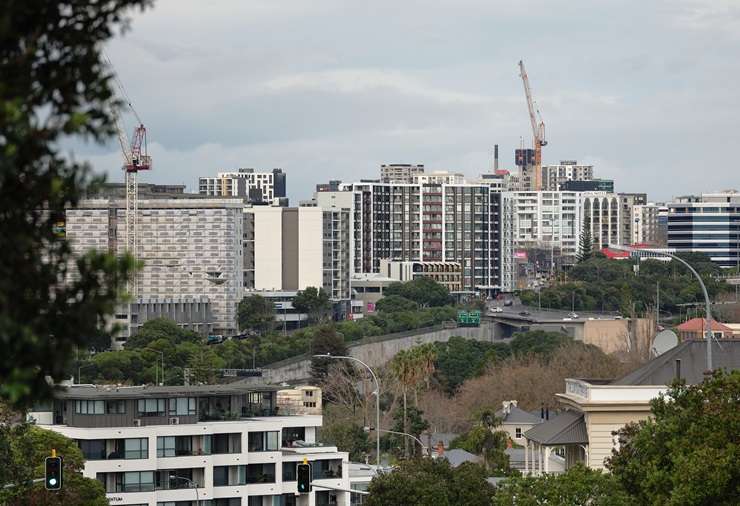
Auckland CBD offers plenty of sub-$500,000 homes, but most are small one-bedroom or studio apartments. Photo / Ted Baghurst
Shum suggests people think about where their child might go to school, where the shops are and whether there is decent mobile phone and internet coverage if the plan is to work from home. Be careful, he says: “Just like you would in Auckland, or anywhere else, some of these are cheap for a reason. For example, does it flood?”
On the other hand, due diligence might reveal an area that is up and coming with a road of national importance due to go through in 10 years, which could add value.
Shum says 20 years ago, Kumeu and Riverhead were rural townships, but they are now very much part of Auckland city. “There are quite a few regions that have new infrastructure coming that would cut down the commute time in some areas and revitalise some areas.”
Ohura - former mining town that’s slowly coming back to life
Top of the OneRoof/Valocity list for cheap properties is Ohura, in Ruapehu.
While Ruapehu is known for ski chalets, Ohura is a tiny rural spot which once thrived due to nearby coal mines and a prison, but these closed down years ago, and many people have left.
Property Brokers agent Cameron Elliot told OneRoof that he recently sold a house in the town to first-home buyers from Wellington for $199,000. He also has the old Ford building on the market for $149,000.
When the coal mines and prison were open, Ohura was more like a farming service village with a bank and a mechanic, he says. “This is going back probably 50 years now, but it was quite a bustling little place and then I guess when those things all closed, it turned probably into a little bit of a ghost town in the 90s and 2000s.”
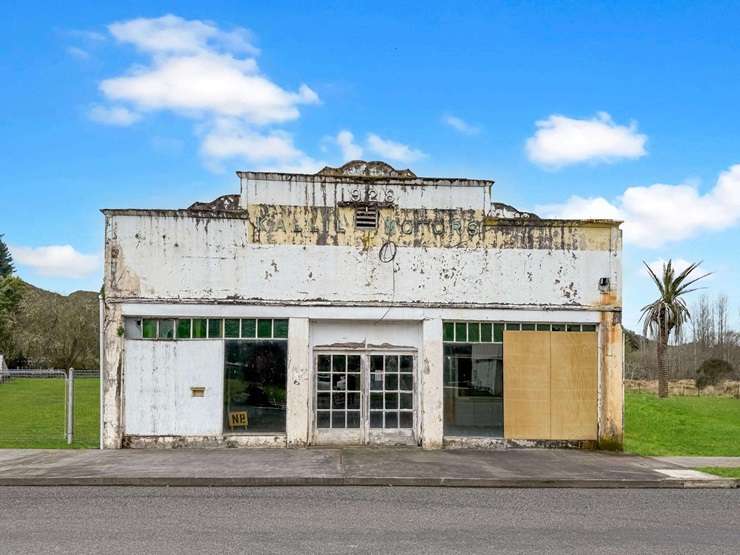
On the market for $149,000 in Ohura is the former Ford building. Photo / Supplied
However, there has been a little bit of a resurgence in Ohura since Covid and the work-from-home trend.
When Elliot first started selling in the town, a section would go for $10,000 and a house for $30,000. Now, properties can sell for over $200,000, which is a big leap, but still very cheap.
For under $500,000, you can afford “anything”, Elliot says, but listings are few and far between, and he says the town has seen flooding before, though there hasn’t been one for a while.
There’s a lot to like, though, with a friendly community, and the Cozzy Club sells bread and milk. There is a small primary school and another couple of good country schools 10 or 15 minutes away, but secondary school children would have to board or go to Taumarunui High School, which is about 45 minutes away.
“It’s a great little town,” Elliot says. “I’d live there if I didn’t have to travel to work every day. But that’s the problem, it’s just the isolation. If you’re after a flat white every morning at the coffee chop down the road, it’s not for you.”
But if someone was looking for a section where they could base a motorhome, Ohura might be perfect. “You might set up a little cabin or tiny home or something like that there, and that can be your base when you’re tiki-touring around the country, and it’s cheap.”
Ohai - the homes need work but young families are giving it a go
Another small town with a coal-mining history, Ohai, in Southland, also has a wealth of affordable homes, with just three of its properties worth more than $500,000.
Tawhiti McPherson, of Tall Poppy, says he gets interest from Aucklanders and even expats from Australia looking to escape the big city and find somewhere they might not need a mortgage.
Ohai offers that, along with peace and quiet, a coffee shop and a medical centre that has a doctor a couple of times a week. “Short of that, there isn’t really much else out there. Your closest kind of small town, or smallish town, with a supermarket is Winton, so you’re about 25 minutes away from where they have a New World.”
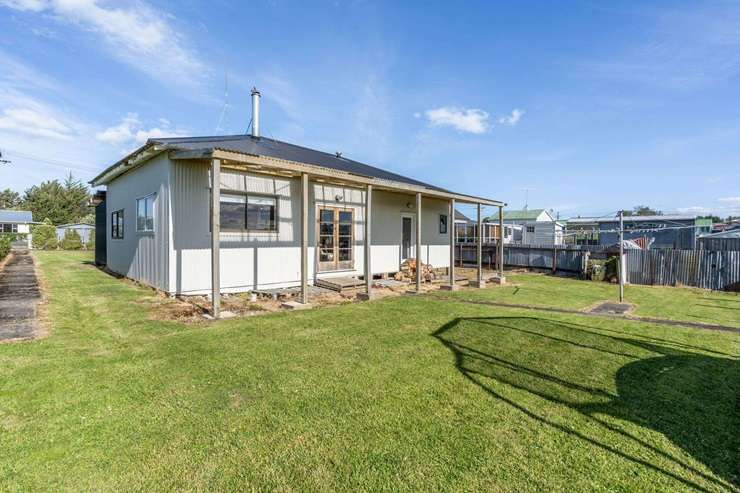
13 Richmond Street, in Ohai, Southland, is looking for $199,000-plus. Photo / Supplied
Some of the housing stock needs work, but with young families moving in, “it’s cool to see old houses that were once derelict and looking like they were going to fall into the ground being brought back to life”, McPherson says.
He has one such do-up on the market, a two-bedroom rustic cottage at 13 Richmond Street, which is looking for buyer enquiries over $199,000.
McPherson says Ohai isn’t too far from the best of New Zealand. “It’s not too far up to Te Anau, it’s not too far out to Tuatapere, where they have walking tracks and stuff like that, as well as the beaches and all that kind of stuff, and it’s not too far to the main highway to Queenstown.”
Bay of Plenty’s affordable towns come with socio-economic problems
Murupara, Fordlands, and Kawerau, in the Bay of Plenty, are also strong on affordability.
Steve Lovegrove, general manager for Eves for the area, says homes for that price reflect the low socio-economic status of the suburbs.
Murupara, about 45 minutes from Whakatane, has a lot of aging stock with challenges in terms of getting properties across the healthy homes line, but values in the last 10 years have risen.
“You used to be able to get them 10 years ago for $20,000 or $30,000. Well, now they are more up around the $200,000.”
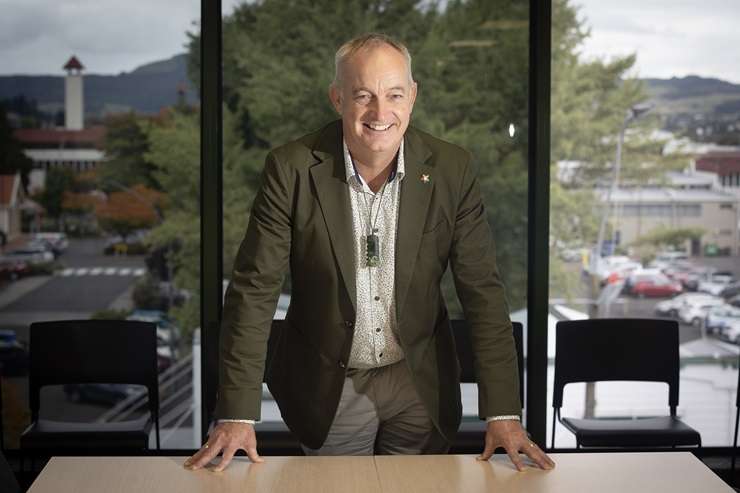
Steve Lovegrove says Fordlands, in Rotorua, is an affordable area to watch. Photo / Supplied
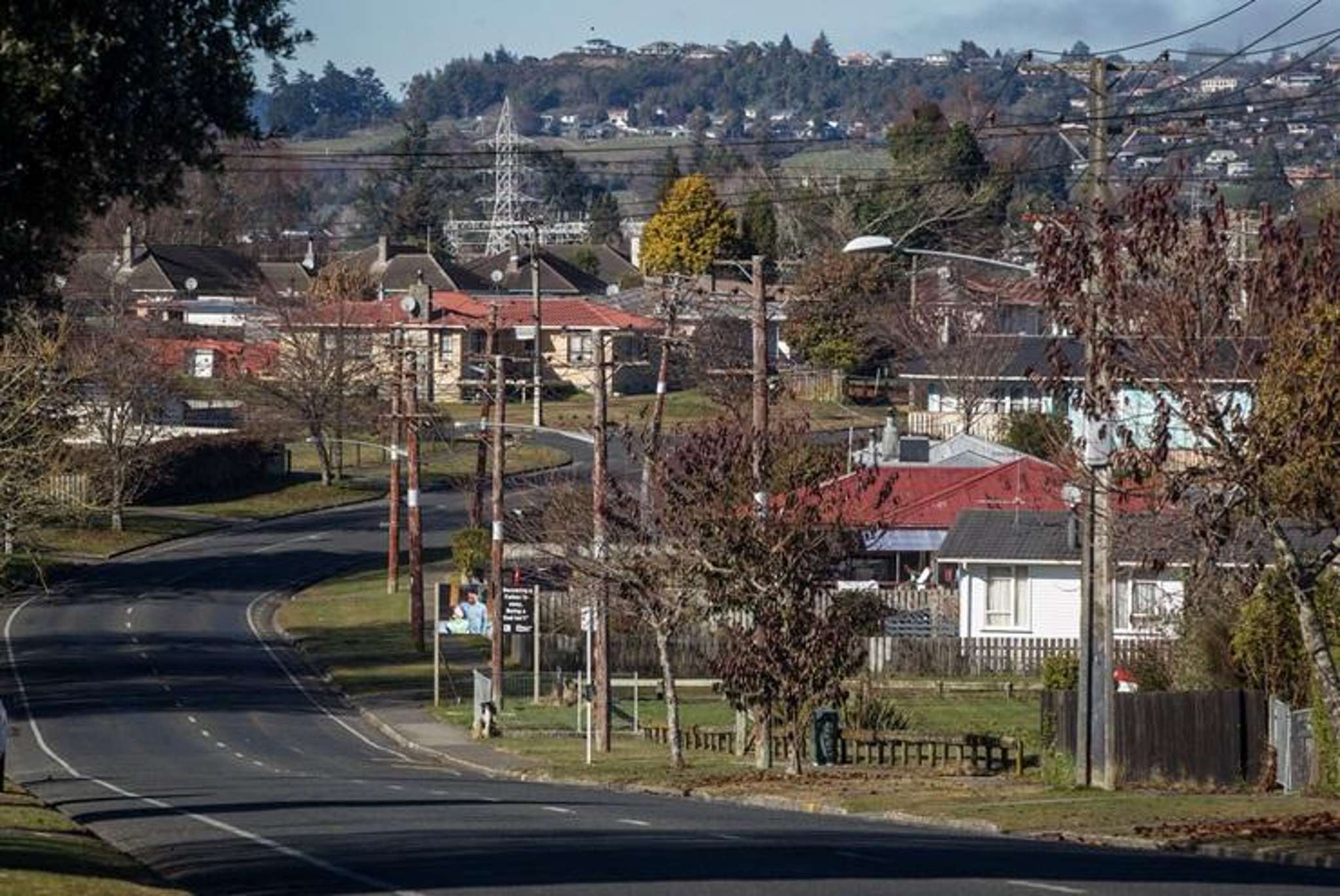
Murupara has its own distinct character and low employment, whereas Fordlands, in Rotorua, is a central city suburb, so one to watch for the future, as Rotorua is getting back into some growth with more new developments happening.
Kawerau, about 50 minutes away from Rotorua, is also tarred with the low socio-economic label and cheaper housing, but Lovegrove says there is employment and the town is one of the sunniest places in New Zealand.
People who move there tend to want to downsize their mortgage, he says.
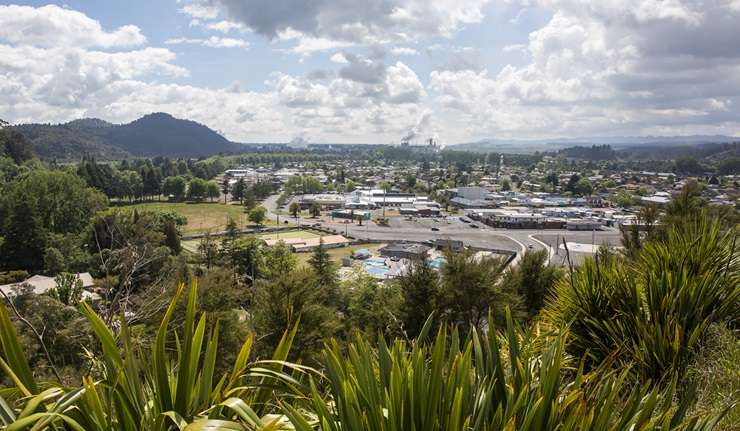
Ninety per cent of Kawerau's housing stock is worth less than $500,000. Photo / Mike Scott
“People who are prepared to say, ‘OK, I’m going to an area that I know is not a premium area but I know is an area where I can become mortgage-free and I own my own plot, have a reasonable-sized section, a quality home that might have been built 50 years ago but was built by Bob the Builder in his Bedford van and done well’.
“If there’s going to be a small town in the region, in the eastern Bay of plenty region, that’s got potential for flourishing again Kawerau has.
“It’s got a bit more of a mix as well. There are some premium lifestyle properties around it. It’s not all the lower-level. There are some pretty nice properties in the surrounding areas.”
Those looking in the major metros have options, at least on paper, but the agents OneRoof talked to say buyers would be wise to adjust their expectations.
Affordable Auckland - how small are you willing to go?
According to the OneRoof-Valocity research, trendy Ponsonby, in Auckland’s inner-west, has 81 sub-$500,000 properties, but while that might sound a lot, Jason Trowbridge, of Inner Realty, says they don’t come to market often.
“I think you may find the odd apartment or studio but you’re not going to find some characterful villa or do-up or opportunistic property that I would predominantly deal in.”
That price might get an apartment big enough to swing a cat in, but if the property was only 35sqm, first-home buyers might hit finance hurdles, with most banks preferring not to lend on such small properties.
These properties are a niche market and could be challenged: “They are compromised on location, they’re usually in a block, and they’re usually very, very small, so you either buy a bite-sized piece of location or you go somewhere a bit further out.”
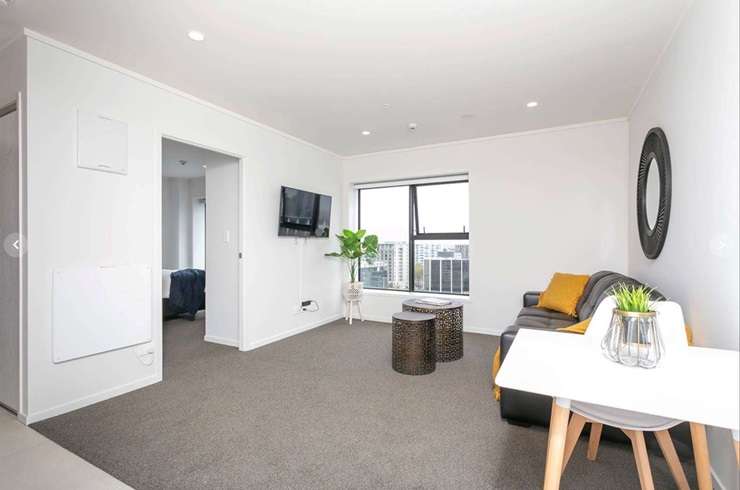
A two-bedroom apartment at 1301/38A Liverpool Street, in Auckland Central, has a $420,000 price tag. Photo / Supplied
Some small homes, however, can make an ideal lock-up-and-leave for someone wanting a base in Auckland, such as someone who has sold a larger family home and has a holiday home elsewhere – and Trowbridge points out that in Tokyo some apartments are only 20sqm in size so there is a market for tiny living.
Barfoot & Thompson agent Aaron Cook says Auckland CBD apartments like the one he is selling on Liverpool Street for $420,000 are often 40-45sqm in size and boast lovely views of the city or the harbour.
The Liverpool Street one is double-glazed, meets the healthy homes requirements and was built in 2019.
“There are very few places in Auckland where you can have the convenience and peace of mind of a modern building for under 500k. It’s a great first rung on the property ladder,” Cook says.
“I’ve lived in apartments for decades, and they are really convenient. You feel like you’ve got everything on your doorstep, and you’ve got control if you live or work in the city.”
These days, apartments come with pre-contract disclosure statements, which specify upfront any issues with a building, Cook says, adding that people should not forget the billions of dollars that have been poured into Auckland City’s infrastructure.
“It’s going to be a lot better than it has been, but people have gone through a lot of ‘oh I don’t like the city because there’s a lot of congestion and road closures’, but I think once you’re out the other side of this, it’s going to be the place to be.”
- Click here to find more properties for sale