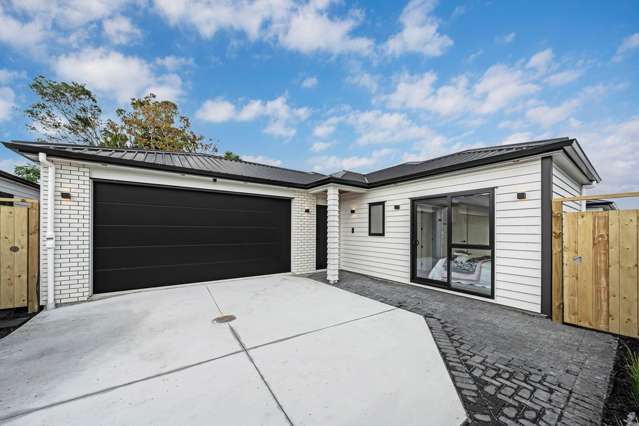
ANALYSIS: This week, I will be giving a presentation to the many builders, architects and suppliers attending the BuildNZ Trade Show at Auckland Showgrounds. I imagine there will be many attendees hoping I give a nice, positive outlook for the construction sector, and I certainly will give some hope. But just as broad forecasts for growth in the New Zealand economy have been pushed a tad into the future because of the ongoing war in the Middle East, so too do better days for the construction sector lie a bit further down the track than earlier hoped.
For the non-residential construction sector, times have been especially tough recently, with the volume of work in the March quarter down 13% from a year earlier. The sector’s recovery will require a broad upturn in the NZ economy, and although some good economic growth has been achieved recently, the events offshore, along with the rapidly approaching general election in November, mean many businesses are likely to keep their construction plans in check until next year.
But there is hope. Farm incomes have grown well recently, and this has produced a 38% rise in the value of consents issued for new farm buildings to be constructed over the past six months compared with a year earlier. Also, the 7% growth in foreign visitor numbers this past year has helped produce 96% growth in consent values for accommodation-type buildings.
Discover more:
Start your property search
- Tony Alexander: What the OCR hike means for mortgage rates, house prices
- 'We got a mortgage of $1.32m - just saying it out loud is ridiculous'
- How a silver and gold coin worth $10 cost one Canterbury family their home
So, sectoral growth does drive sectoral construction. What about house building?
Whereas March quarter activity for non-residential work was down 13% from a year earlier, residential was down “only” 4%. But the 2.2% decline in just the March quarter means heads are being scratched as to why the number of dwelling consents this past year has risen nearly 20% from 33,500 to almost 40,000, and yet actual building work has yet to rise.
The nearly 40,000 consents are actually the highest total since early 1974 if we ignore the Covid period. And it is in line with what we would expect to see happen after the annual number of dwelling sales had risen from 59,000 three years ago to nearly 79,000 now. The 40,000 consents are consistent with what the traditional lag between sales growth for real estate agents and new house construction would suggest.
But with high uncertainty about costs, worries about events offshore, fewer investors looking to buy, and cost-of-living pressures, the delay between consent issuance and construction is turning out to be longer than usual.

Independent economist Tony Alexander: "Assuming the new government does not initiate a fresh crackdown on investors, then stronger sales do lie ahead." Photo / Fiona Goodall
Nonetheless, once the election is out of the way, it seems reasonable to expect that builders will get a lot busier. But will they boom? No.
Over the three months to May, in seasonally adjusted terms, dwelling sales by real estate agents fell 9% after falling 3% in the previous three months. To boom, we would need to see a very strong lift in agent activity.
But my various surveys tell me that for the immediate future, this won’t happen. FOMO is almost completely absent and the number of people attending open homes and auctions is weak. But will growth in sales return once the election is out of the way?
Assuming the new government does not initiate a fresh crackdown on investors, then stronger sales do lie ahead. Net migration flows seem to be improving, and of greatest importance, the outlook for jobs growth is quite positive – again, once the election is out of the way.
But with people scaling back their expectations for long-term capital gains, no old-style migration boom in prospect, and interest rates already cyclically rising as mentioned above, the rise in estate sales through 2027 is unlikely to be of especially strong magnitude. That means just mild growth in consent issuance, which in turn means just mild extra construction activity.
For builders better times are in the offing. But the election needs to get out of the way, things need to settle in the Middle East, and no boom should be expected.
- Tony Alexander is an independent economics commentator. Additional commentary from him can be found at www.tonyalexander.nz