- A Wellington apartment in a historic building is for sale for the first time in over 30 years.
- The property, with an RV of $880,000, has attracted local and international interest.
- Owners Nigel and Christine Jones bought it in 1993 and have witnessed many historic events.
A three-bedroom Wellington apartment in a historic building once used to distract wayward sailors from the city’s bars is being sold for the first time in over 30 years.
Start your property search
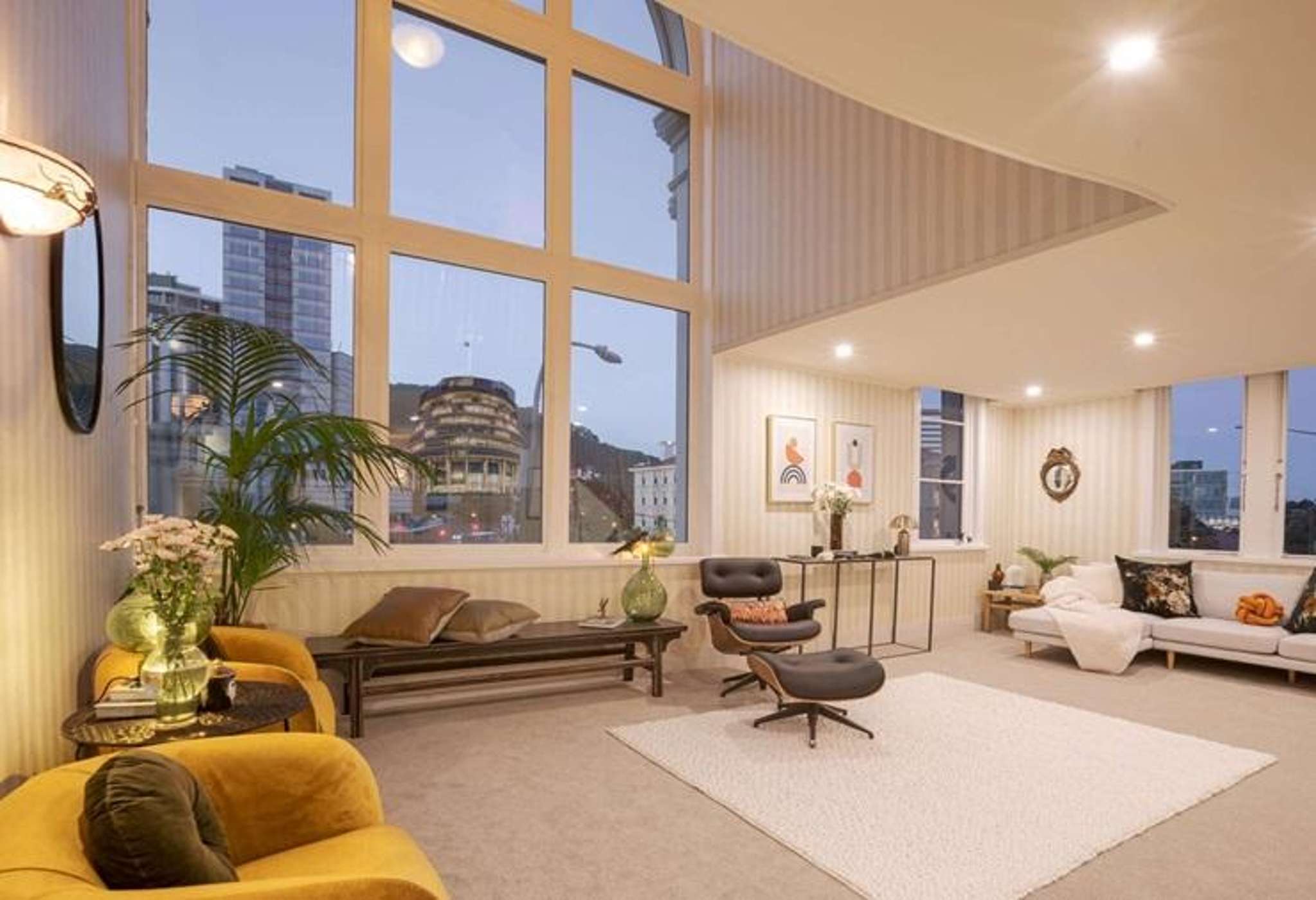
1A/7 Stout Street, which has an RV of $880,000 and boasts a picture-perfect view of the Beehive, has generated quite a bit of interest – both locally and internationally – since it hit the market two weeks ago.
Salim Buksh, from New Zealand Sotheby’s International Realty, told OneRoof that views of the apartment had rocketed within 12 hours of the listing going live.
Because the property was going to tender, he could not give a price indication, but he did say the owners were motivated to sell and that all offers, even those below RV, would be considered.
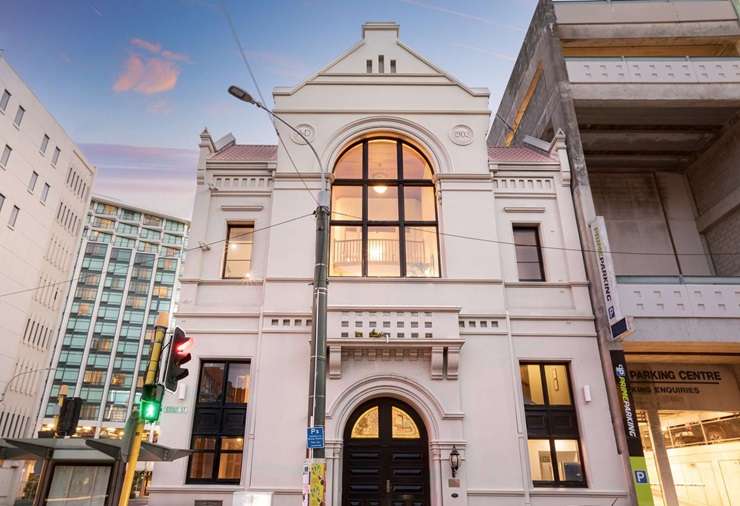
The three-bedroom apartment is located in the former Missions to Seamen building. Photo / Supplied
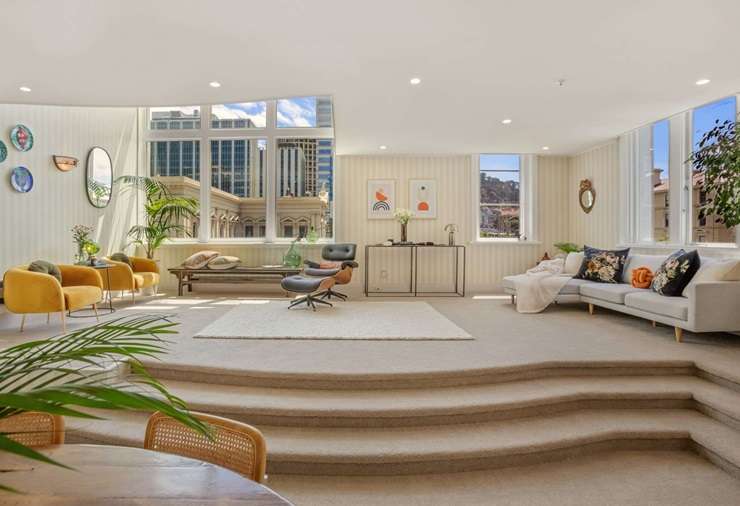
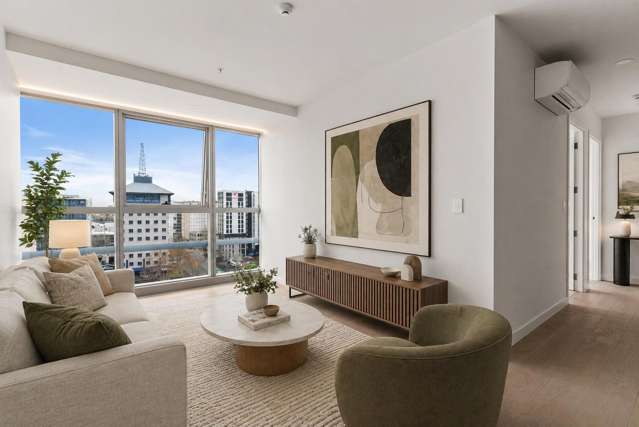
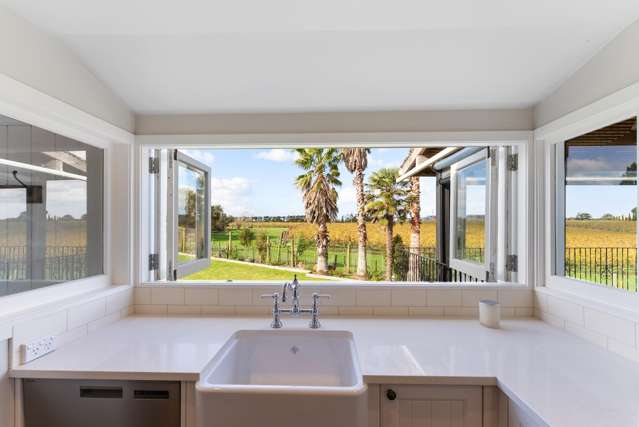
The vendors hired an architect to redesign the interiors and open up the apartment. Photo / Supplied
The owners, Whanganui couple Nigel and Christine Jones, told OneRoof that they had watched a lot of parliamentary comings and goings from their window.
Nigel said they put down a $50 deposit in 1993 for the apartment, which was being built in the old Missions to Seamen building in the city.
“They had an open day on the unfinished building. It was actually quite a terrible-looking place. There was graffiti all over it.
“We went to the top floor, and although the windows were frosted and we couldn’t see out, we knew it was facing the sun, straight up towards the Beehive.”
Discover more:
- From slump to steal: Historic cottages in wealthy suburbs for sale for under $1m
- Historic newspaper office up for grabs as journos pack their boxes and shift down the road
- Home staging queen selling her $3m townhouse – and is throwing in her stylish furniture
The developer was dividing the property into 10 apartments. Jones got an architect in to redesign some of the interiors, partly because there was a stairwell that blocked the view of the Beehive.
While Jones said he had trained his binoculars on the politicians at work in their offices – “I get enough of them on TV,” he remarked – he had witnessed many historic moments outside parliament.
“We’ve seen the different marches and unions, and all the rest of them. I think probably the worst one was when they took over the grounds of the parliament,” he said, referring to the Covid lockdown protests and riots of 2022.
The heritage-listed Missions to Seamen building was opened in 1904 and designed to “draw sailors from the temptations of the city”, according to Heritage New Zealand.
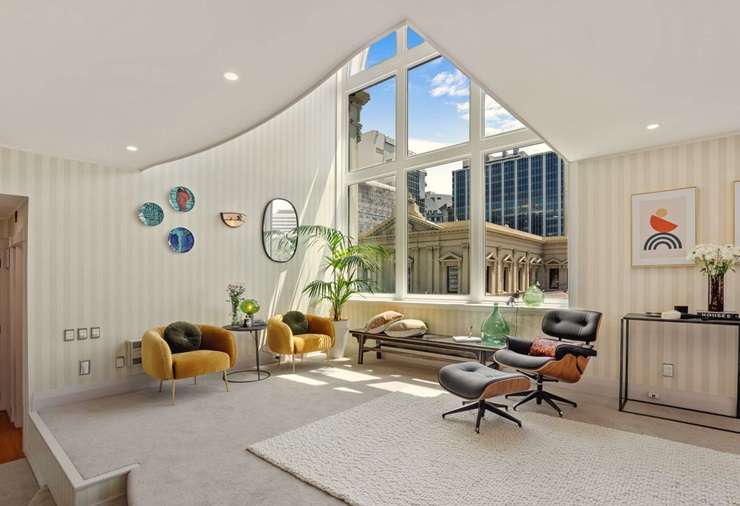
The vendors have witnessed a lot of parliamentary goings on over the years. Photo / Supplied
The Missions to Seamen movement was founded in Bristol, England, by Anglican clergymen who wanted to promote the spiritual welfare of seamen. “In 1898, James Moore, a lay preacher, was sent to New Zealand to establish a Wellington branch of the mission,” Heritage New Zealand reports.
“Wellington was visited by thousands of ships each year in the late nineteenth century. When ashore, sailors sought out entertainment by visiting bars and taverns, and the numbers arrested for disorderly behaviour were very high.
“To distract them from the taverns, Moore invited sailors to religious services and arranged entertainment at various locations around the city.”
The entry said the building was erected on land reclaimed from the sea in 1876 and designed by local architectural firm Crichton & McKay for 5247 pounds.
“The rectangular building is an interpretation of the Edwardian Freestyle Movement, but it incorporates an eclectic mix of other architectural styles.
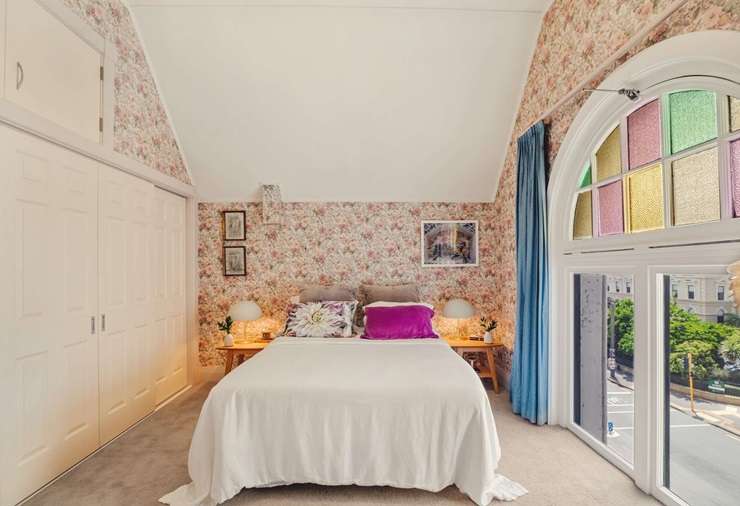
The property has an RV of under $1m and has attracted a lot of buyer interest. Photo / Supplied
“Based on the first Missions to Seamen building in Bristol, the building’s upper floor was designed as a church while the lower floor included a large, lofty hall, a small office and lodging for the caretaker.
“Both the church and hall could accommodate up to 400 people, indicating the numbers expected.”
The building was sold to the Government and used as a storehouse and community centre until 1985, and when there were plans to demolish the building and sell the land, members of the public were galvanised to launch one of the largest campaigns to save a heritage building in New Zealand’s history.
In 1986, the Government agreed to preserve it. Heritage New Zealand said the building was historically significant as the first purpose-built Missions to Seamen building in New Zealand and indicated “the scale of the need for an alcohol-free haven for sailors in the bustling port of Wellington at the turn of the nineteenth century”.
- 1A/7 Stout Street, Wellington Central, Wellington, is for sale, tenders closing February 26