- The historic Art Deco Times-Age building in Masterton is up for lease after staff moved nearby.
- Times-Age editor Piers Fuller called the move the end of an era and a new beginning.
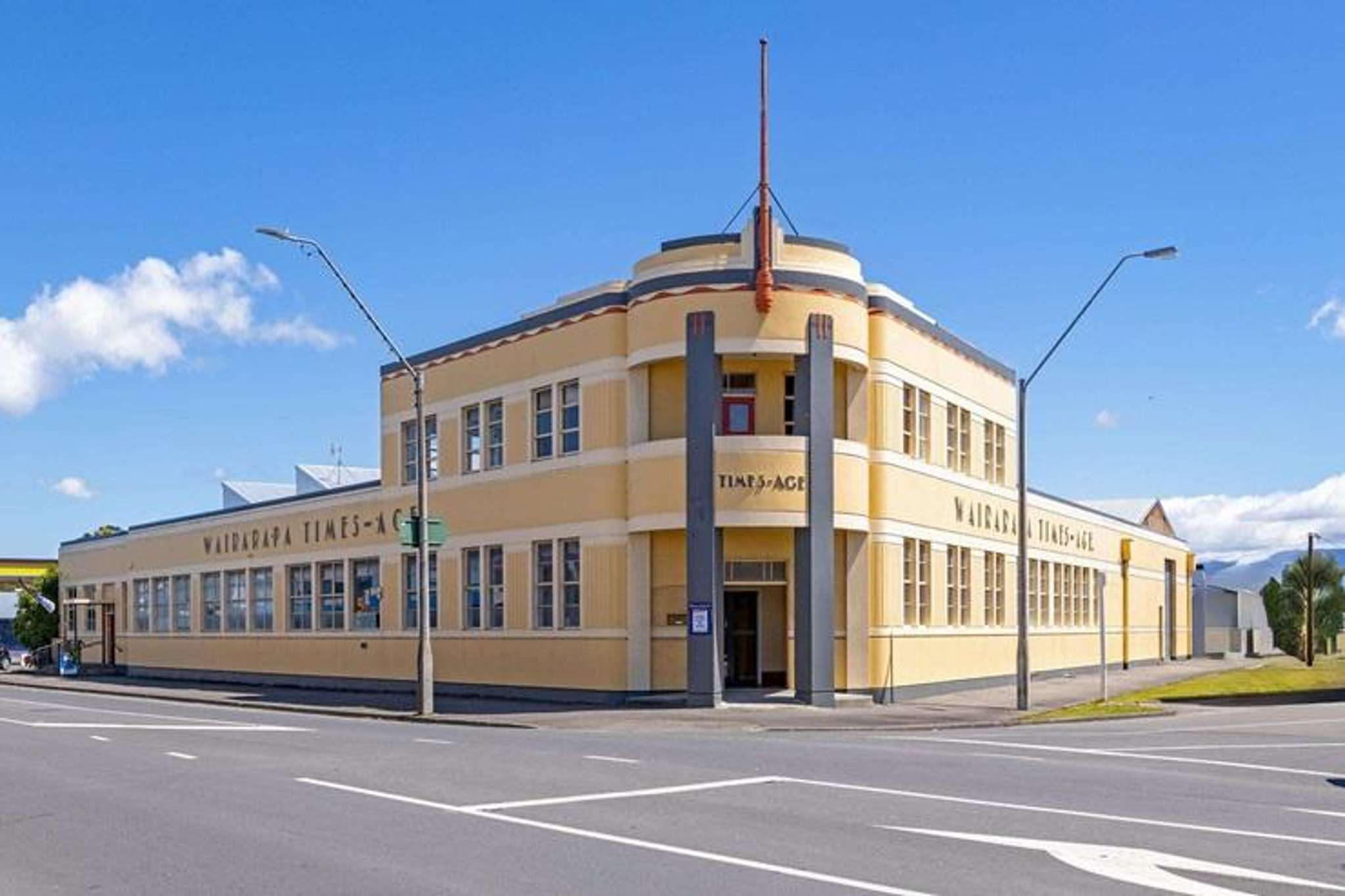
- The building, designed in 1937, is a Category Two Heritage-listed site with distinctive Art Deco features.
The photos are a bit eerie – empty desks and piles of newspapers in an iconic Category Two Heritage-listed building in Masterton – but the agent says it’s okay because the staff have only moved down the road.
Start your property search
Their former home, in the historic Art Deco Times-Age building, is now up for lease.
In December, The Post reported the staff were both sad and excited to be moving on, with Times-Age editor Piers Fuller saying it was the end of an era but also the beginning of “a new, more nimble news service sharply focused on Wairarapa’s most important issues”.
Tom Roseingrave, from Ray White Masterton, said the listing photos were taken while the move was in progress, hence the vestiges of a newspaper office can be seen. “They’ve just moved down the road to another premise,” he said.
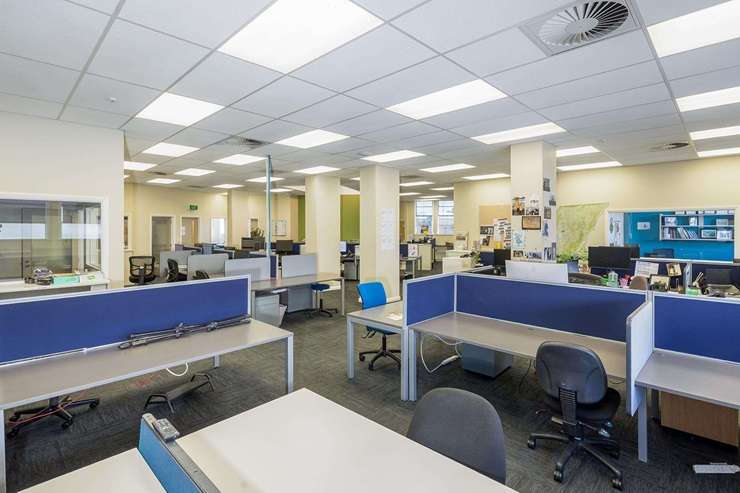
The building was too big for the Time-Age staff, who moved to new premises at the end of last year. Photo / Supplied
“This [building] was a bit big. There were only about four or five of them, and they were sort of swimming around in there.”
Roseingrave said the building had housed the newspaper for as long as he could remember, and he had been in town for 50 years. “I think originally there were two papers and I think that’s where the name Times-Age came from because one was the Times and one was the Age.”
Masterton back in the day was a busy provincial rural service town, which it still is, but times change, and as transport links developed, other towns became more dominant. But while some had lost their newspapers, Masterton had “held on for dear life” to theirs.
Discover more:
- TV star agent Jayne Kiely selling her bach - 'there will be tears'
- 'Gutted': $1 reserve beach 'shed' for sale again after buyer defaults
- Sam Hunt ate here: Iconic Kiwi cafe loved by star poet up for grabs
The Heritage New Zealand website describes how the early 20th century was boomtime for newspapers in the country, “with the number in circulation reaching a record of 193”.
“Yet by the 1930s, rising costs and the Depression put many out of business and forced competing papers to merge in order to survive.
“The Masterton newspaper, the Wairarapa Times-Age, was created from the merging of two rivals, the Wairarapa Daily Times (1892-1938) and the Wairarapa Age (1902-1938). To house the new paper, a new building was constructed on the corner of Chapel and Cole Streets, in Masterton.”
The building was designed in 1937 by Wellington-based firm Mitchell & Mitchell, which specialised in the architectural style that became known as Art Deco.
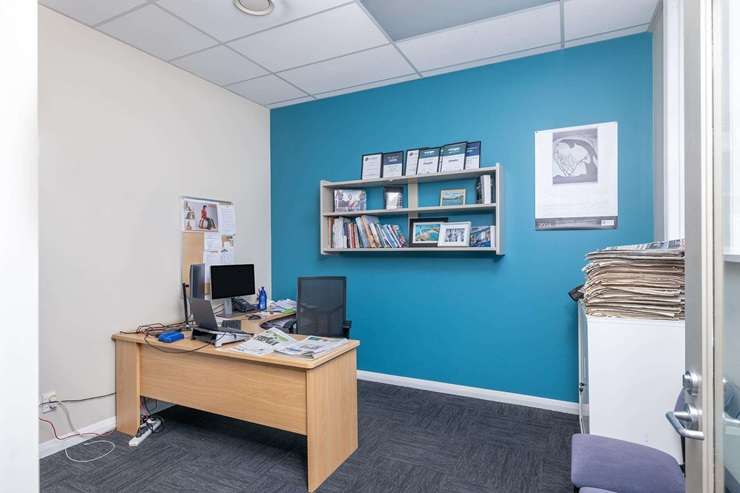
The listing photos show piles of newspapers and editorial bits and bobs. Photo / Supplied
The Heritage New Zealand entry said the building was an excellent example both of the firm’s work and the style. “Constructed from reinforced concrete, the building evokes the image of a large cruise liner floating serenely through the streetscape, drawing on a concept that was first developed by the renowned architect Le Corbusier.
“The curving, two-storey, balconied entrance emulates a ship’s prow while the use of streamlined, horizontal banding on the two principal facades creates the impression of speed and movement.”
The article said that by the 1960s, newspaper ownership had become increasingly business-oriented, and rising costs forced some out of business, while others merged or became part of large companies with head offices offshore.
“By the late 1960s, the Wairarapa Times-Age had become the only remaining daily paper between Wellington and Dannevirke.”
When the paper reached its 50th anniversary in 1988, it was employing 160 staff and producing over 10,000 copies a day.
The entry goes on to outline many of the big stories the paper covered, including the declaration of war in 1939, the conquest of Mount Everest, the Wahine Storm, the closure of the Waingawa Freezing works, the multiple murders on Judd’s Road in 1992 [when Raymond Ratima killed members of his family] and the election of [the late] Georgina Beyer, the world’s first transsexual MP, in 1999.”
Roseingrave said the Category Two listing limited what can happen to the exterior and any structural work, but the rules were not too exhaustive.
“Because it’s an art deco building, it falls into that designation because obviously those art deco ones are pretty special.”
Masterton had a couple more Art Deco buildings, but the style was not that common.
The former editor’s office in the former newspaper building was once up a little spiral staircase, and that was already leased, but the main space, which was largely open plan, was available.
“I would be quite surprised if it stays empty too long because it’s an iconic building and it’s in a good spot.”
Unlike some modern purpose-built office facilities, this one came with history, he said.
“It’s a great space as office space, and it’s got everything you need. It’s got great storage, and it’s got some separate bathrooms and a kitchen area, everything that you’d expect in a building such as that.
“It’s certainly not a sterile office environment; it’s got a little bit of feel to it.”
- 70a Chapel Street, Masterton CBD, Masterton, is for lease by negotiation