OneRoof’s Ask the Expert series is aimed at helping consumers cut through the noise when buying goods and products for their home. It’s hard to make a decision when there’s so much out there, so who better to trust than the people who have the expertise and use these items for a living?
There’s something deeply appealing about cooking pizza at home. Gathering friends around an outdoor fire, the theatre, the speed and the smell. But which oven should you choose? Should you go for a portable gas unit, an electric model or a statement wood-fired oven?
We asked celebrity chefs Mark Southon and Hercules Noble what really matters when buying a pizza oven, and how to get the best results once you have one.
Quality matters
Start your property search
There is a wide range of pizza ovens on the market. All are capable of cooking a pizza, but they do deliver very different experiences.
For fast, even cooks, says Southon, look for a solid oven that's built to trap heat.

Private chef Hercules Noble has cooked pizzas for the US SailGP team. Photo / Supplied

Celebrity chef Mark Southon: "First decide what price point you would like to invest in." Photo / Babiche Martens
Noble, who was recently cooking pizzas for the US SailGP team, says understanding how to use your oven is also critical.
“One mistake people make is not learning how best to use their particular oven. I worked out that my oven works great by pumping the heat really high, launching the pizza, keeping high heat for 30 seconds, then lowering the flame to allow a slower cook and slightly crispier base.”
Wood-fired ovens
Wood-fired ovens are “a showpiece in the garden”, says Southon. Ideal for keeping friends and family happy, but they are a waste if you're not keen on parties or don't do that much entertaining.
Wood adds a great flavour, but you need to pre-warm the oven for 1–2 hours before using it. Wood-fired ovens are also typically larger than gas or electric models, and while they can cook multiple pizzas, they require much more effort and skill.
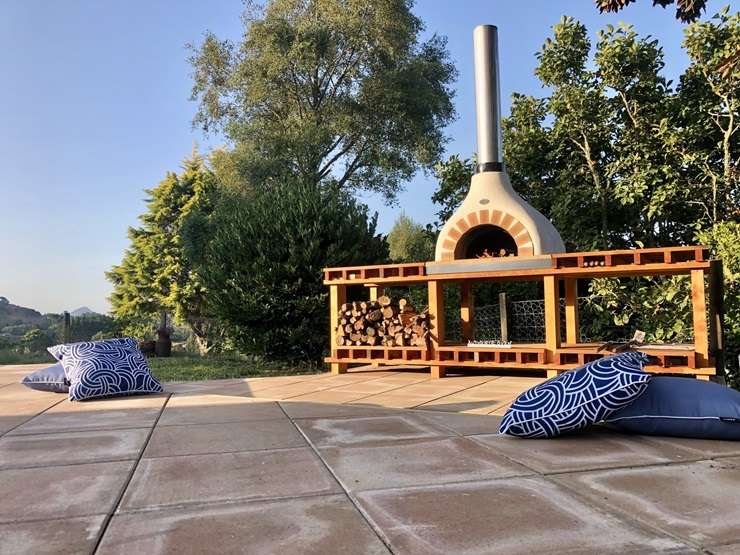
The Authentic Oven 780 is recommended for those who like entertaining and a deep, smoky flavour. Photo / Supplied
Southon recommends Authentic Oven for a show-stopping, ready-made, authentic wood-fired pizza oven.
If you’re up for some heavy DIY and want to create an outdoor entertaining centrepiece, you can build your own using kits from The Fire Brick Co, which offers both brick and precast ovens with plans.
Noble says a wood-fired pizza oven adds a wonderful smoky flavour. If you want flexibility, an Ooni might be the best option, as it offers multi-fuel ovens to suit every level of pizza prowess.
Gas ovens
Both chefs say gas is the sweet spot if you want convenience and consistency.
“You miss out on the flavour, but they are very consistent and heat up very fast,” says Southon.
Noble is also firmly in the gas camp: “Gas is great for both. I love cooking on gas.”
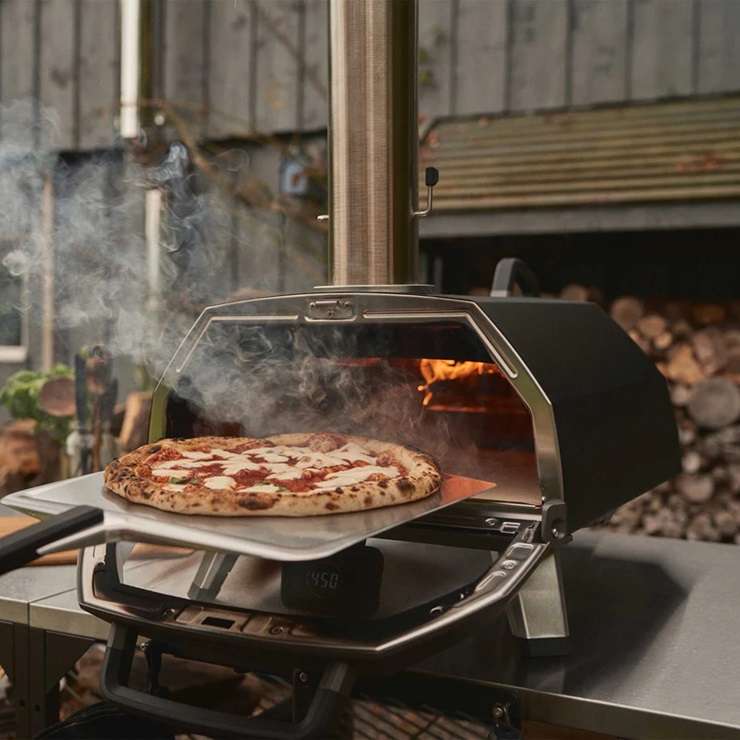
The Ooni Karu 2 Pro. Photo / Supplied
Southon recommends Ooni and Gozney pizza ovens for their reliability and range, with the Gozney Arc sold with a five-year warranty.
Noble's go-to is the Gozney Tread. “It’s the one I recommend most to people who ask. It’s small, portable and heats up and cools down really quickly. It’s also got the bag. So easy to transport and store,” he says.
Electric ovens
Electric pizza ovens are often overlooked. Southon says he was sceptical at first, but then he installed one at the Pukekohe Golf Club. “The results are amazing,” he says, although he’d still go with gas or wood at home.
Noble says electric ovens can be a good entry point. Breville's Smart Oven Pizzaiolo has good reviews, with users highlighting its ability to hit the magic 400°C heat for perfect pizzas.
Can portable ovens perform?
Hell yeah, says Noble. “The Gozney Tread is amazing… small, portable and heats up and cools down real quick.”
Southon agrees that smaller gas ovens can still deliver, able to reach temperatures of 500°C and small enough to carry.
Get the temperature right, or don’t bother
Both chefs say the biggest difference between an average home pizza and a great one comes down to heat.
Southon says a proper pizza oven should range between 400–450°C, so you get a fast cook within 90 seconds. This makes the dough crispy, fluffy and cooked, and the cheese melts without burning.
Noble says different temperatures will deliver different styles of pizza. “Some go low and slow for a crispy base; others go hard and fast for a Neapolitan style. I prefer roughly 425-460°C.”
Size, price and practicality should guide your choice
Southon recommends starting with budget and lifestyle. “First decide what price point you would like to invest in,” he says. “If wood is a big driver, then size, then look into great producers like Authentic Oven and Gozney.”
Noble says choose something that suits you. Nothing too much or too big.
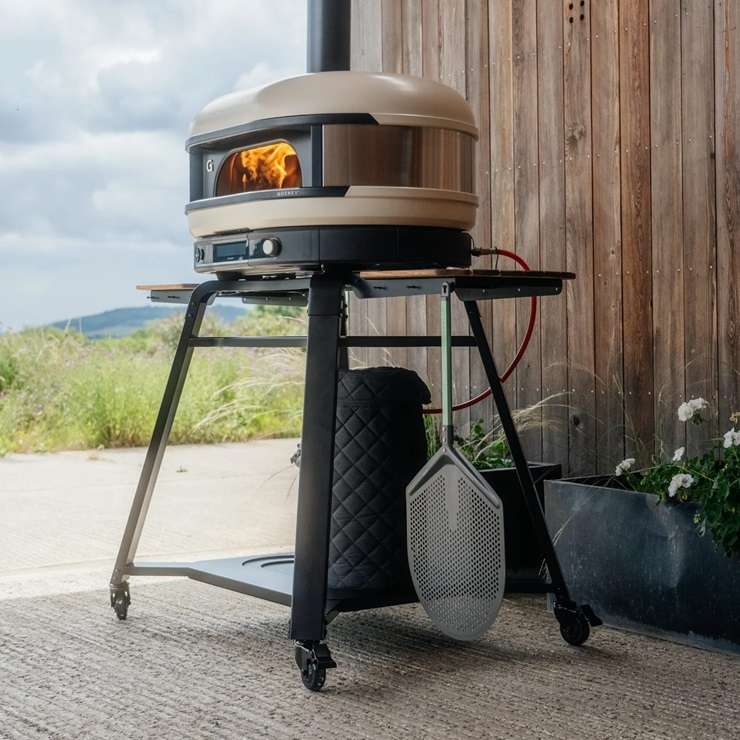
The Gozney Dome XL (Gen 2). Photo / Supplied
The ingredients and technique matter
Even the best oven won’t save a bad pizza, however.
Southon says great pizza comes down to three things:
- Fuel: Manuka/tea tree (hard wood) gives a great flavour, and high, consistent heat.
- Dough: For best results, start making the dough 2–3 days ahead.
- Ingredients: Use the best ingredients you can procure, and keep it simple with one or two toppings, not 50.
Noble says learning how to make proper dough is key, along with using semolina when stretching to get the right texture.
Mark Southon’s quick pizza dough recipe
- 500g OO flour
- 330ml warm water
- 1 tsp sugar
- 8g yeast
- 25 ml extra virgin olive oil
- 1/2 tsp salt
Mix the sugar into the yeast and pour over the warm water. Leave for five minutes for the yeast to react.
In a mixer, add the flour and salt, mix on a low speed, then add the water and oil gradually until a dough is formed, then increase the speed and work for 8-10 minutes or until the dough is smooth and springy.
Place the dough in an oiled bowl and cover with cling film. Proof in a warm area until doubled in size, knock back and portion into equal balls depending on what size pizza base you would like.
Allow these to prove again, then stretch and add your favourite topping, then bake in a hot pizza oven until crispy.
Top tip for getting the perfect warm water for yeast: mix one part boiling water with two parts cold water, stir, and use.