Intentional clutter isabout balance, colour and structure, fuelled by inspiration.
A layered, personality-filled home is having a moment. Intentional clutter, or maximalism, is less about mess and more about meaning. The antithesis of classic minimalism with its pared back palettes, intentional clutter is the art of surrounding yourself with things you love and using colour, texture and pattern to make it all feel considered rather than chaotic.
The secret lies in editing with purpose. Every object earns its place, and every colour plays a role.
Build a Resene palette that can hold it all
Start your property search
Maximalist interiors begin with a point of inspiration. As Resene colour consultant Veronika Vuletic explains, this could be artwork, a rug or even a favourite fabric. From there, you build outwards.
“Maximalism follows a ‘more is more’ approach such as mixing colours, layering patterns, having a range of textures and incorporating funky statement furniture,” she says. “Contrast is also an important part of the style, with a variety of materials, colours and patterns working together to create a space that feels full of personality.”
The key is not using every colour you love but choosing a core palette and repeating it in different ways. Think three to five anchor shades, then lighter and darker variations to create depth.
A strong starting point could be a deep, enveloping base such as Resene Coast or Deep Teal paired with warmer counterpoints like Rusty Nail or Tuscany. Add softer notes through complex neutrals such as Truffle or Half Tea to give the eye somewhere to rest.
Remember: not all maximalism needs to involve bright or bold colours. If you prefer a lighter maximalist look, begin with a warm off-white like Bianca or Double Rice Cake, then layer in more muted colours through furniture, art and painted accents. This approach keeps the space feeling airy while still embracing abundance.
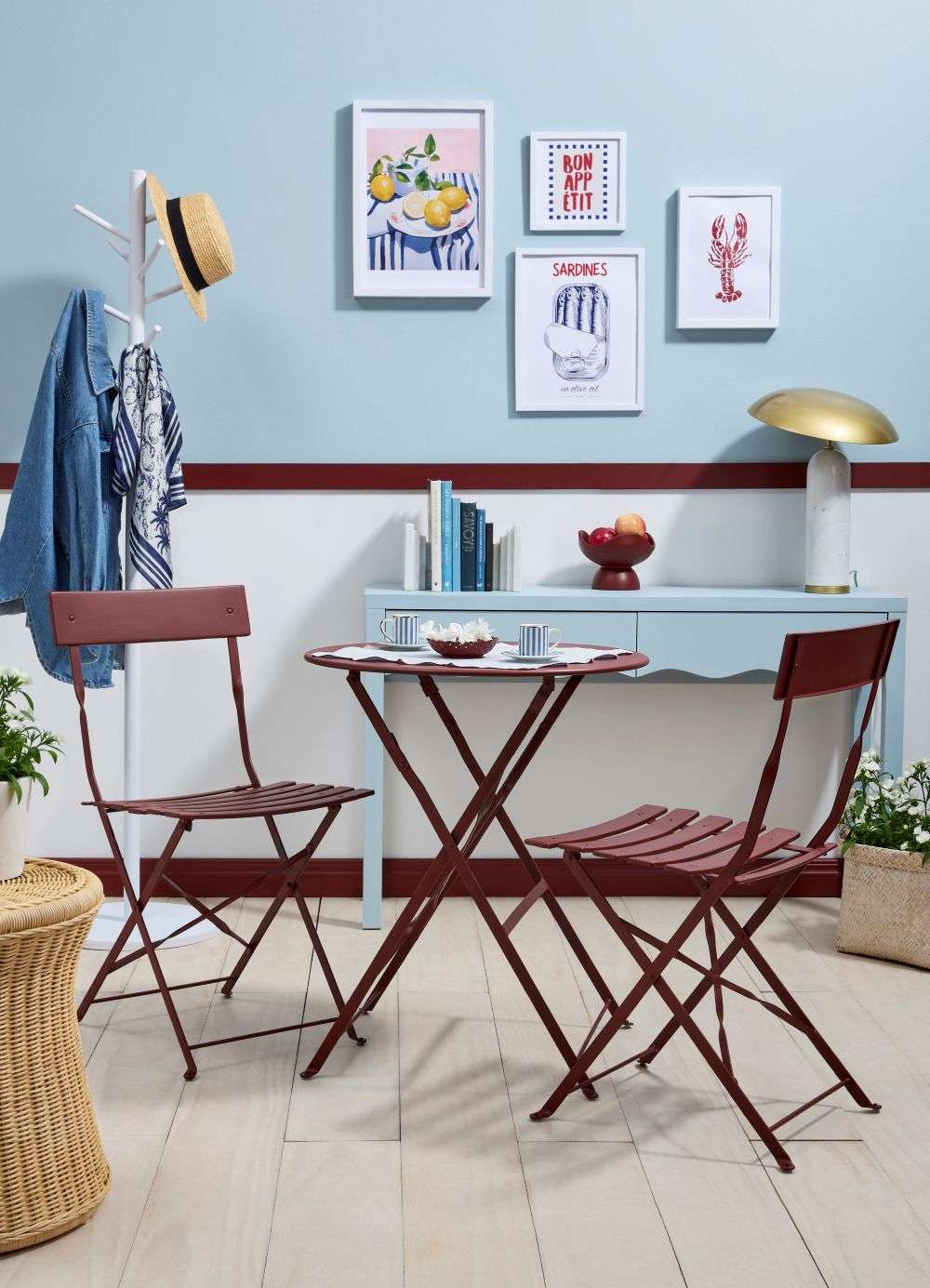
Mix up your sheen levels so they’re functional but also draw attention to the pieces of your curated clutter that you want to draw the eye to. Upper wall and side table in Resene Halcyon, lower wall in Alabaster with dado rail and dining set in Lonestar floor in Resene Colorwood Breathe Easy, coat rack in Solitude. Bookends, and rattan side table from Bed Bath and Beyond, cups from H&M Home, art from Etsy. Project Melle van Sambeek. Photo / Bryce Carleton.
Make clutter feel cohesive
Intentional clutter works when there is an underlying structure. Without it, even the most beautiful objects can feel disconnected.
Veronika recommends starting small. “When working with mixed patterns and colours, it helps to start with a small palette and build from there. Pulling colours from a key piece you love can help guide the rest of the scheme and keep everything feeling connected.”
Repetition is your best tool. If a particular blue appears in a cushion, echo it in a painted shelf using a shade like Resene Bluff. If a warm terracotta runs through your artwork, pick it up again in a feature wall using Pioneer Red.
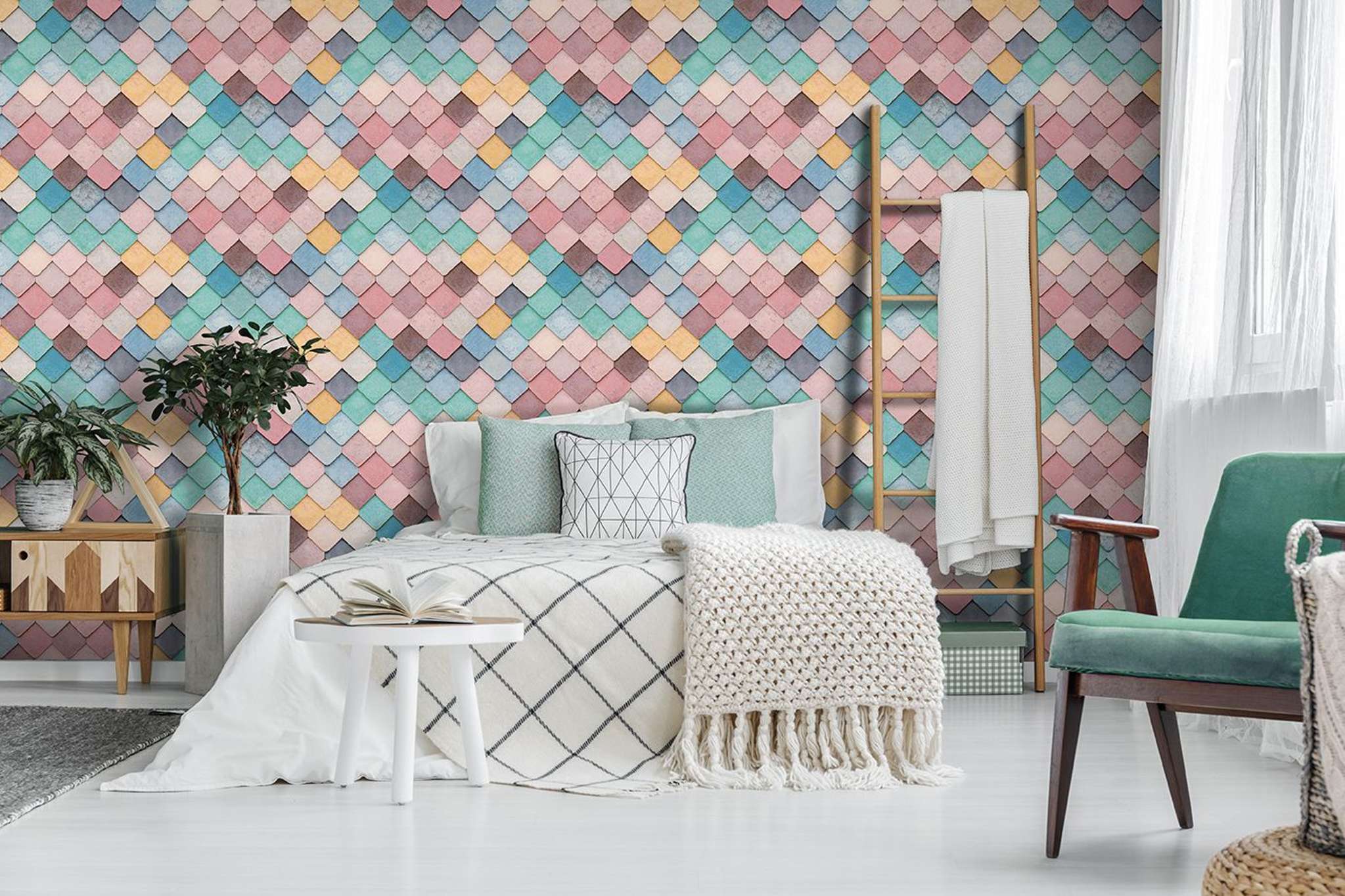
Mixing pattern scale is equally important. Pair large, bold wallpaper designs like Resene Perfect Harmony Wallpaper Collection PH3011 with finer, more subtle patterns like Resene Perfect Harmony Wallpaper Collection PH3313 so they do not compete. Resene wallpapers offer everything from oversized florals to intricate geometrics, making it easy to layer patterns without overwhelming a space.
Texture can help bridge gaps between colour and pattern, and colour can help bridge gaps between pattern and texture. Combine painted timber, woven fabrics, ceramics and metals to create a layered look that feels deliberate rather than cluttered.
Top tip: If you are working with open shelving or display areas, paint the back panel in a strong colour such as Resene Midnight Moss or Indian Ink. This creates a visual anchor that pulls a collection together and makes individual items stand out.
Using colour to unify the chaos
Colour is the thread that ties everything together. A well-chosen palette can make even the busiest room feel calm.
“One effective way to achieve this is by using the colour wheel to create harmony in the space,” says Veronika. “Start with a strong anchor colour whether that be a painted surface such as the wall, built-in cabinetry or a piece of furniture.”
From there, introduce complementary tones. Blue with orange, green with red. These combinations add energy without feeling random because they are grounded in colour theory.
For example, a living room anchored in a deep blue like Resene Navy Blue can be lifted with accents of Sante Fe or Persimmon. A green-led space built around Resene Cabbage Pont can be warmed with hints of Red Oxide or Cinnamon.
This interplay of opposites is what gives maximalist interiors their vibrancy.
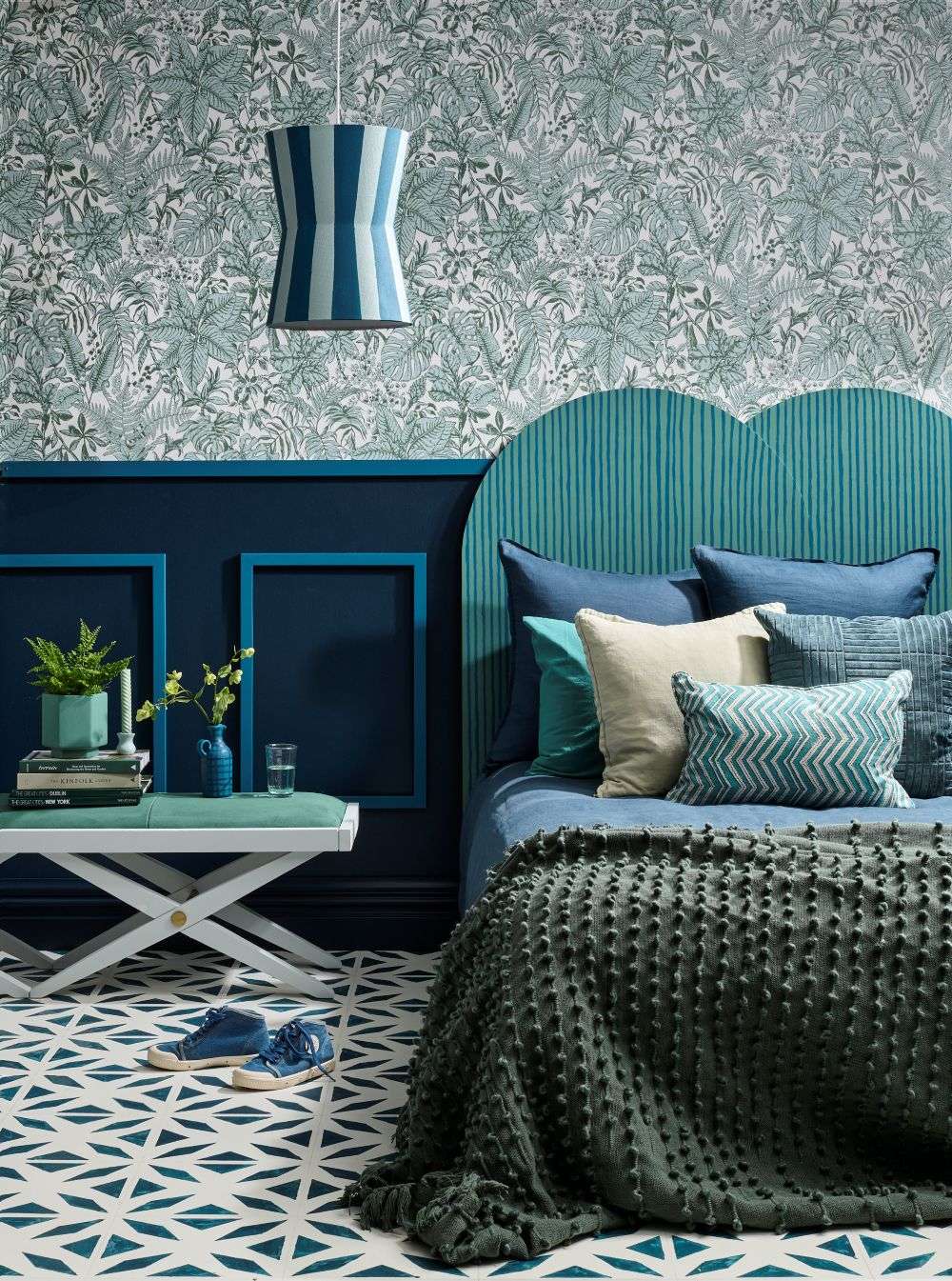
A harmonious colour palette bridges the gap between pattern and texture to pull a maximalist look together. Upper wall in Resene Wallpaper Collection 37520-2, lower wall Resene Tangaroa with framing and dado rail in St Kilda, skirting in Tangaroa, floor in Rice Cake stencil pattern in Tangaroa mixed with Resene FX Paint Effects Medium, bench in Stromboli with legs in Duck Egg Blue, headboard in Stromboli and St Kilda, pendant light in St Kilda and Sorrento, vase in Stromboli, pot in St Kilda. Zigzag cushion from Collect Living, other cushions. bedding and throw from Adairs. Project Kate Alexander. Photo / Bryce Carleton.
The role of paint, wallpaper and finishes
Paint is one of the most effective ways to bring intention to a layered interior. It can define zones, highlight collections and create cohesion across different elements.
Feature walls are an obvious choice, but consider painting ceilings, internal doors or cabinetry to extend your palette through the room. A ceiling in a soft tone like Resene Quarter Spanish White can soften a busy space, while a darker shade overhead can create a cocooning effect.
Wallpaper adds another layer of personality. A bold Resene wallpaper such as used on a single wall or inside shelving can act as a backdrop that ties multiple colours together.
Top tip: Use Resene SpaceCote Low Sheen on walls in high-traffic areas. Its durable, easy-clean finish is ideal for maximalist homes where surfaces are often on show and in use.
Pay attention to sheen
In a room filled with detail, sheen plays a subtle but powerful role.
Low sheen and matte finishes, such as those in the Resene SpaceCote range, help absorb light and soften the overall look. This is particularly useful in maximalist interiors where there is already a lot happening visually. A flatter finish prevents the space from feeling too busy or reflective.
Semi-gloss and gloss finishes, like Resene Lustacryl or Enamacryl, can be used more strategically. Apply them to trims, cabinetry or feature furniture to create contrast and highlight key elements. The slight shine draws attention and adds another layer of interest.
Mixing sheen levels is a simple way to add depth without introducing more colour. It also helps define different surfaces, making a layered room feel more structured.
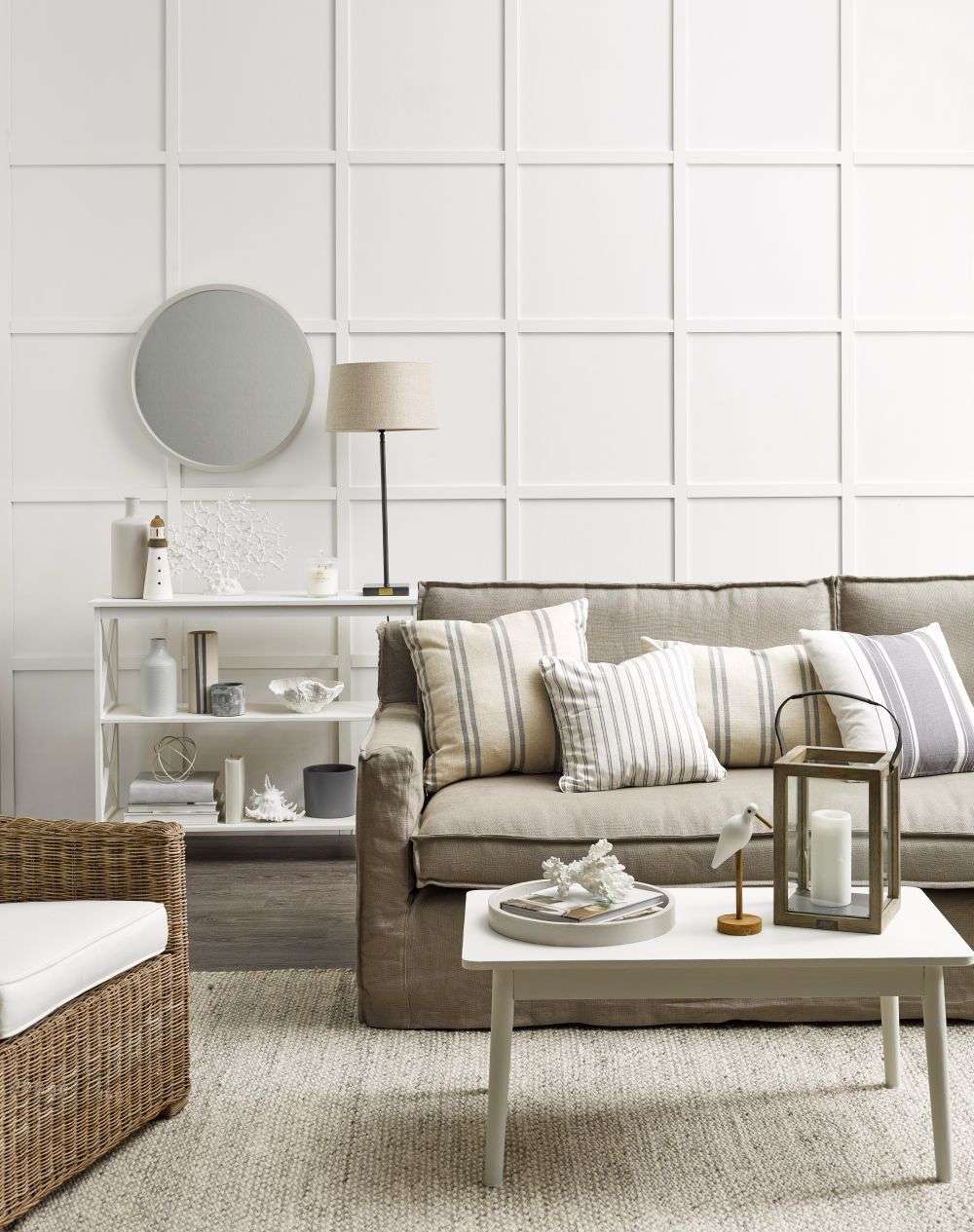
Maximalism doesn’t always mean a clash of bold colours. Here intentional “clutter” is given cohesion with a simple, clean neutral palette. Walls in Resene Black White, floor stained in Resene Colorwood Dark Ebony, console and coffee tables in Merino, mirror, tall bottle vase and tray in Cloudy and textured bottle, and shell box in Silver Chalice, coral in Black White, plant pot in Half Tuna, small pot in Resene Half Tune and Merino, striped vase in Tea with Half Tuna and Cloud, wire orb in Ash. Sofa, lamp base, chair, cushions and lantern from Ji Home, seagull and lighthouse ornaments from Bed, Bath and Beyond, mirror from Spotlight. Project Vanessa Nouwens. Photo / Wendy Fenwick.
Bringing it all together
Designing with intentional clutter is about balance. Bold colour paired with soft neutrals. Large patterns offset by smaller ones. Matte surfaces contrasted with subtle gloss.
Start with a palette, repeat it thoughtfully and use paint and wallpaper as tools to create structure. Let your favourite pieces lead the way and build a space that feels collected over time rather than styled in a single moment.
The result is a home that feels lived in, loved and unmistakably yours.