- Cheap money for home buyers has ended, but house prices are expected to rise in 2026.
- Economists predict growth of between 3% and 6%, with Southland performing well and Wellington lagging.
- Mortgage rates are at their lowest, unlikely to fall further, with potential OCR rise in 2027.
Cheap money for home buyers has run its course, and New Zealand house prices are expected to edge upward next year, as the housing market enters its “Goldilocks” phase: not too hot, not too cold.
Start your property search
OneRoof spoke to economists at the country’s major high street banks, and their outlook for 2026 is broadly aligned: there’s scope for growth while mortgage rates remain low.
Their predictions range from 3–4% to around 6%, although some note that high stock levels will act as a restraint on prices.
It’s also shaping up as a tale of two islands, with the economists picking Southland as the country’s star performer and Wellington as the market’s problem child.
Their message to buyers is that next year could be the time to act, with prices still roughly 15% below their peak.
ASB chief economist Nick Tuffley told OneRoof he expects a slight pickup in 2026 “but not a dramatic boom”, while Kiwibank chief economist Jarrod Kerr is more bullish: “Our best guess is house prices will rise by 5 to 7% over 2026. Call it 6% to sound precise.”
Westpac is predicting 5.4% annual growth, which senior economist Satish Ranchhod says is “pretty modest”.
Discover more:
- How much money has your suburb made? The housing market's biggest winners and losers of 2025
- Top lawyer's foreign buyer warning: Offers of luxury cars and boats could end in trouble
- Here comes the boom: What will Kiwi farmers spend their $3.2 billion windfall on?
Historically, big cuts to interest rates have triggered housing booms. Not this time. Despite the OCR dropping to 2.25%, house prices remain subdued. “There’s a lot of supply in the market,” Ranchhod told OneRoof. “That’s giving buyers a lot of options.”
ANZ chief economist Sharon Zollner agreed with the modest outlook, predicting around price growth of 5% next year. “Clearly, housing demand has picked up,” she said. “But it’s also clear that there have been a lot of people who have been waiting to sell a house as well. We’ve seen a strong increase in listings, and so there’s still plenty of choice out there. As long as that is the case, you’re not going to get the price tension. However, we will work our way through those inventories, and price tension will start to emerge.”
Zollner said government efforts to free up housing supply could influence prices: “The dream is that more of an increase in housing demand ends up in more housing, as opposed to just higher prices for the existing housing. But we’ll have to wait and see.”

BNZ chief economist Mike Jones has identified Wellington as a problem market. Photo / Fiona Goodall
The economists note that there’s a lot of regional variation in the market, with parts of the South Island, such as Canterbury and Otago, performing well this year.
Some areas are “laggards”, said Tuffley. “Wellington has been really lagging. It’s had the deepest downturn from the peak. It’s been pretty much the most sluggish picking up.
“In the short-term, we think there’s going to be a fair amount of caution hanging around in Wellington, given that the Government is still looking hard at how it can restrain spending growth.”
The South Island was a different story, said BNZ chief economist Mike Jones. “Wellington house prices fell by about 3% over the year, but Southland house prices rose by 8%.”
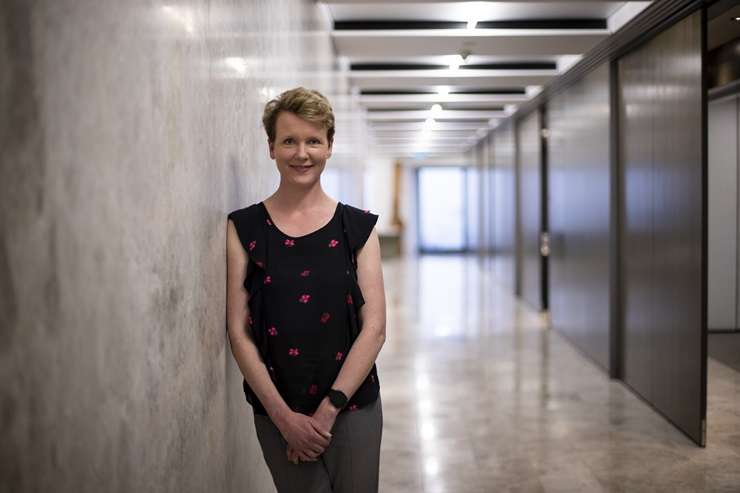
ANZ chief economist Sharon Zollner: "The market has moved very quickly onto wondering when the RBNZ will hike.” Photo / NZME
One thing most of the economists highlighted to OneRoof was the number of building consents still going through the market. “We’re still consenting a fair amount and even still building a fair amount of homes, at a time when population growth has slowed rapidly,” said Tuffley.
Excess stock, Jones said, was likely to nullify demand, which means house prices might not move at all.
Kiwibank’s Kerr raised another theme likely to affect house prices: the 2026 general election. “There are a lot of nerves around the election, particularly around a capital gains tax, which is up for debate.”
He also wondered if the new RBNZ governor, who has just arrived from Sweden, might be more liberal on bank capital and risk-weighting. “Where she’s from, they have lower levels of bank capital. I’d love for her to join and just do what they do in Sweden.”
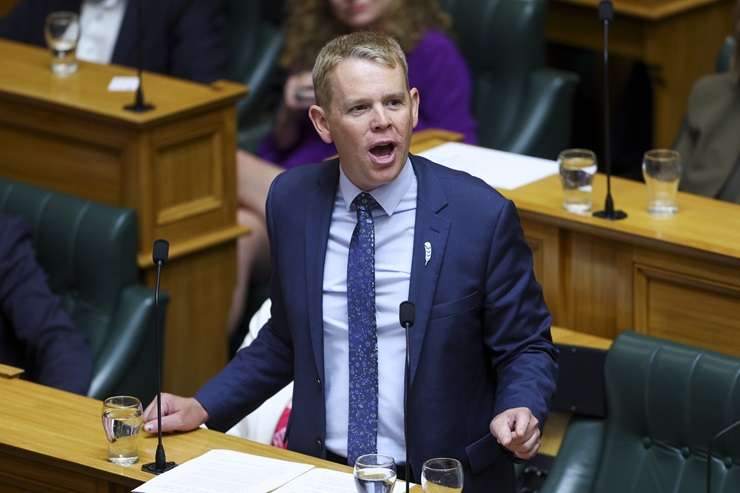
Labour leader Chris Hipkins has promised to introduce a capital gains tax if the party wins next year's election. Photo / Getty Images
When it comes to home loans, the economists are pretty much in agreement: after a year-and-a-half of aggressive cuts, mortgage rates are at the bottom and are unlikely to fall further.
Some of the economists expect the Official Cash Rate (OCR), which affects mortgage interest rates, to rise in 2027.
“We’re now in the final stages of the downtrend for mortgage rates,” Jones said. For borrowers, the message was clear: don’t expect another wave of relief.
Kerr added: “People are realising that this is as low as the interest rates will go."
Zollner agreed, noting that the Reserve Bank sounded “quite definitive” about not cutting rates again in its November statement: “The hurdle to do that is quite high. Not impossible, but it would probably take some sort of negative shock.”
She pointed out that swap rates jumped after the statement: “The market was surprised. It had been pricing a bit of an even chance of another cut in February, and that’s now gone. Indeed, the market has moved very quickly onto wondering when the RBNZ will hike.”
She added that upcoming GDP data could reinforce that trend: “We expect GDP to be stronger than the Reserve Bank is expecting. So while the market reaction has been very large, it’s not obvious that it’s going to turn around anytime soon. It does underline our sense that there’s not a lot of downside for mortgage rates from here.”
The forecasts follow a choppy year for market predictions. This time last year, economists at the big banks were predicting house price rises of between 5% and 10% in 2025, citing falling interest rates and expectations of a strong economic revival.
These were hastily revised mid-year, with the watered-down forecasts responding to a lacklustre economy, rising unemployment and a sluggish housing market carrying the weight of unwanted listings.
- Click here to find properties for sale