ANALYSIS: The Reserve Bank has just conducted its regular review of the Official Cash Rate and left it unchanged at 2.25%, as most analysts expected, and signalled the first of several rises would come in September, with the cash rate projected to peak at about 3.3% in 2028.
Why has the Reserve Bank committee not increased the rate despite inflation sitting 0.8% higher than they predicted in November at 3.1% (just 0.1% of the divergence attributable to the Iran War)? And why have they held off despite expectations that inflation will soon rise above 4%?
Two reasons. First, our central bank has an established record of tightening monetary policy too late in the cycle and then tightening by too much. It then tends to ease too late and end up easing too much. This happened last year with the cash rate cut to 2.25% even as the inflation rate climbed from 2.2% to 3%.
This tendency is likely to be enhanced this cycle because we are looking at monetary policy cyclically tightening even before the economy has commenced a decent cyclical upturn and placed strong pressures on resource availability. The unemployment rate remains above average at 5.3%.
Start your property search
Second, there is little chance that the economy will achieve the near-3% growth most of us, including the Reserve Bank and Treasury, expected for this year and next, given the effects so far and those to come of the US attacks on Iran from February 28. The Reserve Bank now, for instance, predicts just 1.7% growth in our economy in the year to March 2027 compared with the 2.8% it predicted last November.
There are downside risks to growth as business margins become newly crunched. Consumers effectively pay a war “tax” of higher fuel prices, and that leaves less money available to spend on other things.
Much as I am quite critical of the Reserve Bank’s loss of the ability to accurately predict inflation, for the coming year it effectively gets a free ride when it comes to setting monetary policy. That is because none of us knows how long the Iran war will last, what the final impacts will be on the pace of economic growth and inflation, etc. None of us is likely to get our forecasts right.
Discover more:
- Tony Alexander: This is not the GFC all over again - four reasons we will get that upturn
- Queenstown 'madness': Homes so unaffordable people are hot-bedding, living in garages
- Mortgage fear: Rising fuel prices 'making people think twice about more debt'
Just like the Global Financial Crisis of 2008-09 and the pandemic period of 2020-22, none of us has experience of what usually happens when there is the greatest reduction in global oil flows in human history.
Acknowledging this uncertainty for the future track of our economy and interest rates is important because there are implications for interest rate risk management.
Normally, us economists would feel some confidence when making predictions at the start of an upturn regarding what will happen with borrowing costs. But this time around we’re just guessing and making some strong assumptions regarding the effects of the Iran war in particular.
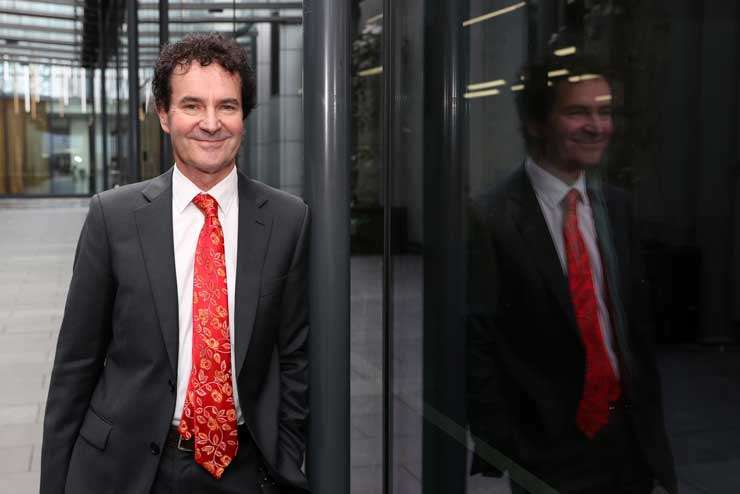
Independent economist Tony Alexander: "None of us is likely to get our forecasts right." Photo / Fiona Goodall
Periods of enhanced uncertainty mean gambling on rate movements by fixing one’s mortgage interest rate for only a short period of time is riskier than normal. Medium- to long-term fixed rate periods are more valuable.
So, whereas for the period from early-October to about mid-December I was a fan of fixing five years because the rate was attractive below 5%, since then I have supported fixing three years. Initially that was simply because rates had moved up, but more recently, I have favoured fixing three years to get well beyond the period of lingering inflation and rate uncertainty associated with the oil price shock.
Note, however, that most people are fixing for two years because the cost is almost 0.2% lower than fixing three years. That still feels a tad risky for me. But then again, it is complete guesswork as to where rates will be this time in 2028. Good luck.
- Tony Alexander is an independent economics commentator. Additional commentary from him can be found at www.tonyalexander.nz