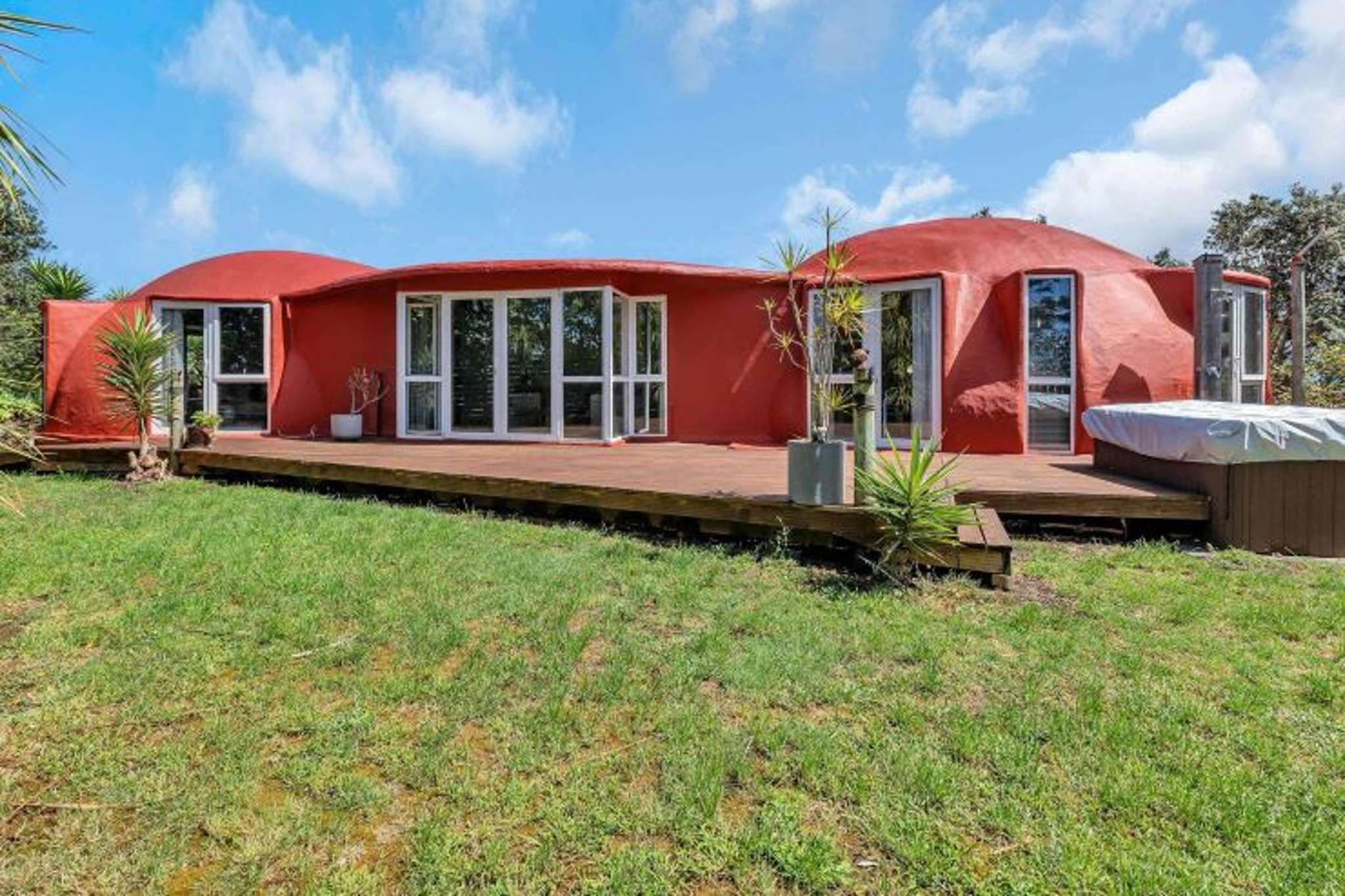
A bright red dome home dreamed up over "a pallet or two of Steinlager" is one of the most unusual properties to hit the Northland market this year.
The striking two-dome home in Ruakākā was built by owner Jim Archibald as a retirement project and is now on the market after a decade as his family's home.
The property stands out for more than its bold colour and igloo-like appearance. While most of New Zealand's dome homes were built during an alternative-housing boom in the 1970s, many by engineer Bill Braine, Archibald's version was completed in the 2010s using more modern materials and construction techniques.
Archibald told OneRoof the idea for the project had its origins in years of conversations with his close friend John Braine.
Start your property search
The domes are unusual in more than one way. Most similar homes in New Zealand were built in the 1970s, many by Bill Braine, the brother of Archibald's mate. But Archibald domes were completed in the 2010s.
"I have a lifelong friend, John Braine, who was a chef, and his brother Bill [Braine was an engineer," Archibald told OneRoof. "John and I have probably drunk a pallet or two of Steinlager over the years, discussing how we could actually do something like this because I've always been interested in sustainable building and changing the whole cost structure.
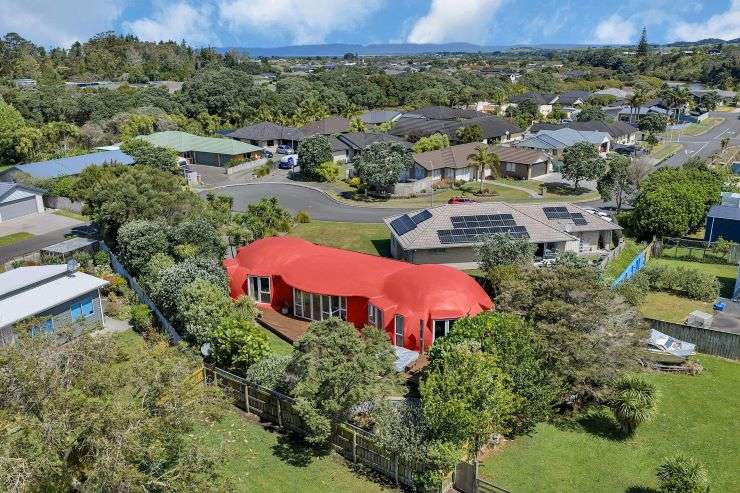
Archibald and partner Astrid Fisher, who have lived all over the country, found a suitable section in Northland while visiting an old friend. Photo / Supplied
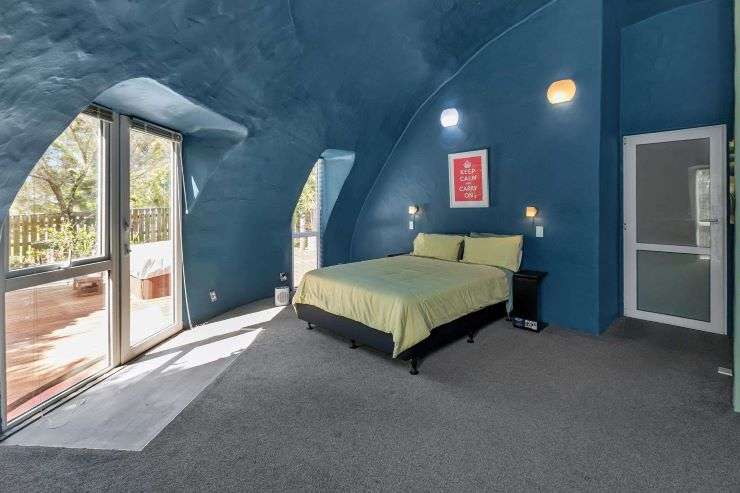
The couple decided to use vibrant colours in the home instead of the standard whitewash used in dome homes built in the 1970s. Photo / Supplied
"We were up in Ruakākā visiting John, and I was going for a bike ride when I saw this section going cheap and decided, as I'd retired at the time, 'Let's have a go.'
"I've always been interested in alternative construction, and the key thing about building these domes is the speed at which they can be erected. You need council sign-off on the foundations, then you just need someone who can operate a foam gun. You use a butanol inflatable bladder and spray the inside with polyurethane foam."
The polyurethane shell is then coated in fibre-reinforced cement, creating a highly insulated structure.
Archibald and his partner, Astrid Fisher, carried out much of the work themselves, from digging the foundations to painting the interior.
Discover more:
- Historic home heads to auction with $70k reserve - but there's a catch
- Why Aucklanders and Queenstown escapees are piling into tiny lake town
- Historic mansion could smash Sir Rod Drury’s house price record
"I've worked in all sorts of jobs, and guys my age [79] are usually pretty handy at most things because it's how we grew up. My background is in tourism and marketing. I was one of the people who pioneered whitewater rafting in New Zealand. I spent 20 years on the back of a raft having a great time. But I've always been intrigued by building."
The couple have enjoyed living in the three-bedroom home at 9 Waikohua Place but are now making a permanent move south to be closer to family. "We were in it for 10 years. We moved to Nelson because of my mother-in-law, who passed away a month ago."
He said of the home: "It's wonderful to live in. It's passive and has really high insulation qualities. The floors in the foyer area are a real heat sink. It can be 12 degrees outside and 20 degrees inside during the day."
One of the biggest differences between modern dome homes and those built in the 1970s is the use of basalt fibre reinforcement.
Archibald said earlier dome homes relied on rebar as reinforcement, which is more prone to corrosion.
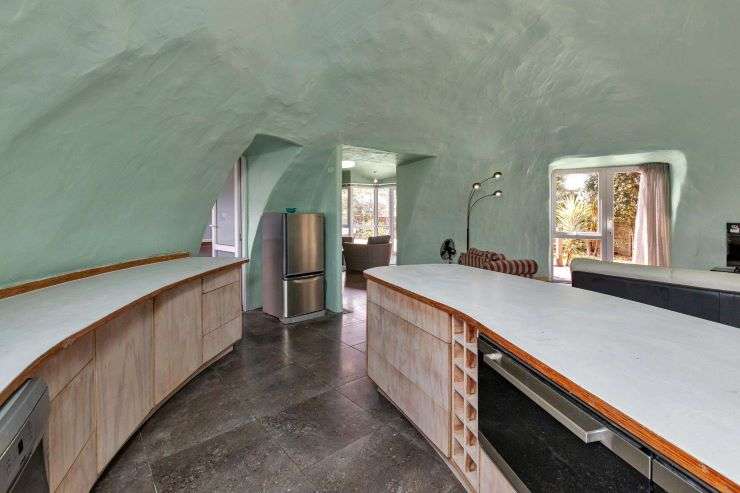
Archibald and Fisher have decided to sell their passive-style home after moving to Nelson to be nearer to family. Photo / Supplied
His home's vivid appearance is another departure from tradition. Most dome homes are painted white, but Archibald drew inspiration from colourful cities he visited during his career.
"I was lucky enough in my job to travel extensively, particularly in places like Italy and Buenos Aires [Argentina], and there are all these wonderful colour schemes and palettes on houses. I thought, 'Well, if you have a dome, don't paint it white.' Red is the second colour we've had. We had a light green initially, a pastel, but then we decided, 'Let's change it up.'"
Inside, the colourful theme continues, with a navy-blue master bedroom and shades of green and yellow throughout the rest of the home.
The property has an RV of $840,000 and is on the market with Harcourts agent Francie Stokes, who has embraced its unique character with the marketing slogan: "Dare to Be Different!"
In the OneRoof listing, Stokes describes the home as a standout property that combines distinctive design with practical family living.
"This distinctive home makes a statement with its striking dome-shaped roofline, flowing seamlessly down the walls, complemented by durable fibre-cement cladding," she writes in the listing on OneRoof.
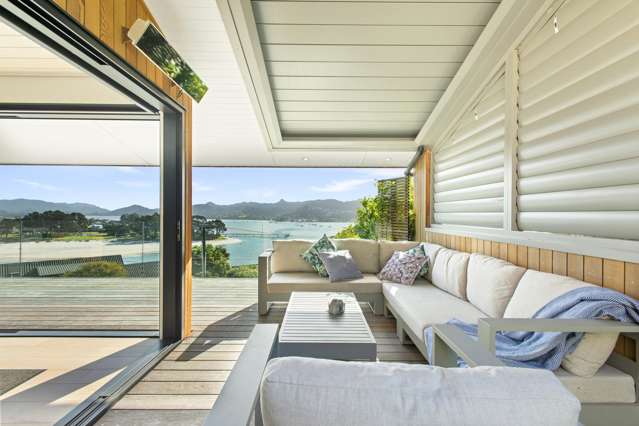
"Numerous double-glazed doors create a wonderful connection between indoors and out, opening onto a large, north-facing deck, the perfect spot to soak up the sunshine, entertain friends or enjoy those long summer evenings."
- 9 Waikohua Place, Ruakākā, Whangārei, is for sale, deadline December 3