New Zealand’s housing market is heading into the election in a slump. The nationwide average property value has fallen $7000 over the past three months and $9000 over the past six months to $955,000.
Only two regions, Otago and Canterbury, emerged from winter with any meaningful momentum. Otago’s average property value rose 0.8% ($8000) to a record $1.065 million, while Canterbury gained 0.4% ($3000) to $821,000.
Seven regions recorded quarterly declines of 1% or more. Wellington was among the weakest performers, with average property values dropping 2% ($17,000) to a post-Covid low of $817,000.
The West Coast suffered the steepest quarterly decline, with average property values falling 2.3% ($12,000) to $507,000. However, that remains only slightly below the region’s peak of $519,000.
Start your property search
Auckland’s average property value slid 1.3% ($16,000) to $1.236m. Values are now $25,000 lower than a year ago and close to $300,000 below the market peak.
Among the major centres, Dunedin was the standout performer over winter. Its average property value climbed 1.3% ($9000) to $700,000, leaving it just 7% below its record high of $752,000 reached in early 2022. The performance aligns with anecdotal reports of strong first-home buyer activity.
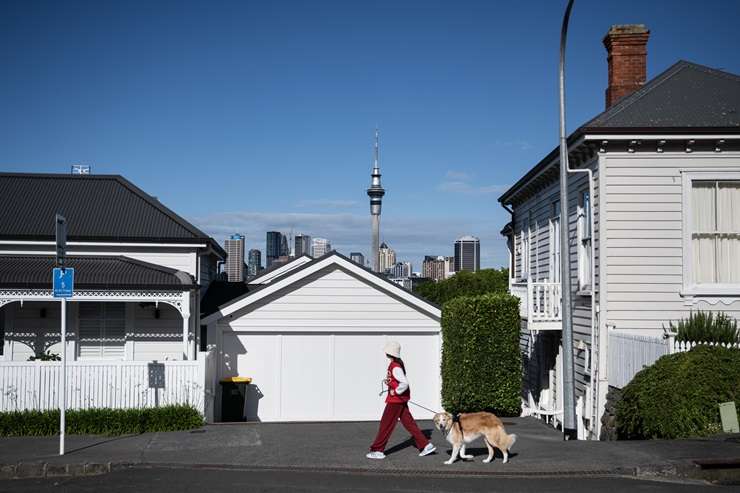
Auckland’s average property value has dropped by $16,000 in the last three months and $71,000 in the last three years. Photo / Alex Burton
Tauranga (+0.7% to $1.106m), Christchurch (+0.6% to $826,000) and Queenstown Lakes (+0.3% to $2.204m) also edged higher over the quarter. Christchurch and Queenstown Lakes both reached fresh value peaks, although for very different reasons. Christchurch continues to benefit from robust first-home buyer demand, while Queenstown Lakes is being buoyed by activity in the holiday-home market, including several high-value sales in the district’s most affluent enclaves.
Hamilton was flat over the quarter, with average property values holding at $798,000, though they remain 1.5% lower than six months ago.
Within Auckland, North Shore home owners have weathered the downturn better than most. Average property values there slipped just 0.7% over the quarter to $1.416m. By contrast, Waitākere recorded one of the city’s larger declines, with values down almost 2% to $945,000. The figures suggest affordability alone is offering little protection from falling values.

Dunedin’s real estate market has been country’s hottest over winter, with the city’s average property rising by 1.3% in the last three months. Photo / Supplied
Wellington City’s weakness was a major drag on the wider region. Average property values in the capital tumbled 3.2% to $902,000, slipping below their level at the start of 2020.
At suburb level, the biggest quarterly gains were recorded in Georgetown, Invercargill (+5.1% to $436,000); Kaniere, Westland (+4.5% to $698,000); Otumoetai, Tauranga (+4.4% to $1.085m); Tauranga Central (+4.3% to $1.057m); and Bluff, Invercargill (+3.3% to $381,000).
The sharpest falls were in Edgecumbe, Whakatāne (-6.6% to $624,000); Auckland Central (-6% to $499,000); Mangakino, Taupō (-5.8% to $439,000); Elgin, Ashburton (-5.8% to $947,000); and Blaketown, Grey (-5.5% to $364,000).
Fifty-two suburbs, all in the South Island and predominantly in Christchurch, reached record values over winter. In contrast, 41 suburbs, largely concentrated in Wellington and Auckland, saw average property values fall back to pre-Covid levels.
The biggest post-Covid shift in values has been recorded in Peacocke, Hamilton, although that reflects the impact of major new subdivisions bringing different housing stock and price points into the suburb.
Where was the market heading into the 2023 election?
By the end of September 2023, the consensus was that New Zealand’s housing downturn had largely run its course after one of the steepest corrections on record. The Reserve Bank had paused its interest rate hikes, but the Official Cash Rate remained at 5.5% and fixed mortgage rates were still hovering around 6%.
Annual inflation had retreated by two percentage points from its post-Covid peak of just over 7%, but remained above the Reserve Bank’s target band of 1% to 3% (it currently sits at 4.1%).
The economy and cost-of-living pressures dominated the election campaign, much as they do today.
At a national level, housing values have gone nowhere over the past three years. The average property value is just 1.2% higher than it was at the end of September 2023, with home owners in eight regions, including Auckland and Wellington, worse off than they were before the last election.
Those lower prices have been a boon for first-home buyers, but few others. In many of those markets, first-home buyers have become the dominant force, helping support demand while investors have largely stayed on the sidelines despite the return of interest deductibility.
The South Island has been the biggest beneficiary of the past three years, although it is difficult to draw a direct link between changes in property values and specific government policies.
The West Coast has been the strongest-performing region since the 2023 election, with property values rising almost 20%. Otago and Southland have also posted double-digit gains, up 15.9% and 13.9% respectively, while Canterbury values have climbed 7.2%.
At a district level, Queenstown-Lakes is the clear winner, with average property values rising by more than $300,000, or 18%, over the past three years. Christchurch and Dunedin have also recorded gains, although the increases have been more modest at about 7%.
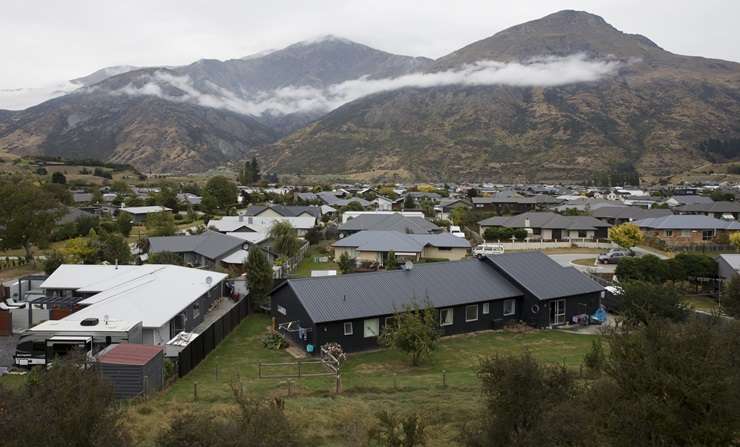
Queenstown-Lakes house values have soared in the last three years, rising by more than $300,000. Photo / Mike Scott

OneRoof editor Owen Vaughan: “Lower prices have been a boon for first-home buyers, but few others.” Photo / Fiona Goodall
OneRoof’s analysis found that the average property value in more than half the suburbs with at least 20 settled sales in the past year is now higher than it was ahead of the 2023 election.
Home owners in 20 suburbs, most of them in Otago and Southland, have enjoyed value gains of more than 20%, led by Lake Hayes, where average values jumped 32% to $3.1m, followed by Arrowtown (up 31% to $3.1m) and Lake Tekapo (up 26% to $1.32m).
By contrast, property values in 21 suburbs fell by more than 10% over the same period. The steepest declines were in Wairakei, down 22% to $1.03m, Wellington Central, down 20% to $437,000, and Strathmore Park, down 16% to $847,000.
In dollar terms, average property values have fallen by more than $100,000 in 28 suburbs, most of them in Auckland and Wellington.
Nearly two-thirds of Auckland suburbs are worth less than they were three years ago, with the biggest falls concentrated in apartment-heavy areas such as Auckland Central and suburbs that have absorbed large amounts of lower-priced townhouse development.
The region’s affluent holiday-home enclaves have been among the strongest performers. Values in Onetangi, home to the Prime Minister’s Waiheke bach, have risen by $249,000, while Omaha, on Auckland’s northern fringe, has recorded a $268,000 increase.
No Wellington suburb has posted a gain over the past three years. Christchurch, however, has been a different story, with every suburb recording value growth.
- Click here to find properties for sale