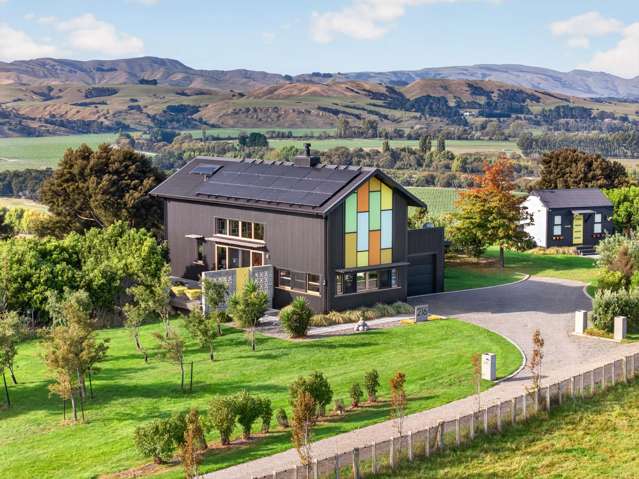
Is there a colour more in need of an image boost than beige?
Like vanilla, the name has often become associated with meaning bland and dull, but, we’d argue, unfairly so!
In fact, beige is one of the most versatile colours there is, working in serene soothing colour palettes just as well as a backdrop for bolder, invigorating looks. The world is your Resene Pale Oyster!
Start your property search
Modern beige
“It’s so much more inviting than white,” says Resene stylist Monuean Ryan, of using beige in your interiors.
The key, she says, is recognising that beige doesn’t refer to one colour, but a whole spectrum of neutrals. Beige takes its name from the French word for cloth made from undyed wool and is often used as a ‘catch-all’ name for any neutral that isn’t white, grey or black.
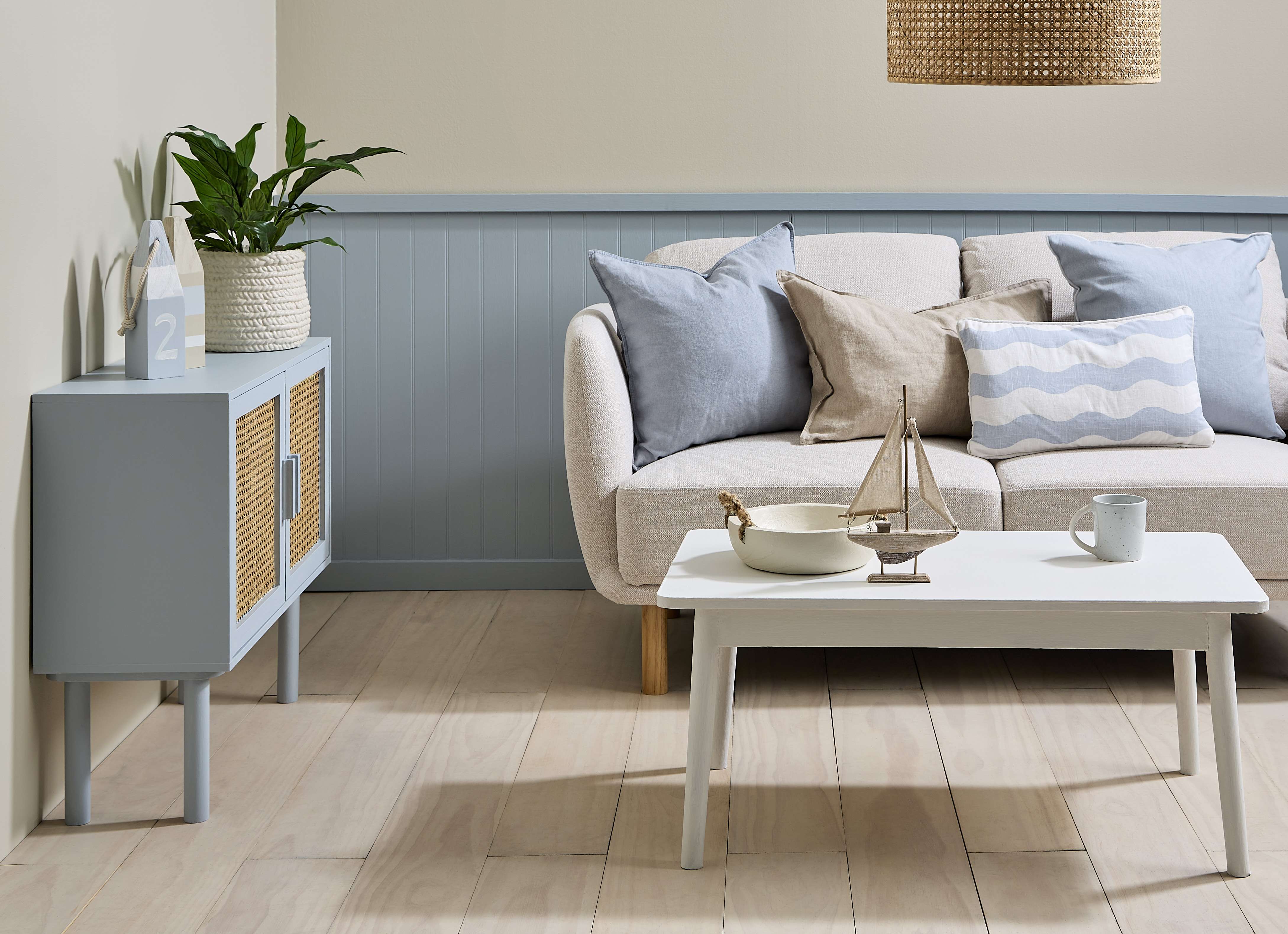 Sandy beiges are the perfect backdrop for a breezy beachy sitting room. These upper walls are painted in Resene Parchment with lower walls and cabinet in Resene Casper, floor washed in Resene Colorwood Breathe Easy, coffee table in Resene Quarter Parchment and planter and bowl in Resene Parchment. Cushions from H&M Home, boat from Spotlight. Project by Vanessa Nouwens, image by Bryce Carleton.
Beiges can refer to anything from yellow-based creams like Resene Spanish White to deeper pink-toned tans like Resene Mongoose, all of which actually makes it a really fun, adaptable colour to work with.
“Beige has had a bad rap in the past, but it has evolved into a versatile neutral that works in well with our on-going desire to feel connected to nature. Popular modern beiges tend to be warm, pale shades which offer an organic, natural feel.
“Paired with other nature-inspired colours and materials they help a space feel cosy and soft,” Resene colour expert Meryl Southey says. “Add pops of deeper tones like green Resene Clover, rustic reds like Resene Pioneer Red and browns like Resene Trek to add depth.
The beauty of beige
Once you see beige in a new light and realise not all beiges are created equal it opens up a whole range of possibilities in how and where they can be used, Meryl says.
As well as making a practical and adaptable base colour from which you can start to build a complex - or minimalist - colour palette, they can help add warmth to cool spaces, or add airiness to small, confined spaces. They can help rooms feel both more spacious and cosier and they are excellent at complementing key pieces of furniture or decor in brighter accent colours, by neither completely fading into the background, nor dominating a space.
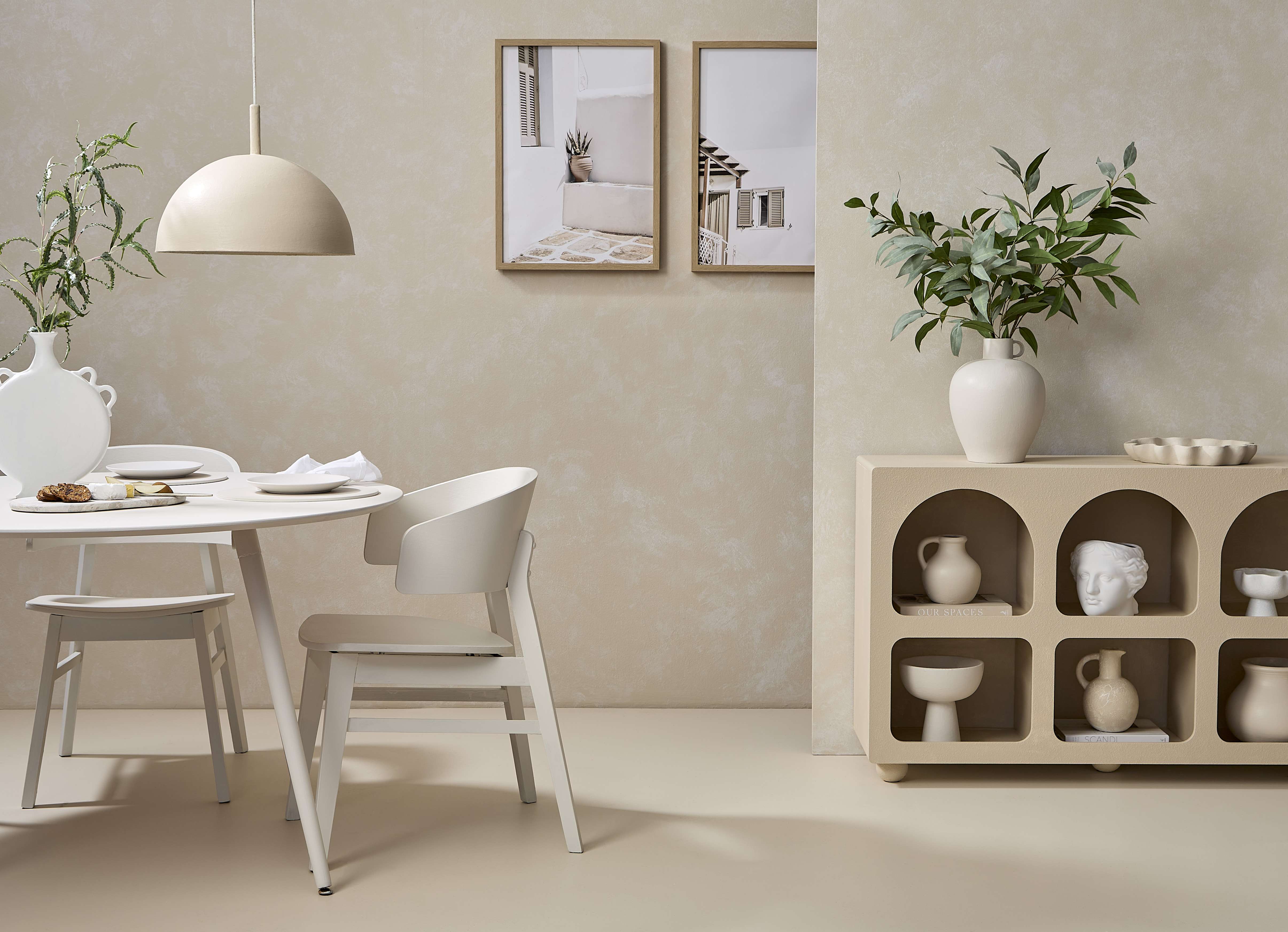 Layers of a beige neutral are given additional interest and movement with the use of a subtle textured effect. Walls painted in Resene Biscotti topcoated with Resene FX Paint Effects Medium mixed with Resene Eighth Biscotti. Floor painted in Resene Biscotti, dining chairs and table in Resene Quarter Biscotti, cabinet in Resene Double Biscotti, vase with foliage, top shelf jug and pedestal bowl in Resene Half Biscotti, wave dish and lower shelf jug in Resene Biscotti, vase in cabinet in Resene and light pendant in Resene Double Biscotti. Art from Etsy, frames and napkins from Kmart, plates from The Warehouse, cabinet from Sunday Homestore. Project by Vanessa Nouwens, image by Bryce Carleton.
“Beige is not only for aesthetic purposes but will also optimise a room,” Meryl says. “Mushroom beiges like Resene Triple Blanc, for example, are great at brightening up a space and can make a room feel larger than it is.
“Sandy beiges such as Resene Bison Hide with its green edge, are, on the other hand, ideal for rooms which have cooler accents or hard surfaces, adding contrast without the starkness of a cool-toned white.
For a sophisticated finish that’s as calming as it is chic Meryl suggests pale coffee beiges
such as Resene Almond Frost paired with other soft, muted shades like palest pink beige Resene Pearl Bush, grey-blue Resene Ship Cove and classic mid-toned brown Resene Brown Derby.
Warm minimalism
Using neutrals to create a pared back palette is a straightforward way to create a classic minimalist palette. Traditional minimalist looks are often anchored in a simple white like Resene Eighth Rice Cake, or a subtle off-white like Resene Blanc but a different approach could be to warm up your minimalism with layers of subtle beiges.
Try Resene Biscotti in layers with its eighth, quarter, half and double variations for layers of warmth that build visual interest and colour shifts across walls, floors, ceilings, trims and decor without creating any sense of busy-ness or visual clutter.
To complete the look while staying with a minimalist palette, try a stain or stain wash finish in Resene Colorwood Natural or Resene Colorwood Becalm.
If you do want one or two touches of contrast try a soft, greyed violet like Resene Enigma and finish with an accent or two in coppery Resene Korma.
Let’s talk about greige
If classic tan-toned beiges are not for you, you can veer more toward the charcoal end of the spectrum to discover greige. The word is an obvious portmanteau of grey and beige and refers to shades that sit in the not quite grey, not quite beige area of the spectrum.
Resene Greige is a clear example as a perfect balance between a warm grey and a mushroom-y beige. Other examples from the Resene colour range are Resene Stonewall and Resene Truffle.
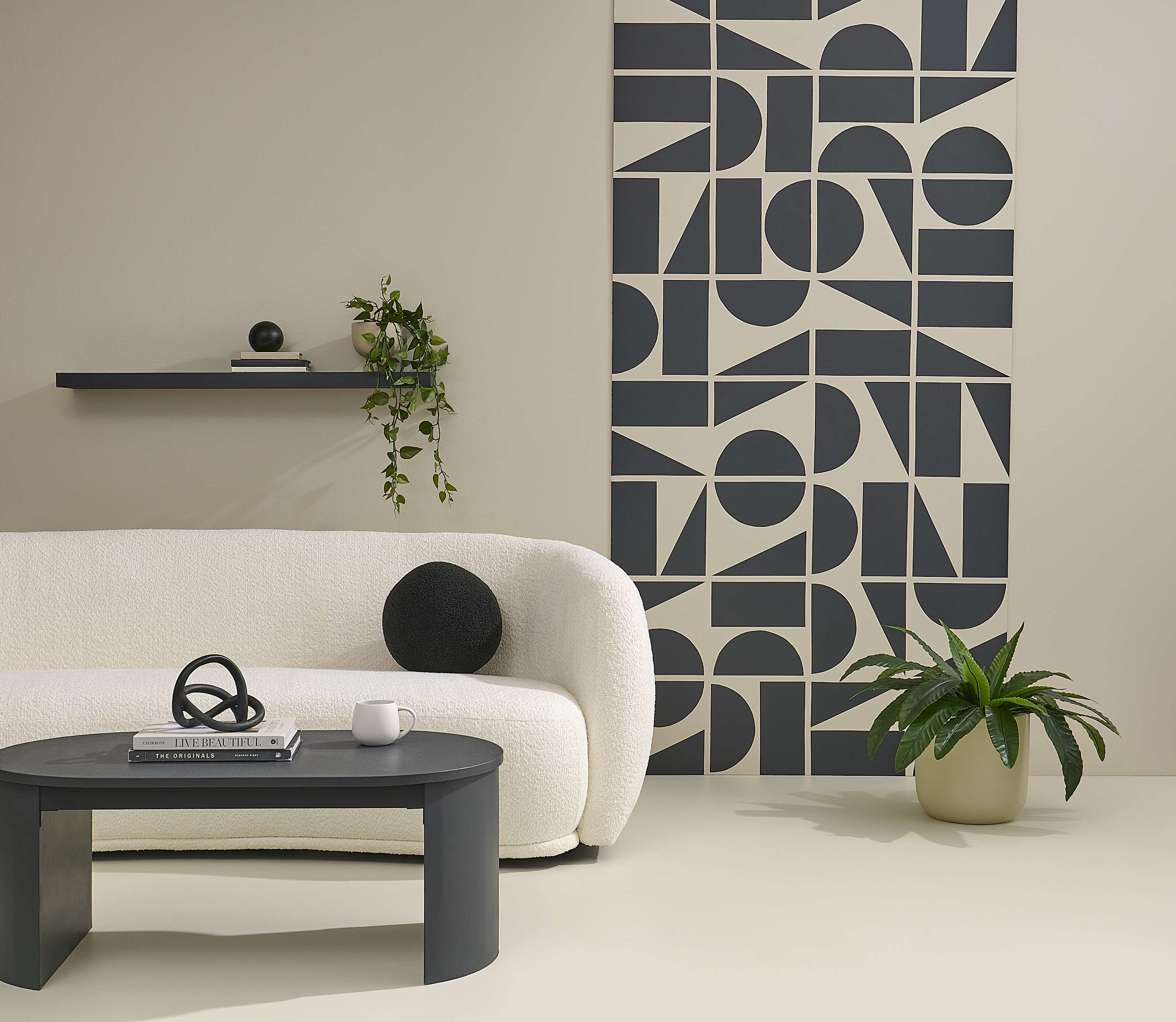 Beige neutrals paired with deep charcoal offer a modern and dramatic alternative to a classic black and white palette. The rear wall is painted in Resene Parchment with mural tile design in Resene Foundry. Floor painted in Resene Half Parchment, table and shelf in Resene Foundry, ornaments in Resene Black, plant pot in Resene Triple Parchment and books in Resene Half Rice Cake, Resene Black and Resene Triple Parchment. Sofa from Danske Møbler, faux plants from Adairs. Project by Vanessa Nouwens, image by Bryce Carleton.
These mid-toned neutrals are a good choice to add to otherwise-white interiors and exteriors to make them feel more colourful than they are. Their blend of grey and taupe means they are particularly versatile and open up new areas of the colour spectrum to play with.
Try Resene Stonewall with deep grey blue Resene Big Stone, against a fresh, white backdrop of Resene White Pointer. Resene Half Stonewall used on a home exterior also works beautifully with trims in Resene Eighth Rice Cake. Add a bold front door in Resene Fire for drama.
For a soothing interior space try dusty, sophisticated greige Resene Cloudy with deep industrial browns like Resene Space Shuttle, subtle lilac Resene Santas Grey or pastel aqua Resene Jet Stream.
Other combinations to try:
Yellow-toned beiges such as Resene Putty bring a sunny note and work well with deep greens like Resene Celtic or creamy off-whites like Resene Bianca.
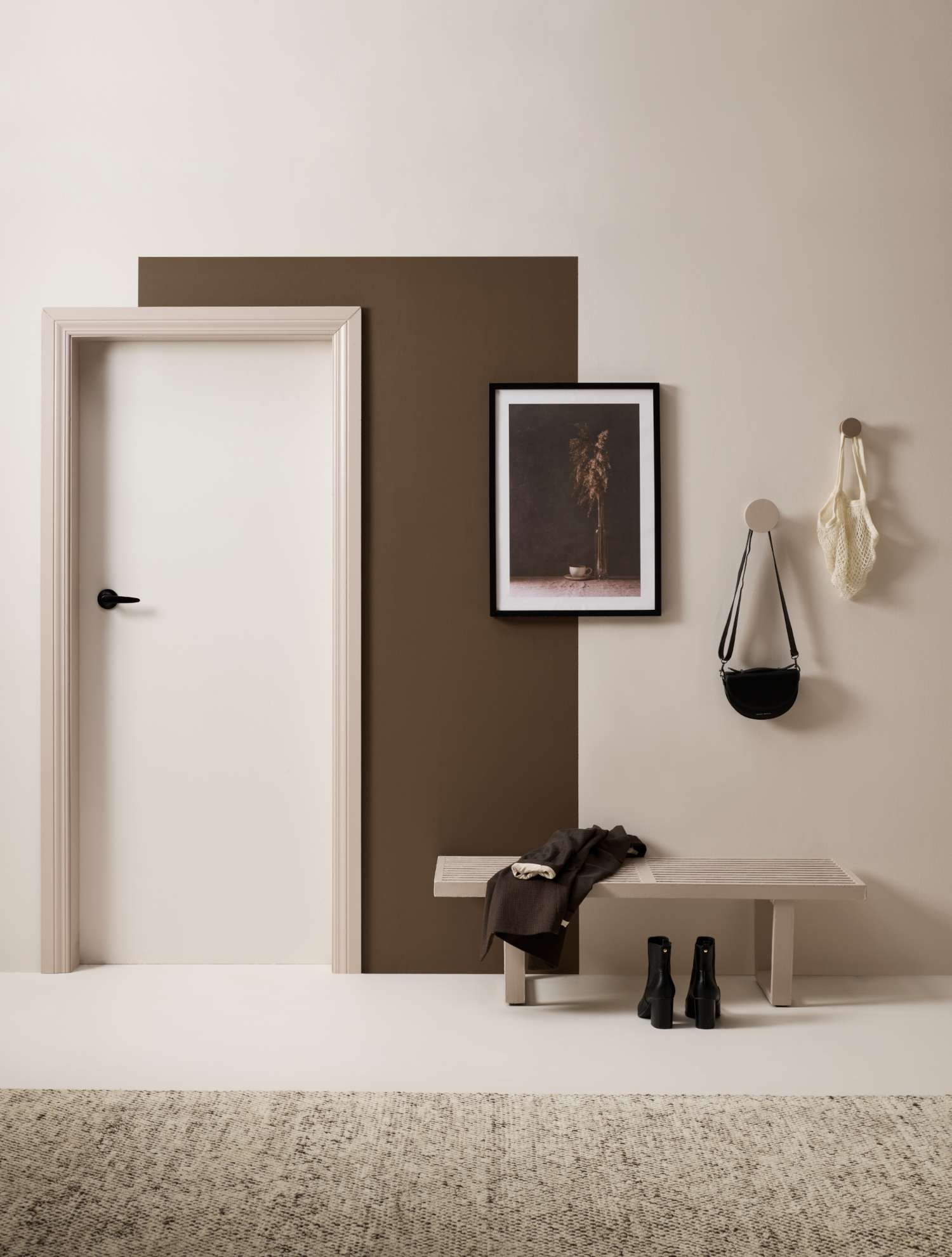 Chocolate brown adds the perfect contrast to this beige-on-beige foyer. Walls, door and floor painted in Resene White Linen, colour block in Resene Oilskin, bench seat in Resene Tide and hooks in Resene Tide and Resene Americano. Project by Vanessa Nouwens, image by Wendy Fenwick.
Beige tones with a very subtle hint of green such as Resene Pavlova add unexpected complexity to a pared back palette. Team with Resene Lusty for a dramatic edge or layer with Resene Half Pearl Lusta for an all-neutral look.
Peach-toned beiges add a pastel softness to create elegant modern rooms. Pair with Resene Avocado for earthiness or Resene Lonestar for drama.
Top tip: The versatility of a lot of beige tones means they can change in appearance based on the colours and light conditions around them. Always test your colours first using Resene testpots painted on to A2 card with a 2 cm border left unpainted. Move your swatches around the room and check the colours at different times of the day to see which colours best suit your space.
If you need help getting starting or deciding on the colours that best suit your home, come in and visit your local Resene ColorShop, Ask a Resene Colour Expert free online, www.resene.com/colourexpert or book a Resene Colour Consultation free instore or virtually or a paid home visit in selected areas, resene.com/colourconsult.