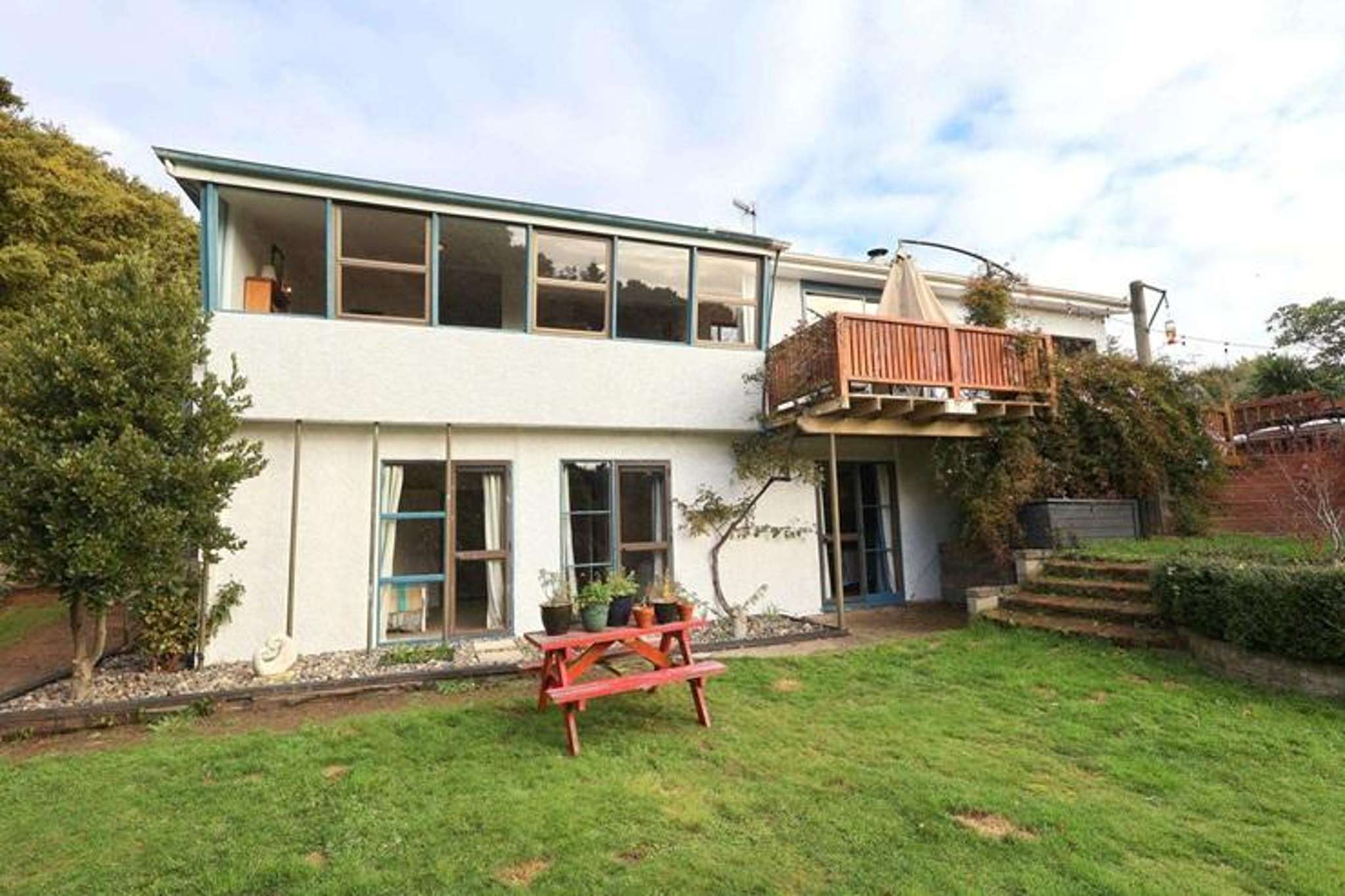
- The home of Monica Barham, possibly New Zealand’s first practising female architect, is up for auction.
- Barham designed the concrete house in Otatara to harness hillside heat and provide thermal comfort.
- The property, largely original, features a pool-sized fishpond, Japanese garden, and separate studio.
A slice of New Zealand’s architectural history is up for grabs in Invercargill.
Start your property search
The home of Monica Barham, possibly the country’s first registered practising female architect, will be heading to auction on June 25 with an RV of $610,000.
Barham, who died in 1983, designed the concrete house at 30 Taiepa Road, in Otatara, to harness the heat of the hillside it was built into.
Ray White listing agent Katie Davis told OneRoof that the property was beautiful yet quirky, and steeped in history, pointing to Barnham’s own painting of the house that hangs inside.
Barham lived in the distinctive four-bedroom, two-bathroom home with her architect husband Cecil and their six children. Dubbed Telesis after an American planning philosophy, the property is largely in its original condition.
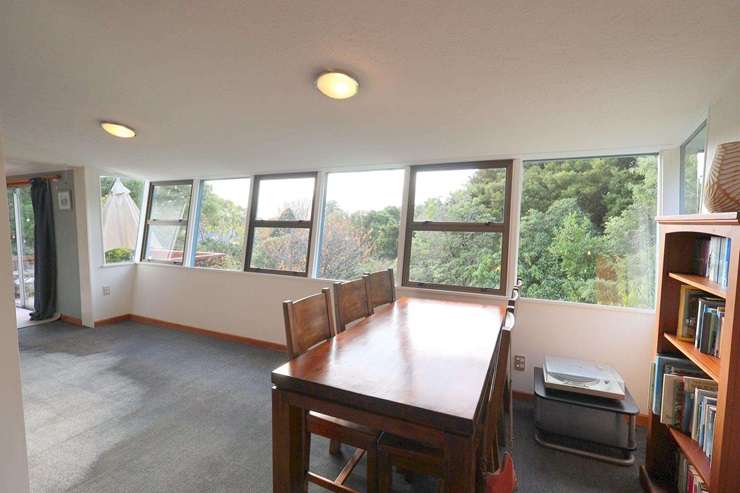
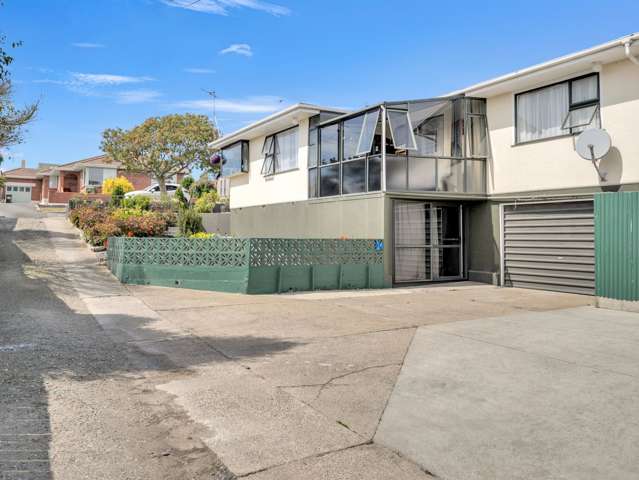
The property, which has an RV of $610,000, was designed by Monica Barham to withstand the cold and features sloping windows. Photo / Supplied
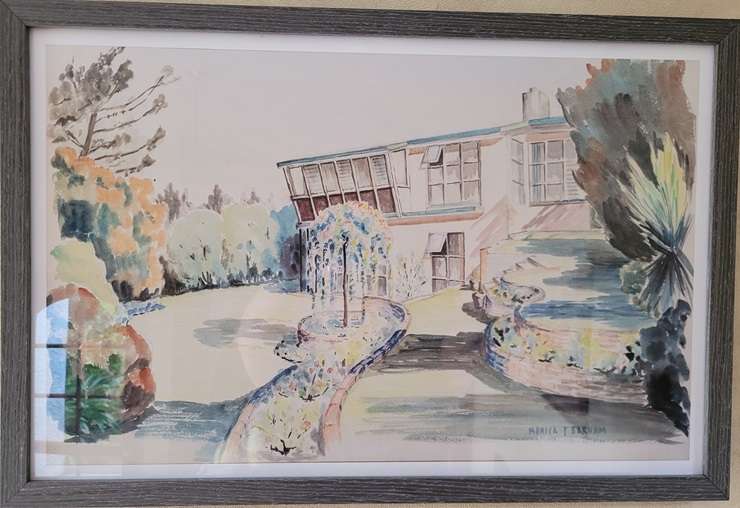
Barham’s painting of her work still hangs inside the home. Photo / Supplied
An article in Architecture Now by architect Megan Rule describes the house as a testing ground for ideas, a practical and modern response to the requirements of rural life and the needs of a family.
Rule also wrote in the Otago Daily Times that the Barhams “shared an interest in the international work of American architect Frank Lloyd Wright”, following his attempts to make more compact, affordable and energy-efficient houses, “responsive to climate conditions and comfort”.
The couple nestled their own two-storey dwelling into the hillside of their sloping 4049sqm site to provide shelter from the sometimes cold, stormy winters. Native vegetation and planting also helped moderate the microclimate of the property.
Discover more:
- Celebrated photographer's 'anti-villa' sells for over $4m at heated auction
- Night-life king selling his 'wonderland' estate with waterslide and mini-golf
- Family snaps up bach after OneRoof article leads them to tiny fishing town
“To address thermal comfort, the interior layout placed the service rooms and circulation spaces along the southern side of both levels. These continuous buffer zones help the living areas maintain a more consistent and comfortable temperature by creating a thermal bridge,” Rue wrote in the Otago Daily Times.
Davis said Barham was a legend in the area. She designed the Waihola pub just out of Dunedin and has a string of other high-profile projects to her name.
Whoever bought 30 Taiepa Road, she said, would be getting a piece of New Zealand history. “You know you are looking at something special. It’s something unique.”
The vendors had owned the house for over 20 years and put in a new kitchen and bathrooms, but there is plenty of scope for new owners to add value to the property, Davis said.
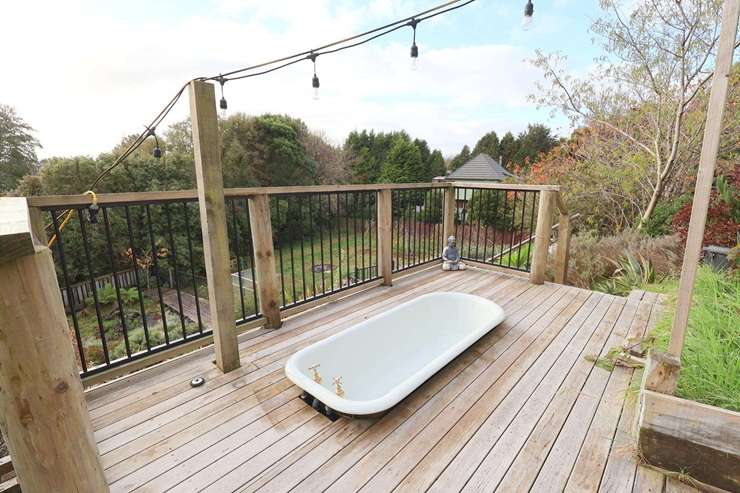
The property has several quirky features, including an outside bath. Photo / Supplied
She said the sloping windows were the home’s standout feature. “They just give you the feeling of openness, and you’re looking out over the bush and over the land, and it’s just beautiful. It’s so private,” she said.
“Architecturally designed places are quirky; they’re a bit different. It’s built into the hill, so it’s very solid – the bottom floor is very solid.”
The property comes with a pool-sized fishpond, a Japanese garden, a separate studio with double glazing and a heat pump, and an outside bath with gas heating underneath.
According to Rue, Barham’s work prioritised human needs. “The building configurations were practical, placing importance on economy, services, adaptability and convenience but, also, relating sensitively to local climate and context,” Rue wrote.
“Decorative glass and steel featured in the Barham repertoire as the practice enriched a materiality in concrete and stone, together with locally available timbers.”
In 2023, a medical centre on Don Street, in Invercargill, received a New Zealand Institute of Architects Enduring Architecture award and became the earliest known building by a female architect to have received an NZIA architecture award.
- 30 Taiepa Road, Otatara, Invercargill, goes to auction on June 25