- Kiwibank’s chief economist Jarrod Kerr says the US-Iran conflict is increasing oil prices, impacting lower-income households.
- Economists are divided on when the Reserve Bank should raise the OCR, with some suggesting July.
- The conflict is causing global economic uncertainty, affecting spending and housing market recovery prospects.
The US war with Iran is leading to greater inequities not only in far-off African countries but back home in New Zealand, says Kiwibank’s chief economist Jarrod Kerr.
Start your property search
The issue is oil affordability as a result of the standoff over the Strait of Hormuz.
Kerr says richer nations, including New Zealand, are securing oil by paying higher prices than poorer nations can afford, such as parts of Asia, Africa and other vulnerable economies.
The cost of securing that fuel is being felt at New Zealand petrol pumps, with lower socio-economic households finding it harder to fill up their cars than wealthier households.
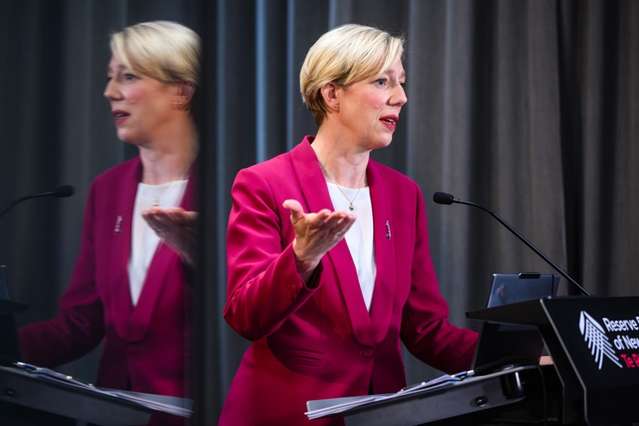
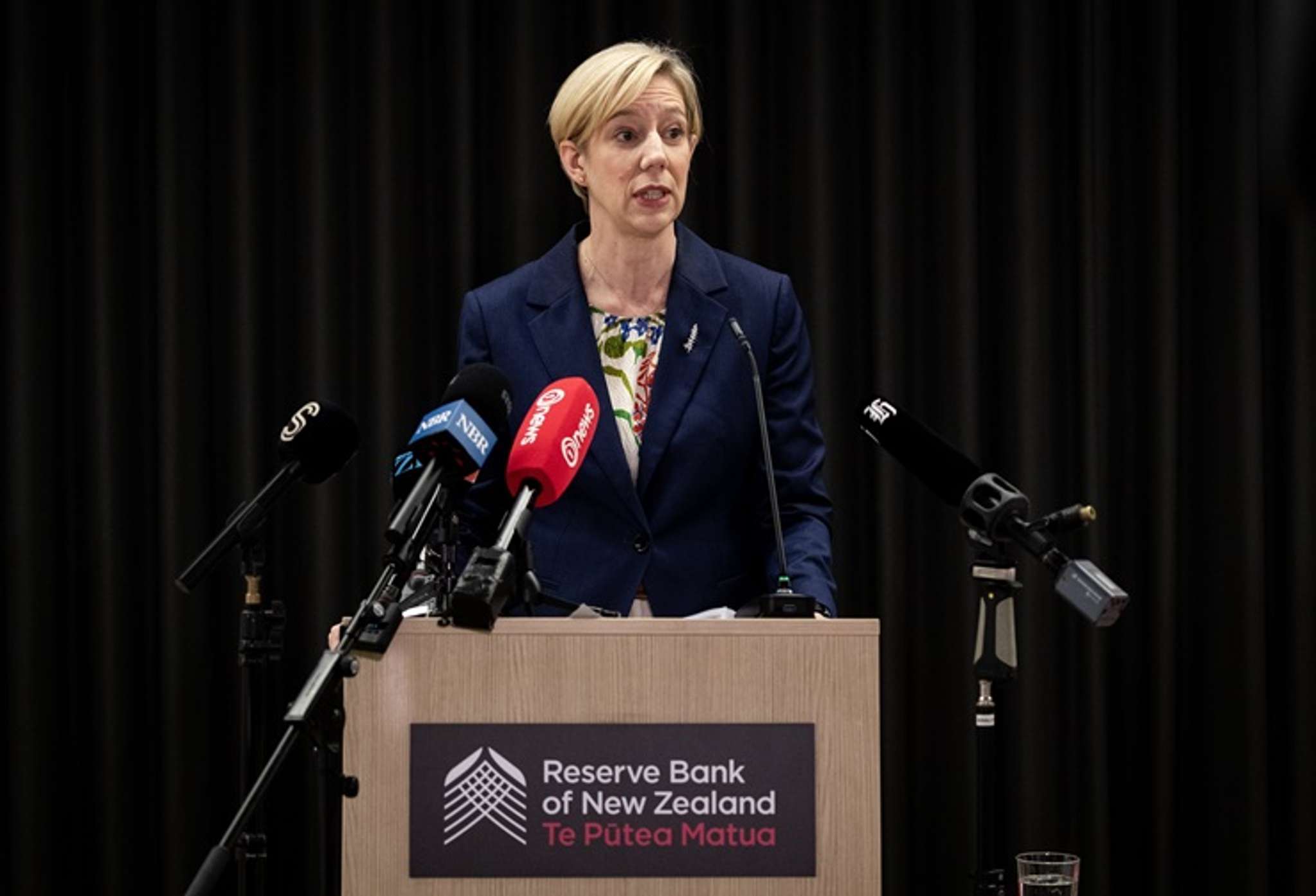
OneRoof spoke to economists ahead of a big month for the housing market: Reserve Bank Governor Anna Breman will announce whether the OCR - currently at 2.25% - stays the same on May 27, and the annual Budget will be read the following day.
Across the ditch, where annual inflation is 4.6% (in New Zealand it’s 3.1%), the Reserve Bank of Australia lifted the cash rate from 4.1% to 4.35% and warned that more rate hikes could be needed as a result of the Iran war. Announcing the increase, the Reserve Bank governor said: “We are poorer, and there is no way out of that. These interest rate rises are not going to do anything for inflation in the next six months. That’s done and dusted.”
Economists in New Zealand agreed households were feeling the strain of rising costs, but differed on how soon the Reserve Bank should move to lift the Official Cash Rate.
Most expect the rate to stay the same this time, but where Kerr is adamant it should not be hiked any time soon. Miles Workman, a senior economist at ANZ, thinks a July hike would cause less pain in the longer term.
Workman did not rule out a May hike, either, if the situation escalated.
The global uncertainty is contributing to concerns around restrained spending on different fronts, from eating out to businesses not hiring, none of which bodes well for a housing market recovery.
What has surprised Kerr is how well the US equity market has been performing, given the volatility in oil prices. “It just keeps hitting new heights. I mean, there are signs of stress out there, and there are signs of investors just soldiering on.”
He thought the appetite for AI stock was masking some of the weakness underneath the United States markets, but while the NZX had a bit of a lift, it was not a convincing one.

Kiwibank chief economist Jarrod Kerr: "I just don’t think that adding more costs to a cost-of-living crisis is the answer.” Photo / Supplied
Concerns were shifting to “demand destruction”, where high prices and low supply lead to decreased demand.
“What I’m finding interesting is that there’s been a massive demand destruction in Asia and Africa, so poorer nations just simply cannot afford oil at these prices.”
“100%,” the war in Iran was contributing to iniquities in New Zealand, and the oil shock had come on top of a food price shock.
“Obviously, poorer households spend a much greater proportion of their incomes on food.
“You’ve had rates, you’ve had insurance premiums, you’ve had all sorts of things spike, and that has a heavier impact on poorer households so that inequity is getting worse.”
Kerr does not think rate hikes are warranted at this stage: "I just don’t think that adding more costs to a cost-of-living crisis is the answer.”
Discover more:
- Tony Alexander: It's 2021 again for sellers ... but not in a good way
- 'This wasn't a quick trip to Bunnings': What a $15m home reno looks like
- Coffee baron sells home to US buyer: 'You’ve got to let go of some stuff'
He said businesses were talking about uncertainty, over and over: “Uncertainty around the war, uncertainty around the election, uncertainty around a lot of things and uncertainty kills growth immediately.”
Other banks were calling for a July OCR hike, but “we fiercely disagree with that. We think that would make matters worse, but it is what it is. If the Reserve Bank wants to be preemptive, then they hike in July. If they want to be a bit more reactive, then they wait.”
The $50 a week to selected households promised in the Budget was the right thing to do, Kerr said, but many other households were missing out, and the money did not fix the fact that there had been a cost-of-living crisis for over three years.
He wanted the Budget to prioritise targeted spending, with a stronger focus on capital investment in infrastructure and initiatives that would stimulate economic growth and build a more resilient, flexible economy, ultimately expanding the tax base.
New Zealanders understood the need to take on debt to grow the economy and fix “all the problems that we’ve got”.
“They see the burst pipes in Wellington, they see the 45-minute drive to do 10Ks in Auckland. It’s just not right.”
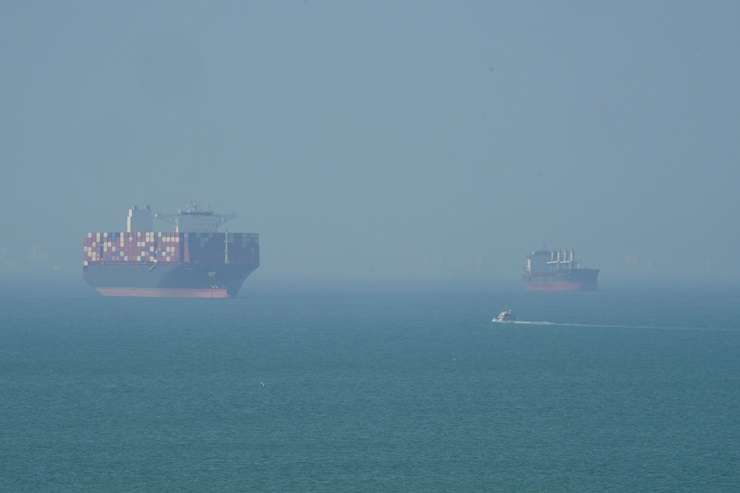
The stand-off over the Strait of Hormuz - the waterway through which a large amount of the world’s oil passes - is inflicting pain at the petrol pump. Photo / Getty Images
Operational spending also came under scrutiny, with concerns about the significant increases expected in coming years for pensions, healthcare and education as the population ages.
“There are some massive challenges in there, and unfortunately, governments with such short terms really struggle to identify and challenge those longer-term problems.”
This Budget would be “really difficult,” he said.
“The recovery we all forecast has not happened; it’s been postponed, so the Government’s books are not flash. They are very difficult to balance, and [Finance Minister] Nicola Willis is going to come out and say, ‘Well, we’re doing what’s right for the economy, and that’s austerity’. [But] I disagree with austerity in this environment.”
Miles Workman says ANZ’s business and consumer confidence surveys showed a significant and concerning deterioration in sentiment around employment and investment intentions.
Economists, he said, were not in a good position to know the next geopolitical friction or outcome. “Just like everyone else, we’re sitting on the sidelines watching the headlines, trying to gauge when the conflict in the Middle East might come to some resolution and what that may look like.
“What that really does to us is it puts us in what I’d call scenario mode, where we just have to make an assumption about what the oil price might be and when things might start returning to normal, but that’s just a line in the sand so we can put together a central forecast.”
Even if all the central forecasts were gathered up, there was a high possibility the outcomes at the end of the year were nowhere near any of them, he said.
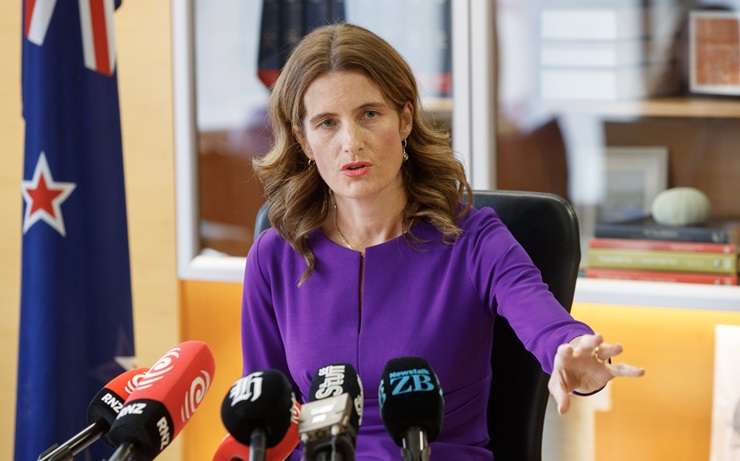
Finance Minister Nicola Willis is due to deliver the Budget on May 28. Photo / Mark Mitchell
But the longer oil prices stayed elevated, the more demand destruction was likely to be seen across the economy.
Fuel costs affected every part of the economy, and as price increases flowed through, there was a risk they would influence pricing and wage-setting behaviour, as well as inflation expectations.
That situation was the Reserve Bank’s “worst nightmare, because in that world you end up with persistently higher inflation than otherwise, despite the weakness in the economic activity”.
That was not the ANZ’s forecast, Workman said, but because it was a risk, the bank thought it made sense for the Reserve Bank to start hiking the OCR from July.
“It’s a bit bittersweet because if they get going early with OCR hikes, it reduces the likelihood that they’ll have to take the OCR as high, and that’s really the tradeoff that we’re playing here.
“If you’re a household with a mortgage and you do see these OCR hikes come through - let’s say we’re right and they come through in July - hopefully that damage isn’t as bad overall.”
While it was not the ANZ’s forecast for the Reserve Bank to hike this month, the market was toying with a May hike, Workman said, with market pricing fluctuating around or slightly below 50/50 odds, although that had pulled back in recent days.
“The idea behind that is, well, if they’re going to go, they might as well just go, and I think that thinking has actually been how the Reserve Bank has reacted in the past, but this isn’t a normal type of shock.”
This was a significant oil and supply shock to the point that if the Reserve Bank came out a little bit aggressively at this month’s meeting, there was the potential to “spook the horses” across the economy, so a more gradual approach made sense.

Westpac chief economist Kelly Eckhold thinks the Reserve Bank will raise the OCR to 3% by the end of the year. Photo / Fiona Goodall
“If you go with the July hike, you at least have an opportunity to prove to all the stakeholders across the economy that you are treading relatively carefully, and you are trying to signal the next move as well as you can despite the uncertainty. I think that's the message we're likely to get from the Reserve Bank.”
People with mortgages should brace for OCR hikes and mortgage rate rises, but rises were going to happen anyway this year, regardless of the oil crisis.
Workman said the Government was making the right noises about targeted, temporary and fiscally neutral support in the Budget. “If it becomes a debt-funded response, well, that's just boosting the demand side of the equation and then increases the likelihood inflation is going to be higher for longer, which puts upward pressure on interest rates, mortgage rates.”
Kelly Eckhold, Westpac’s chief economist, said the global situation looked more threatening. Even if the crisis ended tomorrow, the damage to global inventories and supply chains would take months to repair.
Eckhold thinks the Reserve Bank will raise the OCR, not this month, but in September, “and then after that we'll get a couple more rate rises this year”, taking the rate from 2.25% to 3% by the end of the year.
He said the Government had indicated it would continue to run a fairly tight ship and would not increase operational expenditure in the Budget, except perhaps in a few high-profile cases.
“They are still quite focused on trying to limit the damage that would otherwise have been done to their fiscal projections coming from the Iran war and the associated impact on the forecasts,” Eckhold said.
“One of the things about this nature of the shock is that the Government can quite easily make things worse, for example, by spending a lot of money in an untargeted way.
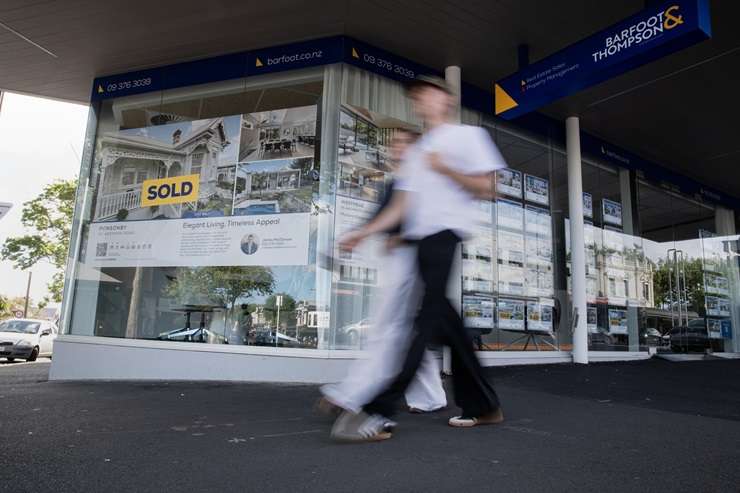
The housing market has yet to feel the full impact of the Iran war. Photo / Fiona Goodall
“I don’t think the Government, or the Reserve Bank for that matter, can really buy their way out of [this crisis]. The increase in energy costs is a loss to us and our standard of living, [but it has] been externally imposed and we haven’t really got any way of offsetting that internally in the short term.
“It just means a reduction in our living standards, and we have to reevaluate our spending and our budgets to reflect that.”
If the Government borrowed to shield households, it would likely intensify existing inflationary pressures and potentially add to fuel price volatility driven by supply risks.
Eckhold expected house prices to fall about 1% this calendar year. While the market had performed slightly better than expected over the past couple of months, the full impact of the war had yet to be reflected in the data.
Some were forecasting a possible global recession, but at this stage, New Zealand was looking at another “meh” year, he said. “We’re going to get growth in the 1.5% to 2% range. It’s not shooting the lights out, but it’s not a disaster either.”
And if the US and Iran were to bring the conflict to an abrupt end, the economy could gain momentum again. “A lot of the other underlying factors driving optimism at the start of the year remain, and commodity prices are still quite supportive, and interest rates are still relatively low," Eckhold said.
“If you could take away the uncertainty that’s been associated with the Iran war, then I think that would make a big difference to business and consumer sentiment, and that would flow through to the housing market.”
BNZ’s chief economist, Mike Jones, said OCR rate hikes were likely this year, but probably not this month.
“Trying to pick the exact meeting is difficult given the uncertainty. We are still at September in terms of the first forecast increase - we've actually been there since before the war, which is not to say it’s a view we hold with any great conviction in terms of ‘is that the month?’.”
An increase was conceivable at “just about any meeting”, but this month was probably too soon, he said.
“The risks move around rapidly on a day-to-day basis.”
- Click here to find properties for sale