- Patrick Reynolds is selling his Westmere home, designed by architect Malcolm Walker.
- Reynolds and his wife plan to move to a city apartment and start cycling.
- The home features a unique “cave and stage” design, attracting significant interest from buyers.
The man who has photographed every significant home in New Zealand is selling his own architectural wonder.
Start your property search
Patrick Reynolds, who is highly regarded for his shots of the country’s grand buildings and award-winning homes, has listed 43 Livingstone Street, in Auckland’s Westmere, so he can put into practice what he preaches.
Reynolds and his wife, writer Maria Majsa, plan to swap their stunning four-bedroom home for a city apartment now that their children have flown the nest. They are also ditching their car, telling OneRoof that they’ll mostly be cycling from now on.
The couple paid $875,000 for the square-fronted villa in 2005 and pulled together a two-word renovation brief for their architect, Malcolm Walker. “We wanted a cave and a stage,” Reynolds told OneRoof.
In their view, Walker is the “genius” of reimagining the classic New Zealand villa.
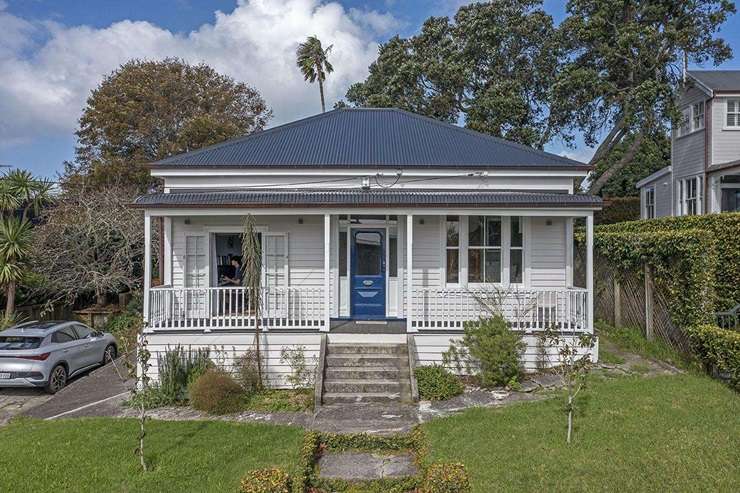
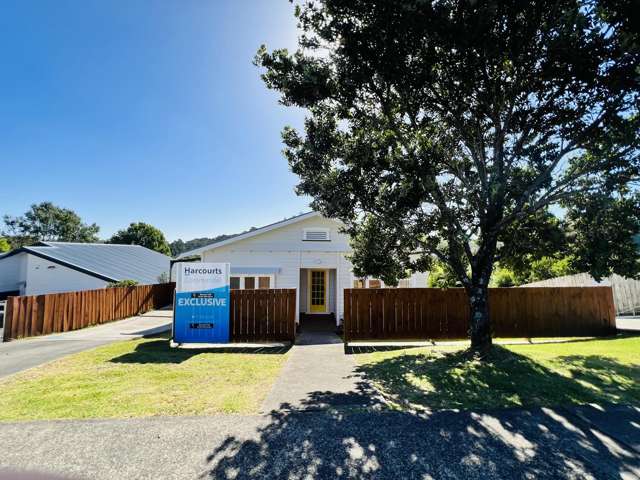
43 Livingstone Street, in Auckland’s Westmere, is unassuming from the street but is a "cave and stage" home at the back, thanks to the efforts of architect Malcolm Walker. Photo / Supplied
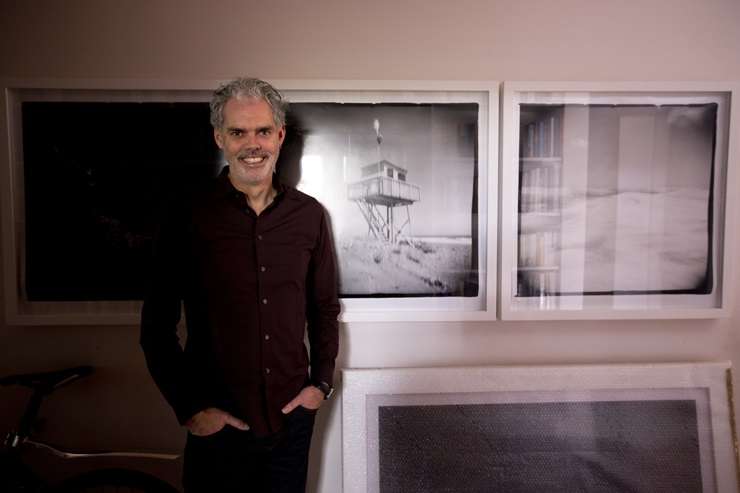
Photographer Patrick Reynolds in 2014. Photo / Dean Purcell
“People, when they think of architecture, think of the form of the building. But to me, the real mystery is the volume. Malcolm gives you these spaces that if they are big, they are never too big and booming. And when they are compact, they are not too small and tight ... It is just intuitive; he cannot explain it.”
So Walker nailed the “cave and stage” in the first plan he presented to the family, Reynolds said. “I was expecting to have strong views and weigh in. And in nearly 20 years, we have not changed anything, not even the colours of the walls.
“We have a busy family life, which was for the ‘stage’, the public living area.
“But Maria and I really like to hunker down and watch a great movie. So there is the downstairs living room, which is dark and a dead end. You are never going through it to somewhere else; it’s a destination. The cave.”
Discover more:
- Locals looking for place to store water toys beat international celeb to iconic boatshed
- Kiwi pop star's shopping spree: What Neil Finn paid for notorious pub and panel beaters
- Grand Designs NZ: Couple relist their dream home after trying to offload it for $8.75m
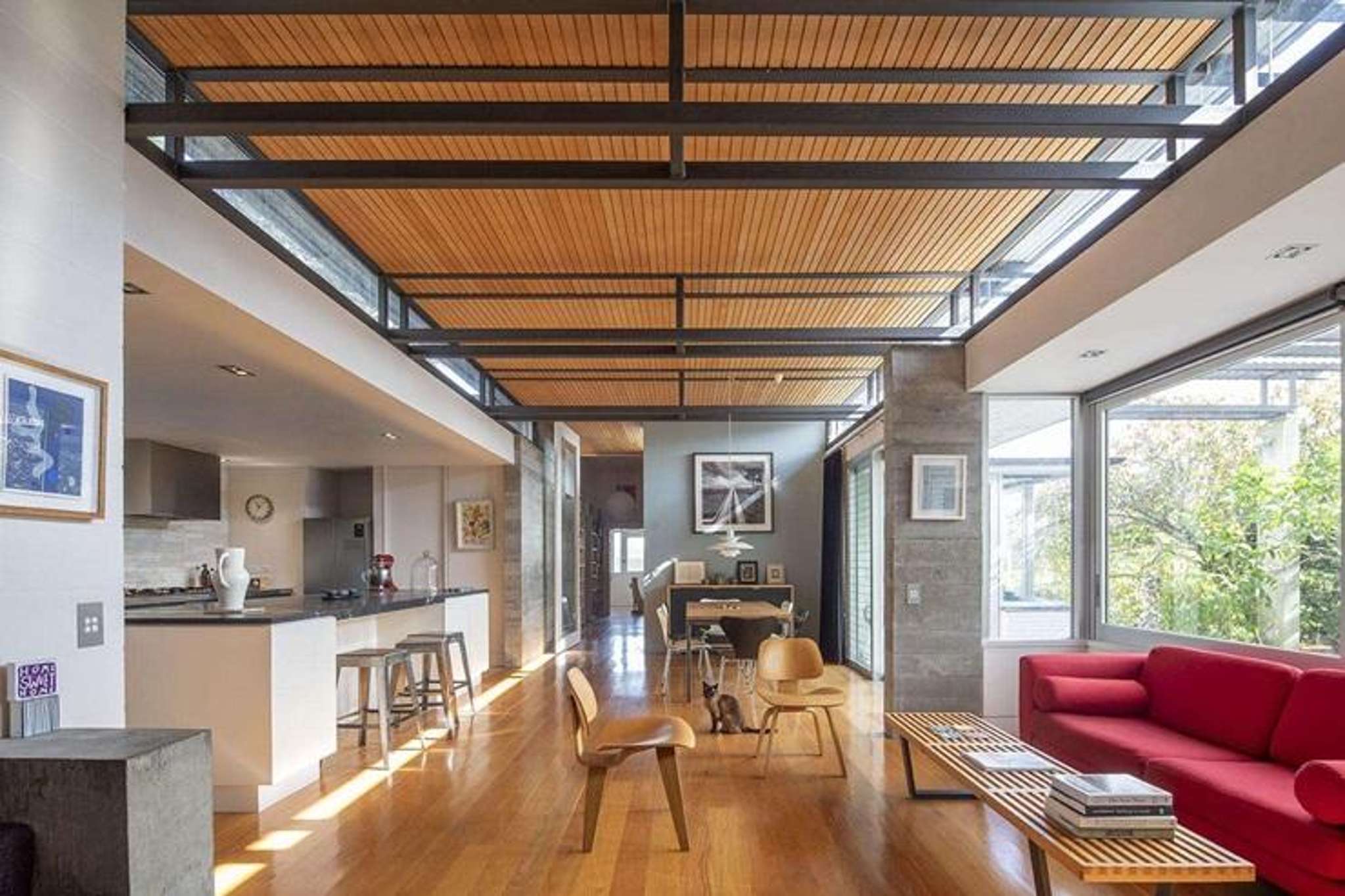
The design and build took a while to execute: the family had to de-camp to a two-bedroom flat above a shop in Herne Bay for the two years. Walker delivered a series of light and airy pavilions to replace the run-down lean-to, anchored by a concrete wall and glass walls to collect sunlight.
“It’s an anti-villa,” Reynolds said, although he points out that the timbers used to form the poured concrete spine mirror the size of the original weatherboards.
The photographer said he was never a fan of villas, calling them “architectural anachronisms” and bemoaning their cold, their lack of orientation to the sun and poor planning. However, not long after the family took possession of their new, improved home, he agreed to collaborate on a book called The Villa, extolling the virtues and quirks of the iconic house (he also did one on the bungalow).
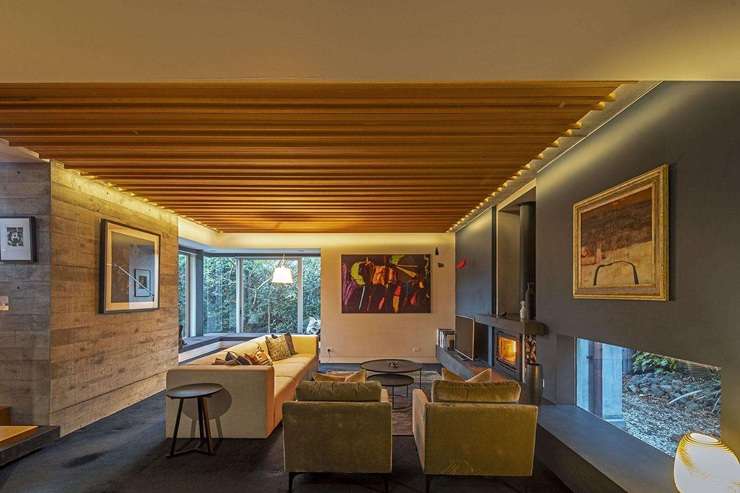
The parents’ media room, tucked below their bedroom, has views of the garden. Photo / Supplied
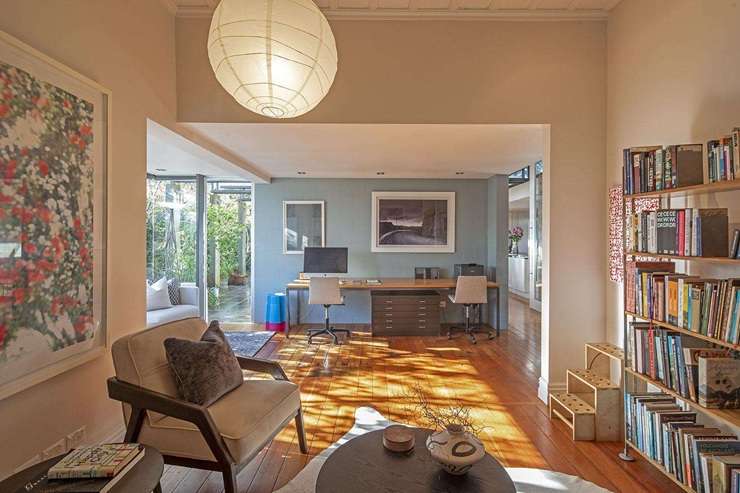
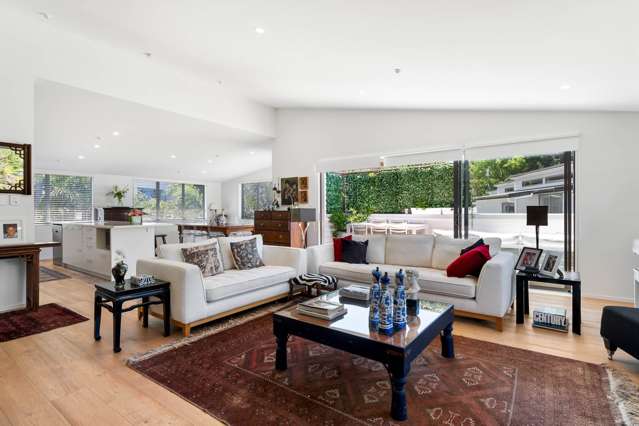
The "stage" is where the family played and entertained friends. Photo / Supplied
Walker’s design has served the family well: the kids’ three bedrooms and bathroom are in the front villa. The living room that connects old and new became their space for playing band music, with desks for computers and space to entertain their friends. The parents got their “refuge” at the back, with their master bedroom upstairs getting privacy, light and birdsong.
In between is a sunny open-plan kitchen, dining room and family space, anchored by the concrete wall and plenty of glass nooks. “If it wasn’t that we are just now camping in one corner of it, we’d still be here,” Reynolds said.
Ray White agent Angela Saunders said that the house had already attracted crowds at the open homes, including fans of Walker’s work. “Everyone who comes here is surprised at how it unfolds,” she said.
“The villa is very unassuming, [then] they are really delighted by the sense of space and the room for people.”
She said that demand for this corner of Westmere had “gone mental” in the last five years. “People are coming in with their kids and asking, ‘Are there other kids in the street?’ and that’s really lovely. More young families coming back in, that’s like a new wave.”
Saunders would not comment on price, but the property has an RV of $4.75 million. “It’s so nice to get a house from someone who is not afraid to do something different.”
- 43 Livingstone Street, Westmere, Auckland, goes to auction on May 20