- The housing market may slow due to a cash rate hike and the November election.
- First-home buyers are benefiting, but overall price growth remains sluggish with only a 2.1% increase.
- Labour proposes a 28% capital gains tax to fund free doctor visits and improve affordability.
The housing market faces a double whammy later this year if the much-touted cash rate hike converges with the November general election, both of which alone could slow the traditional end-of-year lift for the housing market.
Start your property search
Compounding the issue for sellers is the market's anaemic run over the last two and a half years. OneRoof-Valocity figures show little price growth outside a few lucky centres, with the nationwide average property value up just 2.1% since bottoming out in June 2023.
Since the post-Covid slump, the only buyers to be doing well are first-home buyers - the group that felt permanently on the backfoot during the 2020-2021 boom, which saw prices jump up to 40% and affordability stretched to the max.
It remains to be seen how big a political football housing will be in the general election, but the country should have a better idea of where the Reserve Bank sees things after this Wednesday’s Monetary Policy Statement.
The Reserve Bank had, at the end of last year, tipped an uptick in the cash rate in 2027, but the surprise rise in annual inflation to 3.1%, outside the Reserve Bank's target band, has fuelled speculation that the cash rate hike will take place later this year, with the big lenders already increasing some of their longer-term rates in anticipation of the move.
The main parties have yet to fully set out their stalls, but Labour has pledged to bring in a capital gains tax if it is elected. The party says taxing gains from property sales at 28% will help fund free doctor visits for Kiwis and improve overall housing affordability, although economic experts have cast doubt on the numbers.
The Coalition parties have not promised anything specific for the election, but the Government has become bogged down in planning politics, having scaled back its plan to allow for 2 million more homes in Auckland.
Discover more:
- Tony Alexander: The new average - and why we all need to get used to it
- Home staging queen selling her $3m townhouse – throws in her stylish furniture
- 'He's losing money': Stressed investor lists six apartments at less than half price
Last month saw reports that Prime Minister Christopher Luxon made a captain’s call to water down intensification plans for Auckland, something Housing Minister Chris Bishop had advocated as part of his push to make housing more affordable. The fear was that National voters could be spooked, and Bishop went on to say “some tweaks and finessing” of the super city target was underway.
The Government will also, from March 6, open the door to foreign buyers, a group that has become a flashpoint for voters in past elections.
OneRoof approached housing industry experts and politicians to see how fiery an issue housing might be this election year, and what their predictions are for the market in 2026.
Infometrics chief forecaster Gareth Kiernan
Kiernan believes housing will be an election issue due to likely policy gaps between the two main parties, although he doesn't expect it to be the political football it has been in previous elections, given that recent drops in house prices and mortgage rates have improved affordability for many buyers.
Kiernan said National's internal tensions over its intensification plans demonstrated that falling house prices were not necessarily great from a voter support point of view.
At the time of speaking, Infometrics was not expecting the housing market to be particularly strong this year, even if the economy does recover.
And while it doesn't expect a lift in the OCR before November, rising inflation could force the Reserve Bank to act ahead of time.
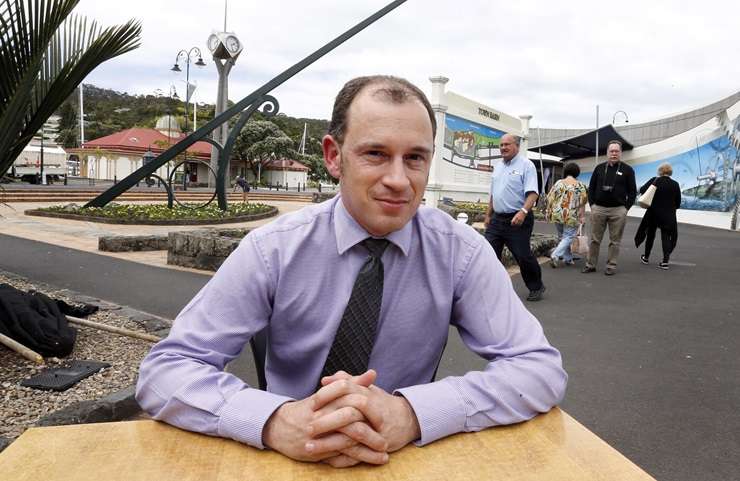
Infometrics chief forecaster Gareth Kiernan: "I'm always a little bit sceptical it's quite as bad as people make out.” Photo / New Zealand Herald
Kiernan said, regardless of the timing, an OCR rise would put the brakes on the housing market, although momentum was unlikely to be strong to begin with. “I kind of feel that those fixed rate rises that we're seeing at the moment are probably already doing that to some extent.”
Buyers and sellers were already more pragmatic, he said. “People are looking at the market at the moment and going, ‘There seems to be a limited prospect of capital gains, there's not that need to rush in’, and you're able to step back and take a more reasoned approach.”
The wait-and-see approach could become more prevalent if the polls look close come election time. Investors are unlikely to commit to a purchase if they believe they'll be taxed on potential gains.
While the above was important, Kiernan did not believe the housing market would be a make-or-break issue at the election.
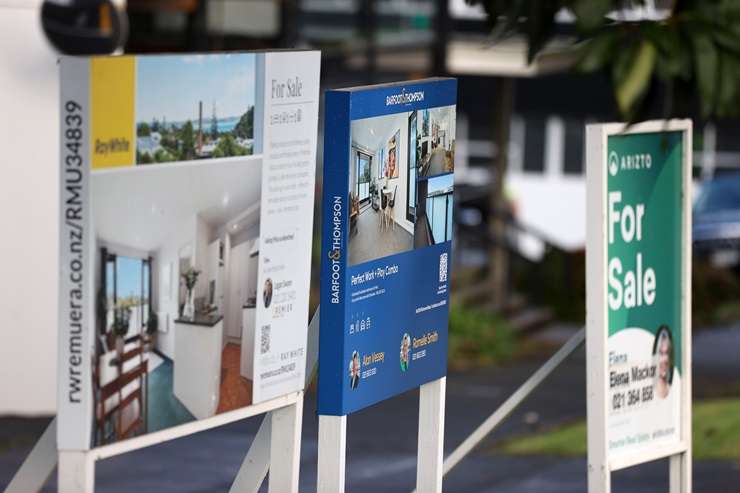
House price growth has slowed in recent years, and affordability has improved. Photo / Fiona Goodall
The New Zealand Herald’s business editor at large, Liam Dann, recently wrote that rate hikes did make a difference in 1999, when they went up 50 basis points right before Labour's Helen Clark ousted National’s Dame Jenny Shipley.
At the time, the pre-election rate hike was described as “National's worst fears”. But, as Dann pointed out, those were different times, and a case could be made that rate rises this year would actually be a sign of economic health. “But good luck trying to make that case to voters who view higher rates as taking cash out of their back pocket… I suspect the powerful monetary policy very much becomes a political football in the weeks before Kiwis go to the polls.”
Kiernan, himself, said the OCR rate rise in 1999 was only one determining factor in the polls that year: “I don't think there was any chance of National winning after nine years and the sort of breakdown of coalitions.”
Kiernan also said the data didn't clearly back up the widely held view that there is a slowdown in housing, construction and the broader economy in the weeks and months leading up to an election. “There's sentiment around it, but whether there's a real slowdown in terms of broader economic activity, I'm always a little bit sceptical it's quite as bad as people make out.”
Independent economist Tony Alexander
Alexander does not believe housing would be a major issue this election, saying it will be “lost in the wash”, with voters unlikely to be rushing to make a purchase anyway. “They know time is on their side. [Listings are high] so I actually think the impact of the general election on the housing market won't be all that much, quite frankly.”
Affordability wasn't as strong an issue either, with the market favouring first-home buyers for some time now. “Young people are able to make a house purchase. I think that is likely to remain the case this year. And while affordability is different to what it was in the mid-1990s, it has improved over the past three or four years. Personally, I don't think it's going to be the bugbear that it has been in the past.”
He said a rise in the OCR before the election would be viewed as a negative, but noted that interest rates were already increasing: “It would just be the Reserve Bank validating what the market’s expected.”
The offsetting factor to an OCR rise would be good jobs growth. “I've got a view that later this year the labour market is going to become quite strong. Businesses will be scrambling to find people and the unemployment rate will drop quite rapidly from the current 5.4%.”
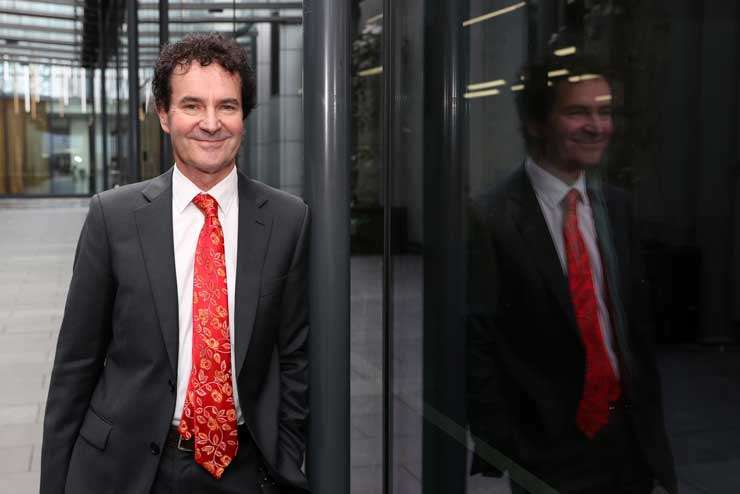
Independent economist Tony Alexander: “Nothing is obvious, and so that's what I think it will be for the housing market as we head into the election." Photo / Fiona Goodall
Alexander runs regular surveys of real estate agents and said the results showed a change in mood around job security. “Back in September, when I asked them what buyers are worried about, 55% of them said buyers were worried about their jobs and incomes. Now that's down to 33%.”
At the same time, though, there had been an increase in buyer concern around rising interest rates. “Nothing is obvious, and so that's what I think it will be for the housing market as we head into the election: the negative of interest rates going up by some unguessable amount, versus the labour market improving and people's job security improving strongly by some unguessable amount.”
Alexander said the data showed the days of housing market excitement were over. “That's what I'm trying to say to people, that we've got used to three decades of the housing market being a matter of moment; ‘I've got to keep up with what's happening’, ‘there could be a sharp increase in prices’, ‘I'm going to miss out’ - that's gone.
“It doesn't mean prices don't rise, and it doesn't mean prices continually fall. It just means it sort of becomes a more normal and better situation, where buyers don't need to panic. They are not driven by FOMO and people can focus on other things. This is what we have waited for for three decades.”
Auckland real estate agent Steve Koerber
Koerber, whose patch covers Auckland's prized double grammar zone suburbs, said that a general election would “100%” cause procrastination for both buyers and sellers.
But, he argued, the market was unbalanced anyway, with way more sellers than there are buyers. He judges the market by the number of calls he gets from buyers or sellers, and, at the moment, sellers are dominating.
It isn’t that buyers aren’t out looking – they are, but they are spoilt for choice and know it. “That makes it really hard to sit someone down at the table and say, ‘OK, let's make an offer.' They're like, ‘We want to check next week.' How the hell do we get an offer in that scenario? I mean, we will, but it's just not so easy.”

Bayleys Remuera agent Steve Koerber: "Get the economy going, get businesses going, incentivise businesses to employ people and make things." Photo / Fiona Goodall
What he would like is for the governing party to do something to stem the tide of people – some of them house-buyers – leaving New Zealand for Australia and elsewhere. “My wish list is for them (the politicians) to generate more and more reasons for young people to stay in New Zealand. That would be my key thing; get the economy going, get businesses going, incentivise businesses to employ people and make things that we can sell to the rest of the world.”
Housing Minister Chris Bishop
Bishop told OneRoof that the Government was committed to improving housing affordability and boosting home ownership, citing the changes to the Resource Management Act as proof of its intentions. “The best way to achieve this is to ensure that it is easy to build housing and that there is an abundance of developable urban land,” he said.
Bishop said the Government in 2024 had made changes to encourage more property owners to rent out their houses, thus boosting rental supply. “These changes are working. Since we came into Government, rents have remained largely flat and have fallen in our biggest cities. In the December 2025 quarter, 28.4% of home purchases were first-time buyers, the highest quarterly level ever recorded by Cotality.”
Bishop said under Labour, rents went up $180 a week, and house prices went up more than 30% in one year (2021) but instead of fixing the fundamentals, Labour had “fiddled at the margins” through first home grants, Kainga Ora delivering market housing at higher costs than the private sector, and a failed KiwiBuild program that was meant to deliver 100,000 affordable houses but only managed around 3000.
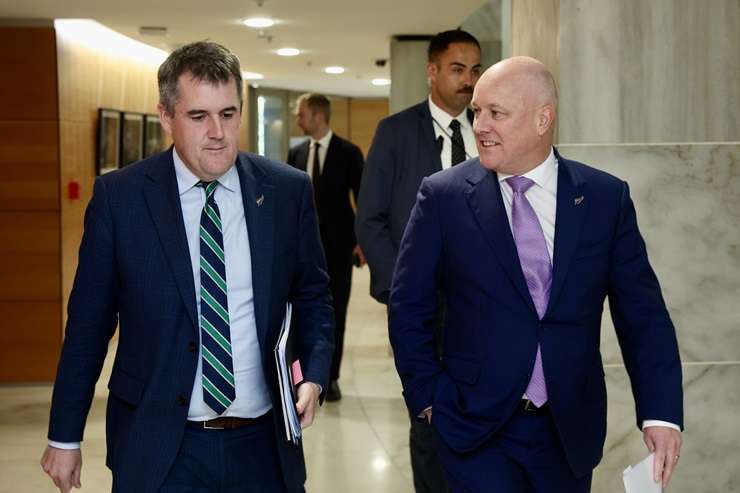
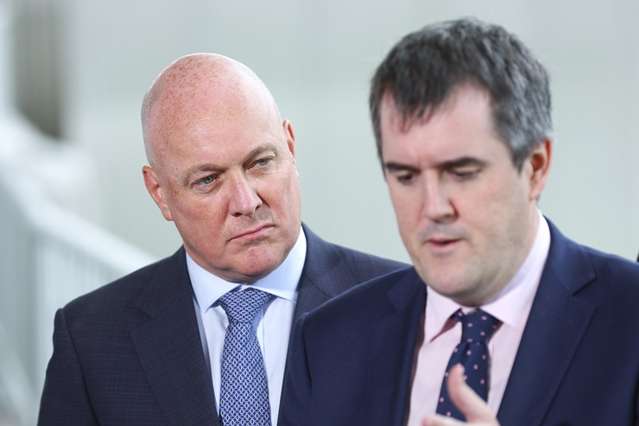
Housing Minister Chris Bishop with Prime Minister Christopher Luxon. The Government's planning initiatives have come under pressure in recent weeks. Photo / Mark Mitchell
“The only good thing Labour did for housing was the National Policy Statement on Urban Development [NPS-UD], and we are building on and strengthening that.”
Bishop added: “Labour can say nice things about how they support housing affordability, but when it comes down to it, they haven't delivered.”
Labour acting housing spokesperson Arena Williams
Williams, who is filling in for Kieran McAnulty while he is on parental leave, said the party would be making housing policy in due course, and indicated it was open to keeping some of the policy changes introduced by the National-led Coalition.
“Unlike the current government, Labour will not rip up policy for the sake of change. We will carefully consider any housing policy changes that have been made, assess each on its own merits, and only reverse a policy where there is a clear and compelling reason to do so,” she said.
In her response, Williams did not touch upon the party's pledge to introduce a capital gains tax for investors, but said: "Labour will make announcements on housing policy in due course. There is a proper process to work through in caucus and within the party, and that process needs to be respected.”
Green housing spokesperson Tamatha Paul
Paul said the Green Party was the only political party with a credible plan to treat housing as a human right.
She said decent, affordable and secure housing was still a problem in New Zealand, particularly for the one in three Kiwis who rent, and indicated that the Greens would build public housing at scale, remove the barriers to Māori building on their own land, and introduce a wealth tax so the economy was “not a real-life game of monopoly”.
Paul said she would be launching a private member's bill that would protect tenant rights, cap rent increases at 2% a year, get rid of no-cause evictions and introduce a rental warrant of fitness.
She accused the Government of siding with landlords and of favouring rising house prices. “[Their] policies are disasters for regular Kiwis, and seeing young New Zealanders leaving at record levels. Officials warned that the Government's policies would increase homelessness, but [the Government] went ahead, and homelessness has increased.”
- Click here to find properties for sale