ANALYSIS: Two weeks ago, I discussed some key results from the survey of residential property investors I run each month with Crockers Property Management. Basically, tenants are not readily available, concerns have grown about interest rates going up, and more established investors are looking to sell, though not in any panicked manner.
This week, I got the results of my first monthly survey of real estate agents this year, and they indicate that the touted housing market recovery will be a mild one.
For buyers, this is good news.
First, only 18% of agents reported seeing FOMO (fear of missing out). That’s down on the 26% reported at the end of November. For comparison, the six-year average is 29%, with a peak of 92% in 2020-21 and a recent low of 5% in May last year.
Start your property search
Discover more:
- Tony Alexander: Australia up the stakes - will NZ follow suit?
- American's offer to buy $69m Pakatua Island falls through
- Ex-All Black Israel Dagg sells his dream home for over $3m
Second, the market continues to be driven by first-home buyers, with a strong net 62% of agents seeing more young buyers in the market. The average is 23%, and the latest reading is the best since the end of 2023. Investors, however, remain relatively thin on the ground, with just a net 6% of agents reporting more investor activity.
This latter reading is nonetheless still above the average of a net 11% of agents who say fewer investors are in the market, so it would not be accurate to say that the market is bereft of people looking to purchase for rental purposes.
Third, two key readings are heading in opposite directions, meaning it is hard to say anything strong about the market’s performance heading into the general election. On the negative side, there has been a sizeable jump in the percentage of agents who say buyers are worried about interest rates going up, from 2% two months ago to 27% now. But on the positive side, the proportion of agents who say buyers are worried about their incomes has fallen from 47% to 33%.
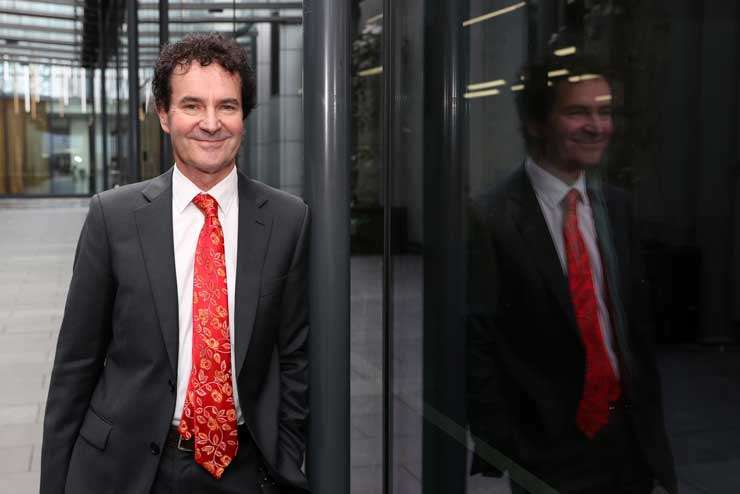
Independent economist Tony Alexander: "We have had the binge, lived through the pullback, and now seem to be settling into a pleasingly mild cycle." Photo / Fiona Goodall
There’s a reasonable chance that the Reserve Bank will raise the cash rate ahead of the November election, so one could expect some market restraint later this year. But confidence in the jobs market is growing, so you could expect more buyers at open homes in the second half of the year.
The situation is one of recovery in the economy, employment, household spending, housing activity, and construction, but also little reason to expect rapid house price gains.
A few years ago, I noted that the average pace of house price growth in New Zealand of 6.8% per year was not sustainable, and that we should probably expect something closer to 5%.
The pandemic binge meant that, for a while, no one bothered about what the long-term would bring. But we have had the binge, lived through the pullback, and now seem to be settling into a pleasingly mild cycle. After all of that, we have the following interesting statistics.
In the period from 1992 to 2019, average house prices in New Zealand rose by 6.8% according to the REINZ’s nationwide House Price Index. Over the last six years, from 2020 until now, the average annual gain has been exactly 5%. We have hit the new long-run already.
- Tony Alexander is an independent economics commentator. Additional commentary from him can be found at www.tonyalexander.nz