ANALYSIS: Not too long ago, the general commentary around monetary policy in Australia was that the central bank should keep reducing interest rates. But with annual inflation jumping to 3.8%, unemployment dropping, and the economy set for good growth, the Reserve Bank of Australia decided this week to raise the cash rate 0.25 percentage points to 3.85%.
The hike comes less than six months after the bank cut the rate by 0.25 percentage points, an unusual and embarrassing situation that signals the Reserve Bank of Australia does not have a firm understanding of what is happening in the Australian economy.
Start your property search
The next Official Cash Rate decision by the Reserve Bank of New Zealand is on February 18, so does the same apply to New Zealand? Regular readers will be in no doubt as to what I think. A year ago I figured that the Reserve Bank of New Zealand would cut the cash rate to 3% in response to inflationary forces, including falling productivity, business plans to boost prices to rebuild margins, and the actions of our many oligopolies and monopolies (local councils) in boosting prices.
The Reserve Bank actually cut the cash rate to 2.25% (lower than the 2.5% rate served up in response to the Global Financial Crisis of 2008/09). The evidence we now have tells us that cutting to 2.25% was probably a mistake, so the question now is: how quickly will the Reserve Bank seek to remove this stimulus by raising the cash rate?
Discover more:
- Tony Alexander: Nervous landlords, early rate hikes, rising inflation
- Rate fixes: 'The banks aren't necessarily waiting' for the RBNZ to act
- Shake-up in $1m club - the suburbs rising in price, the ones falling out of favour
One piece of evidence comes in the form of the inflation rate. Annual inflation for the last quarter of 2025 rose to 3.1% rather than falling to 2.7% as the Reserve Bank had predicted in November. Another key measure – which I have invited people to pay attention to over the past year – is business pricing plans.
As noted previously, on average since 1992, when inflation fell to an average 2.4%, the net proportion of businesses saying they plan to raise their selling prices in the coming year has been 26% in the ANZ’s Business Outlook survey. That net proportion peaked at 81% in March 2022, then fell to 35% come June 2024.
But from 44% in October last year, it has gone up to 51%, 52%, and now sits at 57%. That is very high this early in the economic recovery. Businesses are saying that as soon as extra customers come through the door, they plan to boost prices in order to rebuild crunched margins. That means higher inflation.
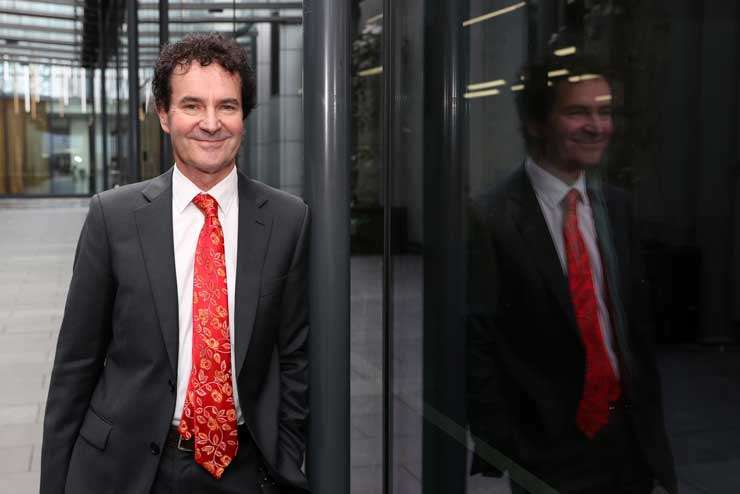
Independent economist Tony Alexander: "Annual inflation for the last quarter of 2025 rose to 3.1% rather than falling to 2.7% as the Reserve Bank had predicted in November." Photo / Fiona Goodall
However, when gauging inflation risks, the Reserve Bank has been relying on the amount of spare capacity in the labour market. The fact that the labour market data just released shows our unemployment rate rising to 5.4% from 5.3% suggests it won’t be in a hurry to follow the RBA in raising rates.
Having said that, it pays to note that while the number of people employed rose by 0.5% in the December quarter after sitting unchanged in the September quarter, the number of hours actually worked rose by 1.0% and 1.1%, respectively.
This tells us that businesses are definitely busier and offering staff to work longer hours. But as yet, they have not become confident enough in the upturn to commit to the sometimes expensive task of hiring new people. Eventually, that will change and when that happens, the unemployment rate will fall potentially quite rapidly.
That is something I expect for the second half of the year, and that is why the chances remain strong that the Reserve Bank of New Zealand will, towards the end of 2026, start unwinding the extra stimulus it provided in 2025. As an aside, this means continued weakness in the NZ dollar against the Aussie currency for most, if not all, of 2026.
- Tony Alexander is an independent economics commentator. Additional commentary from him can be found at www.tonyalexander.nz