OneRoof’s Ask the Expert is a new series aimed at helping consumers cut through the noise when buying goods and products for their home. It’s hard to make a decision when there’s so much out there, and the sheer volume of online recommendations is overwhelming. We live in an age of fake reviews, so who better to trust than the people who have the expertise and use these items for a living?
When it comes to outdoor shade, New Zealand conditions are unforgiving. High UV, strong winds and, in many parts of the country, salty coastal air mean not all shade umbrellas are created equal.
According to shade specialists Dion Radburnd, managing director of Shade Plus, Michael Pearce, managing director of Shade7, and Logan Tottenham, owner of Proformance Shades, the biggest mistake homeowners make is choosing an umbrella based on looks or price alone.
“On the surface, a lot of umbrellas look similar,” says Radburnd, whose company produces a wide range of umbrellas, some designed specifically for New Zealand conditions. “But how they’re built, the materials used, and how they’re fixed to the ground make a huge difference once they’re exposed to wind and UV day in, day out.”
Start your property search
Start with structure, not style
All three experts agree that durability starts with what you can’t easily see: the frame, fittings and canopy tension.
“In New Zealand, you want marine-grade materials wherever possible,” says Pearce. “Aluminium, stainless steel and fibreglass perform far better than painted steel or plastic fittings, which tend to corrode or fail much sooner.”
Pearce says people should also look at the type of aluminium used, as not all aluminium is the same. Cheaper umbrellas are often powder-coated, which can hide lower-quality aluminium underneath.
“Once that aluminium starts to oxidise, the coating can bubble or flake,” he says. “Anodised aluminium lasts much longer because the finish is part of the metal itself.”
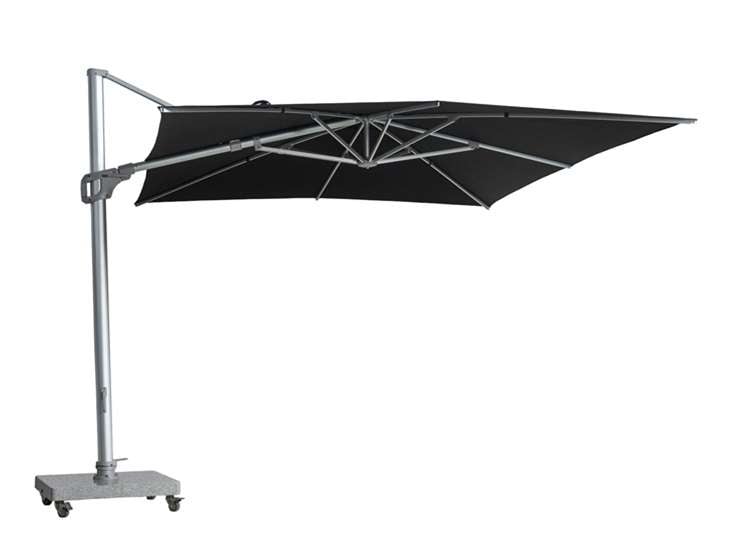
Design Warehouse’s St Tropez rectangular cantilever umbrella. Photo / Supplied
Shade7 offers a range of outdoor umbrellas. Other options that offer durable fabric include Design Warehouse’s Antego range, which uses Sunbrella fabric, while the St Tropez range offers anodised aluminium.
Tottenham, whose business supplies high wind-rated umbrellas to schools, pools and public spaces, says foundation and installation are just as critical as the umbrella itself.
“Even the strongest umbrella will fail if it’s paired with a lightweight base,” he says. “In-ground footings or direct surface mounting perform far better than portable bases, especially in exposed sites.”
Other options include this outdoor umbrella from Harvey Norman, which has a built-in wind stabiliser, a three-year frame warranty and a two-year fabric warranty.
Wind resistance is about design
No umbrella is completely wind-proof, but good engineering goes a long way.
“A strong mast, well-engineered ribs and proper canopy tension all help an umbrella cope with gusts,” says Radburnd. “But installation is just as important; a lot of failures happen because umbrellas blow over, not because the frame itself breaks.”
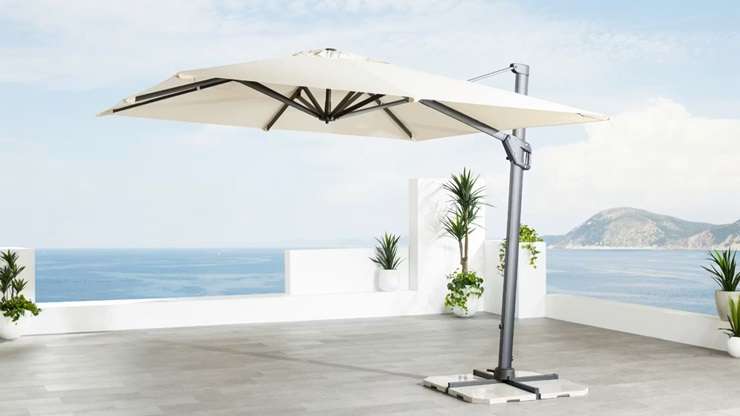
Harvey Norman’s Australis Olefin Outdoor Umbrella. Photo / Supplied
Cantilever umbrellas like this one from Mitre 10 need to be fixed securely in place with bolts or this square umbrella, which has a slightly longer warranty at three years and heavier fabric.
But Pearce notes that umbrellas designed specifically for New Zealand conditions tend to perform better than generic imported designs.
“Most umbrellas on the market are built for Europe, the US or Asia,” he says. “They’re not designed for our combination of wind, UV and coastal exposure.”
Choosing the right size and style
How an outdoor space is actually used should guide the type of umbrella chosen.
“Cantilever umbrellas work well where you want clear space underneath or flexibility to move shade across different areas,” says Radburnd. “Centre-post umbrellas suit tables and smaller spaces.”
Pearce says size is one area where homeowners often underestimate their needs.
“On hot summer days, people rarely regret going bigger,” he says. “It’s far more common to hear someone say they wish they’d chosen a larger umbrella.”
Shape also matters. While square umbrellas can look striking in certain settings, octagonal designs tend to be more forgiving.
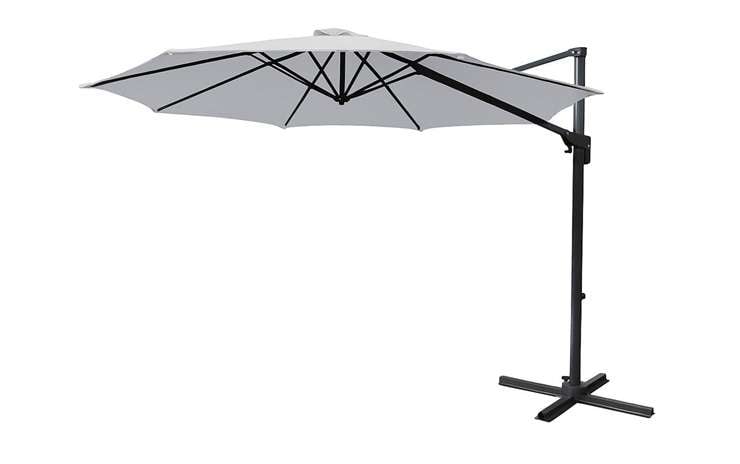
Mitre 10’s Nouveau Cantilever Umbrella 3m Stone. Photo / Supplied
“They distribute wind loads more evenly and look good from any angle,” Pearce says. “Square umbrellas only really work when they’re perfectly aligned.”
This octagonal umbrella from Bunnings uses anodised aluminium and has a two-year frame warranty, although some reviews highlight issues like having to replace bolts.
Tottenham says that New Zealand’s low sun angles make adjustability important.
“You want something that can move with the sun,” he says. “Fixed shade often works at midday but lets sun creep underneath in the morning and evening.”
Coastal homes need extra care
If you live near the sea, quality becomes even more important.
“Coastal environments really separate quality systems from cheaper options,” says Radburnd. “Corrosion-resistant frames, stainless fittings and quality fabrics are essential.”
Pearce agrees, noting that umbrellas designed for coastal use are also easier to maintain and reskin over time.
Tottenham says another thing to consider in extreme coastal locations is that fewer moving parts can sometimes be an advantage, and shade sails may be worth considering alongside umbrellas.
Think long-term, not disposable
All three experts stress the importance of repairability and after-sales support.
“Cheaper umbrellas can be tempting, but they’re often treated as disposable once something breaks,” says Dion. “With higher-quality umbrellas, you’re paying for engineering, durability and the ability to replace parts down the track.”
Pearce says this also has environmental benefits.
“It’s frustrating and wasteful when a good umbrella becomes unusable because a small part can’t be replaced,” he says. “Longevity matters.”
Tottenham sums it up simply: “Buy well and buy once. A good umbrella should last many years, not just a couple of summers.”