OneRoof’s Ask the Expert is a new series aimed at helping consumers cut through the noise when buying goods and products for their home. It’s hard to make a decision when there’s so much out there, and the sheer volume of online recommendations is overwhelming. We live in an age of fake reviews, so who better to trust than the people who have the expertise and use these items for a living?
Outdoor furniture in New Zealand has a harder job than most. It needs to cope with intense UV, sudden downpours, coastal air, and months of being lived on hard through summer entertaining. According to two experts who spend their lives designing and supplying outdoor furniture, choosing well comes down to understanding materials, not just looks.
“Outdoor furniture should be just as considered as what’s inside your home,” says Joanna Rogers, founder of Jardin. “It should reflect your style, suit your space, and most importantly, last for years to come.”
Longevity, she says, starts with selecting materials designed specifically for New Zealand conditions, not just imported designs that look good in a showroom.
Start your property search
Timber, steel or aluminium, what really works outdoors?
When it comes to timber, not all woods are created equal, says Matthias Strickett, managing director of Devon Outdoor Furniture. Devon specialises in teak furniture, and Strickett says teak remains the gold standard for outdoor use, but he warns that not all teak is created equal.
“Teak is best in class for durability in our climate,” Strickett tells OneRoof. “It’s not just hard, it’s full of natural oils that protect it from moisture and decay.”
Buyers should look beyond the teak label, however. “A lot of furniture is sold as ‘teak’, but there are different grades. Furniture made from young trees or sapwood will degrade much faster. We only use teak from mature trees and from the heartwood. That’s why it lasts,” says Strickett.
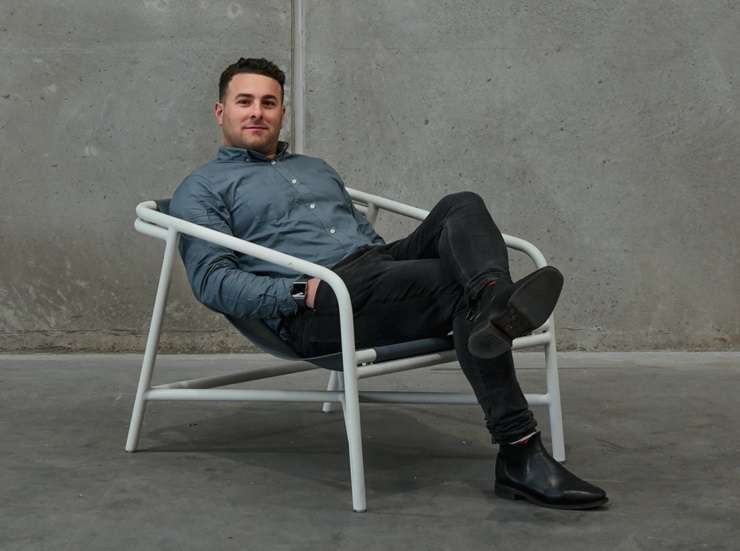
Devon Outdoor Furniture managing director Matthias Strickett: “Teak is best in class for durability in our climate.” Photo / Supplied
Done right, teak can be very low-maintenance. “Personally, I don’t oil it,” says Strickett, “I just clean it. Over time, it silvers off and forms a natural patina that actually helps protect the timber.”
Devon has several teak outdoor dining tables in their new arrivals.
For those living near the coast, timber isn’t always the best option, however, and Jardin's Rogers says aluminium can be a safer choice in salt-laden environments.
“If you’re near the coast, aluminium is your go-to,” says Rogers. “Unlike steel, it won’t rust, making it ideal for homes exposed to sea spray.”
Steel, however, still has a place, particularly inland. Jardin represents French label Fermob, and steel is the foundation of many of their designs. It’s strong, stable, and perfect for outdoor use when it’s protected properly.
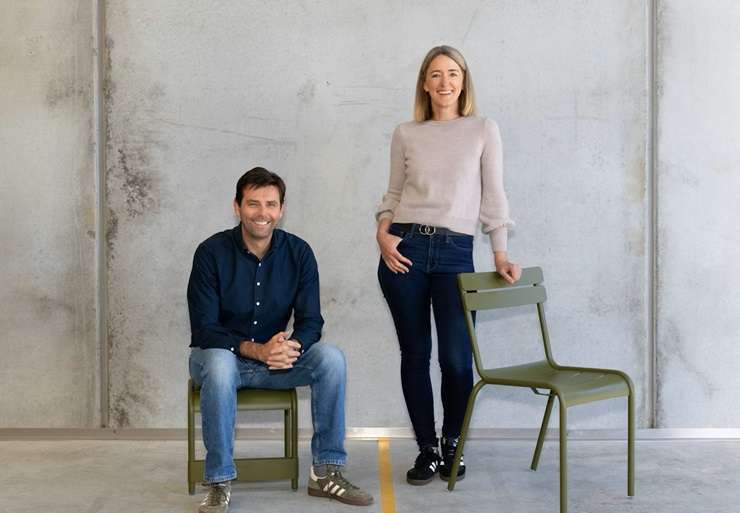
Jardin co-founders Warren and Joanna Rogers. Joanna tells OneRoof that aluminium can be a safer choice for those who live on the coast. Photo / Supplied
The key, irrespective of whether furniture is steel or aluminium, is the finish. “Multi-layer powder coating with UV protection forms a barrier that helps resist fading, corrosion, and wear, even under New Zealand’s harsh sun,” says Rogers.
Strickett agrees that finishes matter just as much as the base material.
If teak is not an option, he recommends looking for aluminium or steel furniture, but urges buyers to check if it has a double coat primer and to ask the supplier for testing details on the powder coat.
“With aluminium or stainless steel, you want to know what’s under the powder coat. A good-quality primer and proper testing make a huge difference. Once a poor coating chips or peels, it’s very hard to fix,” says Strickett.
Oxley’s Furniture is another New Zealand option. It makes high-quality aluminium outdoor furniture, creating pieces from recycled aluminium. It even offers a buy-back service.
Outside Space also has a range of outdoor dining and seating sets that use durable aluminium frames and quality cushions.
Cushions, fabrics and the small details that matter
While frames get most of the attention, both experts say cushions are where many outdoor settings fail. “Anything inside a cushion needs to be quick-dry foam,” says Strickett. “It allows water to drain straight through instead of being absorbed.”
Design matters too. “Cheaper cushions often have fabric all the way around, so water pools in the bottom and mould forms,” he says. Check that the cushions have a mesh panel underneath so water can escape.
Fabric choice is important. Matthias recommends solution-dyed fabrics such as Sunbrella or Agora, which are designed to handle UV exposure without fading. “Some high-end fabrics look beautiful but aren’t made for New Zealand conditions,” he says.
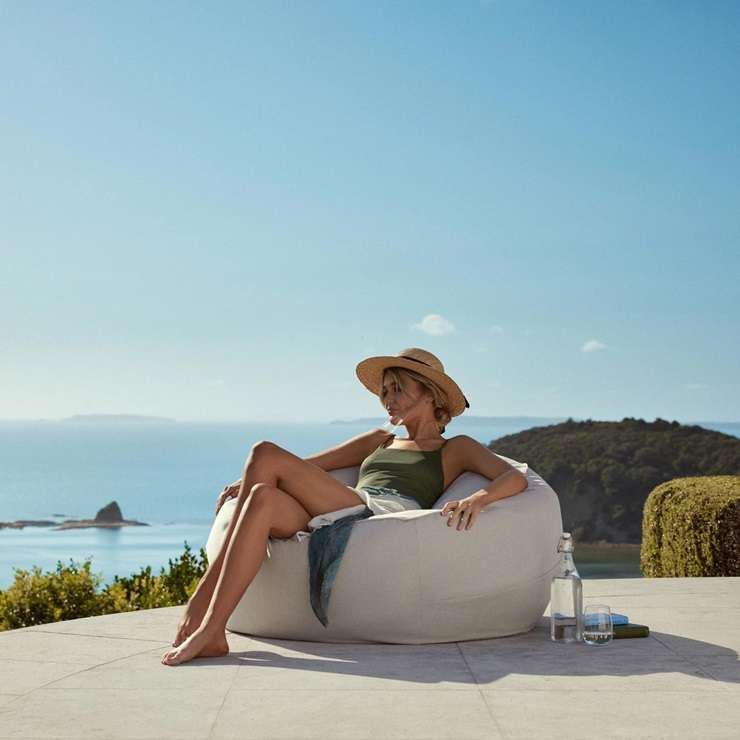
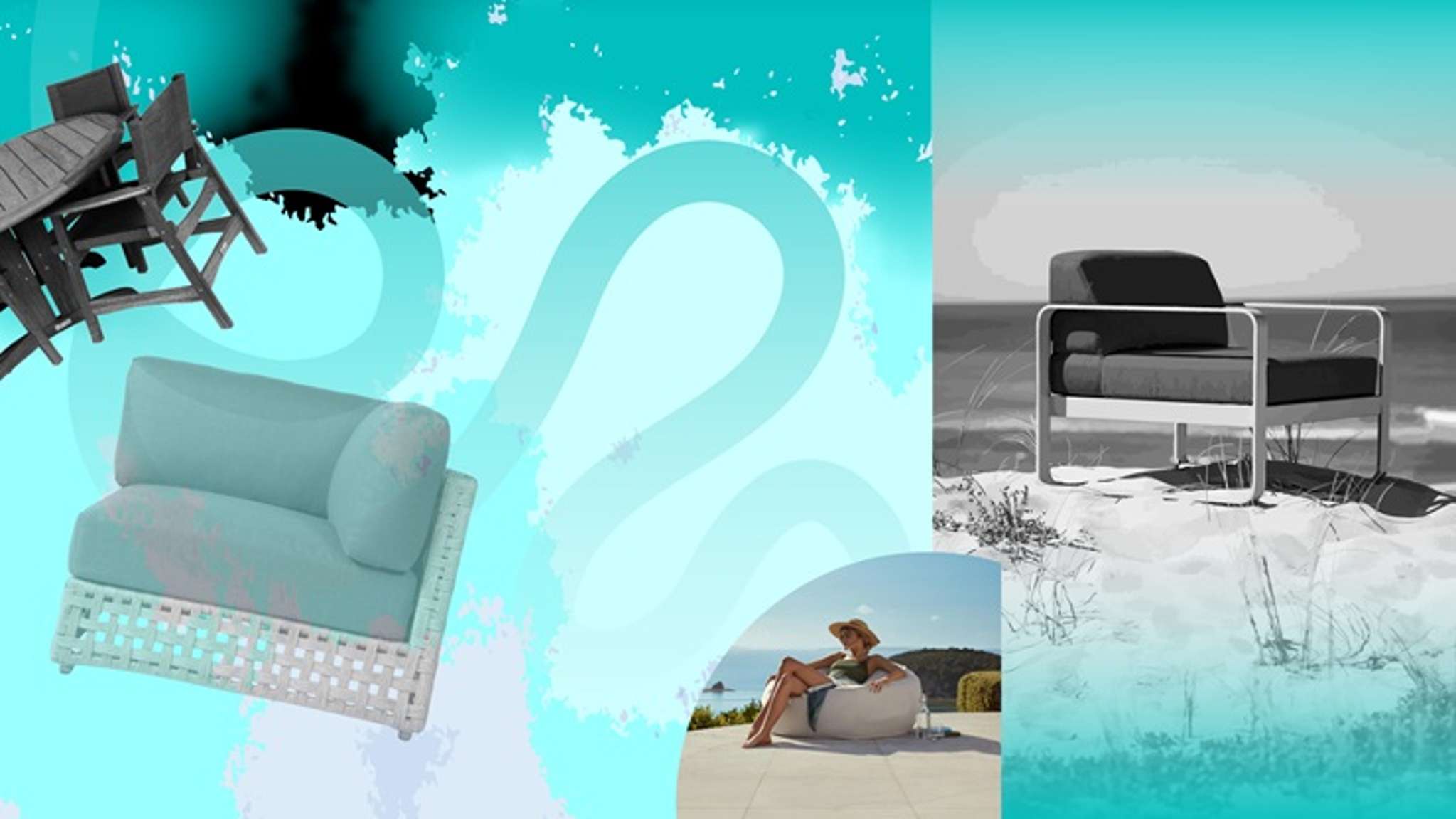
Outdoor bean bags from Coast New Zealand are made with a solution-dyed fabric. Photo / Supplied
Devon Furniture also recently acquired Coast New Zealand, which does outdoor bean bags using Sunbrella fabric.
Rogers says performance textiles are a game-changer for outdoor living. “Sunbrella is trusted worldwide for a reason,” she says. “It’s UV-resistant, fade-resistant, water-repellent, and still feels soft and inviting, perfect for long afternoons outside.”
For seating without cushions, she highlights Batyline, a technical outdoor fabric used in many Jardin collections. “It’s breathable, tear-proof, dries quickly, and never sags. Customers love that it stays cool to the touch and is incredibly low maintenance.”
Design Warehouse also has chairs and sun loungers made using Batyline.
Buying smart, especially on a budget
For shoppers watching costs, Strickett offers some sage advice. “If budget is tight, you’re better off buying a cheaper aluminium set than a cheap timber one. Aluminium will generally last longer in our conditions.”
He also suggests checking warranties as a quick quality test. “If a product claims to be ‘best in class’ but only has a one-year warranty, that should ring alarm bells.”
Design Warehouse does quality aluminium outdoor furniture with Sunbrella cushions designed to endure New Zealand’s harsh summer conditions.
Danske Mobler also has a selection of aluminium outdoor seating options with a three-year frame and two-year cushion warranty, while Trade Tested's corner suites have good reviews and a three-year warranty.
Ultimately, both experts say outdoor furniture should be chosen with the same care as anything inside the home. “The beauty of well-made outdoor furniture is that it’s designed to last,” Rogers says. “With the right materials and a little care, it will look great season after season and actually suit the way New Zealanders live.”