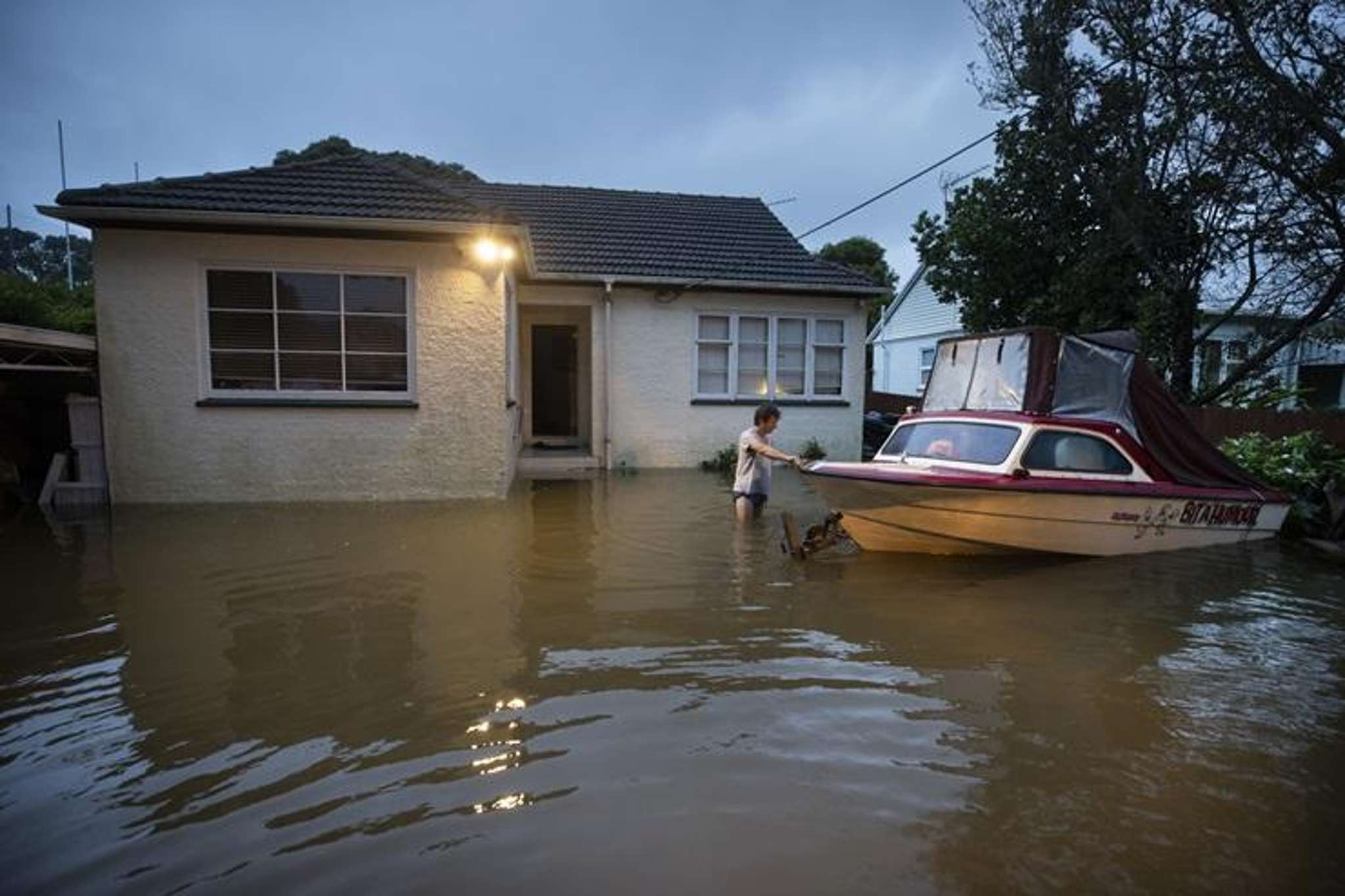
- Tom Rawson, of Ray White Manukau, highlights factors hindering property sales, including flooding, unconsented work, and defective titles.
- Unruly neighbours, gang activity, and contamination also deter buyers, making properties difficult to sell.
- Presentation issues, such as personal items and odours, can further complicate and delay house sales.
When it comes to real estate disasters, Ray White Manukau co-owner Tom Rawson has seen it all. He’s spent 11 years selling houses or managing property sales in South Auckland, so he has a good idea of what can hinder a house sale.
Start your property search
These include:
- Flooding or being in a flood zone
- Unconsented work
- A defective title
- Tenants
- An unruly neighbour or gang activity
- Power pylons
- Contamination
- Leaky buildings
- Derelict or poor upkeep, and
- Fire damage
Rawson says flooding became a problem in the area during Cyclone Gabrielle and heightened awareness of flood zones, while unconsented work to a house or property can kill a sale.
“We’ll have people put in an extra bathroom, bedroom or even another level on their house, and they don’t have consent,” he says.
“We go to sell, and the bank asks if everything is consented, and it isn’t, and therefore the bank won’t lend [to the buyer] because their security – the house – is defective.”
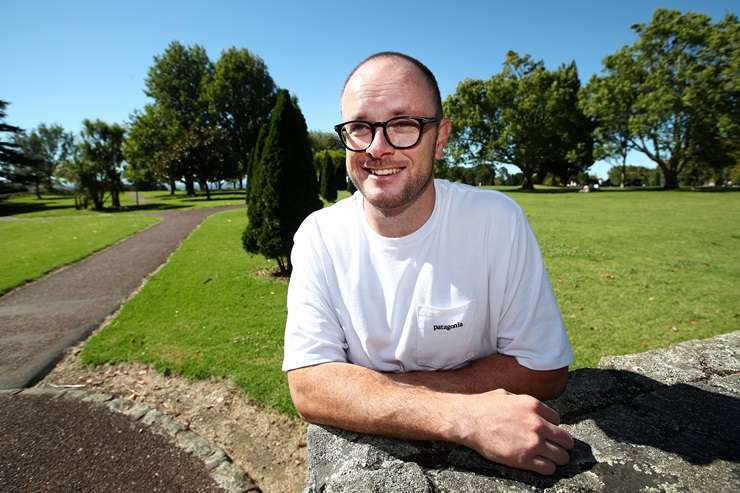
Ray White Manukau co-owner Tom Rawson: “We can sell anything and everything. You just have to be flexible with your approach to things.” Photo / Fiona Goodall
A defective property title also raises red flags with banks and conveyancing lawyers, Rawson says. For example, a cross-lease – where the property shares the title with a neighbour – has a footprint of what is allowed to be on the section.
“People put up garages and all sorts of random things on the property without changing the title, which makes it a defective title,” he says.
When it comes to the sale of investment properties, Rawson says he’s encountered tenants who’ve refused to provide access to bedrooms and bathrooms during open homes.
Discover more:
- NZ’s most viewed homes: Bachelor sweethearts v Block heroes
- Top dollar homes: Inside the biggest house sales of 2025
- NZ's most stylish real estate agents: How they get their look
“So, it’s like buying sight unseen. Some of the mortgagee ones that we sell you’ve got no access, so you are really taking a punt on them, so they can be difficult to sell.”
He’s had tenants restrict access to once a week, demand to inspect all the listing photos before they go online, and refuse to remove their large dog during open homes. “So no one can look in the backyard, and it’s covered in dog poo.”
Similarly, an unruly neighbour can ruin the quiet enjoyment of a person’s home, and if the neighbour is affiliated with a gang, selling a property can be stressful, Rawson says.
“You’re doing viewings, and there’s a party next door. Loud motorbikes or cars. I was selling a property, and I was doing a deal with an investor and there was a raid on the house next door. The [investor] was no longer interested in the property – fair enough.”

Fire-damaged homes are hard to sell but not impossible. Rawson's agent sold this one for over $400,000 in 2024. Photo / Supplied
Rawson once had to jump a fence in his suit to appraise a gang property that had been firebombed by another gang. “We sold it as a firebombed, ransacked, [marijuana] grow house.”
The curtains were shut and the windows boarded up with plywood. The property had free power because the gang had bypassed the power meter. “It was fully ransacked inside. The fridge was pulled from the wall, the oven was pulled from the wall, the bed was flipped over in the lounge ... and there was still a recipe for how much fertiliser and sunlight and water and stuff for the plants to grow," Rawson tells OneRoof.
“I sold it after one open home.”
The house was bought by an electrician and his wife, who renovated it and turned it into a rental. “But between unconditional and settlement, the house got firebombed again.”
Giant power pylons also detract from a property, Rawson says. “We’ve got the national grid coming through South Auckland, and so people just don’t want to live under a power line.”

Gangs and drugs are two things that scare off most buyers. Photo / George Heard
Neither do they show much interest in contaminated properties. “If the property was ever a meth property, or people do a test and it comes up positive for meth, then that’s almost impossible to sell.”
However, in many cases, contamination can be rectified by a deep clean or a renovation. “I owned a house once that had meth from a tenant, and I had to strip all the wallboards – just basically fully refurbish the property. The only thing that stayed was the exterior cladding.”
Fortunately, Rawson had insurance, albeit with a $10,000 excess – but the work cost $150,000, he says.
Leaky houses – many of them built in the late 1990s and early 2000s without eaves and with certain defective designs and materials – are still a selling headache, says the agent. “There’s such a limited buyer pool for them, and they don’t have any value in a non-competitive market.”
They are just as hard to sell as derelict or poorly maintained homes, although Rawson says the Residential Tenancies (Healthy Homes Standards) Regulations 2019 have largely improved the latter category, forcing slum landlords out of the market.

Rawson urges sellers to deal with any overpowering or unpleasant aromas in their properties before holding open homes. Photo / Getty Images
Houses that have been reduced to ashes or even partially affected by fire also have limited appeal. “There was a spate in 2023 where we would have done 10 burnt down houses or semi-burnt down houses in a year.”
Damage to a house can unearth expensive pitfalls such as asbestos – particularly in older homes, Rawson says. “It’s not economically viable to do anything to it other than bowl it, but even when you bowl it, you’ve got to do an asbestos demolition.”
Even for homes that don’t have the above problems, there are certain things sellers may do that can make an agent’s life harder. One is failing to remove highly personal photographs and art, with Rawson telling OneRoof that he once inspected a house where the owner had a large semi-nude photograph of his wife displayed in the master bedroom.
Religious and spiritual paraphernalia have the same effect. A client who’d been trying to sell his house for three months with another agency enlisted Rawson’s help. “I had a look, and I was like ‘You walk in your door, and you’ve got a shrine’.
“And he had some fake animals in his garden, like a fake cow. I said, ‘I’ll take on your property, but it will come with a bit of a ruthless list of things to do’.”
Rawson explained to the vendor that while he personally enjoyed the smell of certain food spices, the buyer might not.
The house was cleaned, the shrine removed, the fake animals put into storage, and the family was banned from cooking the night before an open home. “We sold it at the first viewing.”
Presentation also counts. Rawson once marketed a tenanted property with three dwellings where beds were left unmade on the day of the open home. “I had to go through and make seven beds. It was disgusting. I actually picked up a bed bug from making some of those beds.”
The smell in a house is extremely important, Rawson says. “If you walk into a house and it stinks of cigarettes, or dogs or cats, that’s just an instant no-no.”
If a person has died by suicide or murder in the property, agents should inform potential buyers during the open home.
Some wouldn’t consider a house where a death has happened, Rawson says, while certain cultures require a blessing of the property.
And going to market the day before planned roadworks on the street is not ideal, but as Rawson says, being able to think on your feet helps. “We can sell anything and everything. You just have to be flexible with your approach to things,” he says.
- Click here to find properties for sale