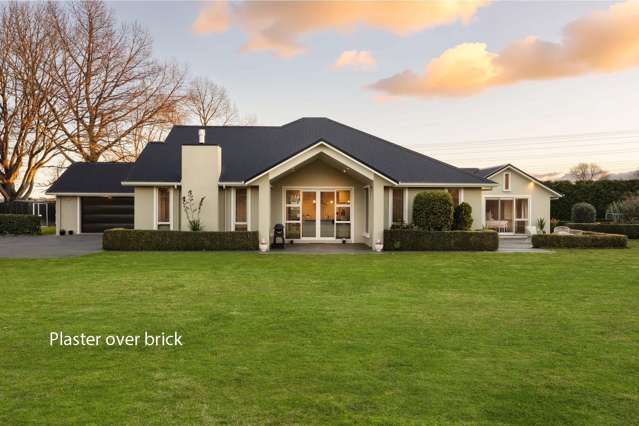
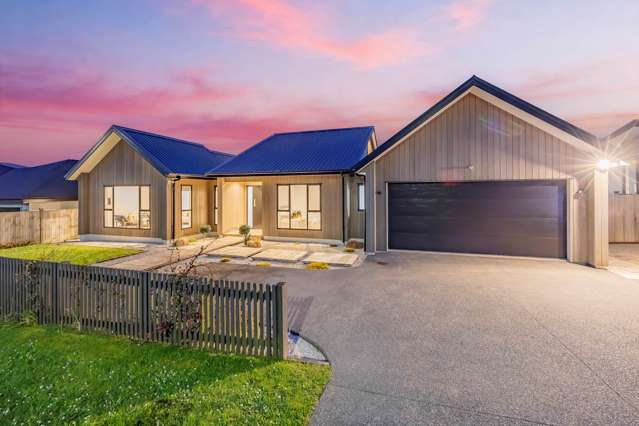
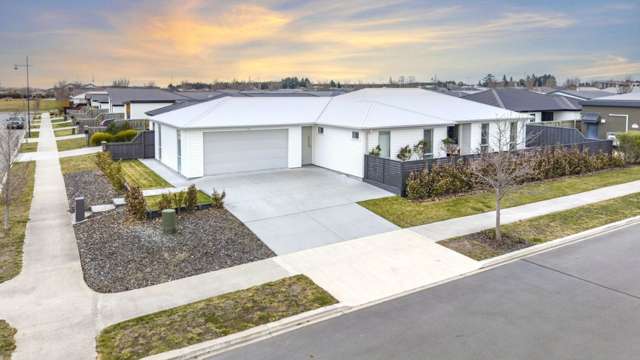
When you buy a newly built home, it’s reasonable to assume it will be warm, dry, healthy and comfortable year-round. But if the home has not been modelled, builders and buyers are largely basing this on guesswork.
Typically, a new home will have been approved by the council, built by professionals and may even come with a 10-year guarantee.
But while the New Zealand Building Code sets important minimum requirements, a code-compliant home will not necessarily deliver everything a buyer expects.
The code covers fundamentals including structural stability, fire safety, water supply, weather-tightness and energy efficiency. However, there can still be gaps when it comes to ventilation, managing moisture, preventing summer overheating and estimating how much a home will cost to keep comfortable.
Start your property search
Matthew Cutler-Welsh of the New Zealand Green Building Council (NZGBC) says buyers understandably associate compliance with quality.
“If you spend $700,000 or $1.5 million on something that has been given a tick of approval by the council, then surely it must be really good,” he says.
“That’s a very reasonable assumption, but it’s not necessarily the case.”
Rather than suggesting that all code-compliant homes perform poorly, Cutler-Welsh wants buyers to understand what the code does and does not cover, and to feel confident asking more specific questions before choosing a builder, design or house-and-land package.
“Energy modelling,” he says, “is the best place to start.”

Getting independent reassurance
This is where Homestar comes in.
It’s New Zealand’s voluntary, independent certification system for new homes and major renovations, assessing homes across areas including health, comfort, energy, water efficiency, moisture control, materials and construction waste.
The rating is verified through assessment and audit by the NZGBC, giving buyers added confidence that a home has been designed against defined criteria.
Cutler-Welsh says improving performance does not necessarily require a dramatic increase in construction costs, with informed decisions made early helping project teams spend money where it will have the greatest effect and avoid expensive retrofits later.
For KR Construction director Dan Richardson, Homestar is helping reassure clients that “the quality behind the walls matches the quality they can see on the surface”.
“Homestar gives us an independent framework to demonstrate that a home will be healthier, more comfortable, and more efficient to run.”
Find out how the home will feel
Energy modelling is the process of testing a building before it’s built.
“It’s an incredibly useful tool for helping to decide where to invest for the best outcome,” says Cutler-Welsh, adding that software developed by NZGBC now makes energy modelling accessible and affordable for all designers and builders, taking away the guesswork.
Descriptors like “warm”, “dry” and “healthy” sound reassuring, but don’t actually tell a buyer how a home will perform.
Will it remain warm through winter without running the heat pump constantly? Will the bedrooms become unbearably hot in summer? How much energy will it take to keep the temperature comfortable?
An energy model can help provide these answers before construction begins by guiding the project team to find the right balance for the home’s design, location, climate and budget.
“It’s a way of testing how the house is going to perform and feel, and how much it’s going to cost to run,” Cutler-Welsh explains.
The model creates a virtual version of the house and estimates factors such as heating and cooling demand, indoor temperatures and likely energy use.
Designers can then test different options including insulation, shading and the size and placement of windows while changes are still relatively easy to make.
Ask where the fresh air comes from
Ventilation is another area buyers should pay attention to.
Everyday life creates moisture inside a home through cooking, showering, washing and even breathing. If that moisture cannot escape, it contributes to condensation, mould and poor indoor air quality.
Opening windows can help, but this is not a reliable year-round ventilation strategy, because of weather, noise, insects, pollution and security concerns. Buyers should therefore ask how fresh air will be continuously supplied and how stale, damp air will be removed.
Airtightness does not mean sealing a home and hoping for the best. It is about controlling unwanted draughts and should be paired with properly designed ventilation. Insulation, windows, airtightness, heating and ventilation all need to work together.

Ask for evidence, not assurances
The NZGBC’s home buyer checklist recommends asking builders and designers specific questions.
The purpose of these questions is to give buyers clear bottom lines, and something more concrete than a general promise that their new home will be comfortable.
These include:
• How will healthy fresh air be constantly supplied?
• How draughty will it be, and how will this be checked?
• Will thermally broken windows (windows with an insulating barrier) be specified?
• How will windows be installed to avoid condensation?
• For how many hours per year will 25C be exceeded?
• How much energy will be needed to keep at least 20C inside?
• How much will it cost to keep between 20C and 25C?
• Is the home eligible for lower-interest mortgage rates?
A builder may not be able to answer every question immediately.
However, Cutler-Welsh says buyers should be wary if their questions are dismissed or they are simply told further assessment is unnecessary because the home meets the Building Code.
“Customers need to remember that they’re the boss,” he says.
The message for buyers is simple: do not stop at asking whether a home complies with the Building Code.
Instead, ask how it is expected to feel, how much energy it will use, and how fresh air and moisture will be managed – and ask for evidence to support the answers.