New Zealand’s housing market has slipped further into reverse, with property values edging down over the last three months.
According to the latest figures from the OneRoof-Valocity House Value Index, the nationwide average property value fell by 0.4% (-$4000) to $953,000, leaving values down $145,000 (-13.2%) from the market peak reached in February 2022.
However, beneath the headline figures, the data reveals a widening divide between the country’s strongest and weakest markets, with parts of the South Island continuing to push to new heights and several North Island regions in decline.
Otago posted the strongest three-month growth of any region, with the average property value there rising by 1.7% (+$18,000) to a new peak of $1.073 million. House values in the region, which includes affordable Dunedin and super-wealthy Queenstown-Lakes, gained $59,000 over the last year.
Start your property search
Notably, the region’s average property value is just $159,000 shy of Auckland’s average property value, which continued its decline.
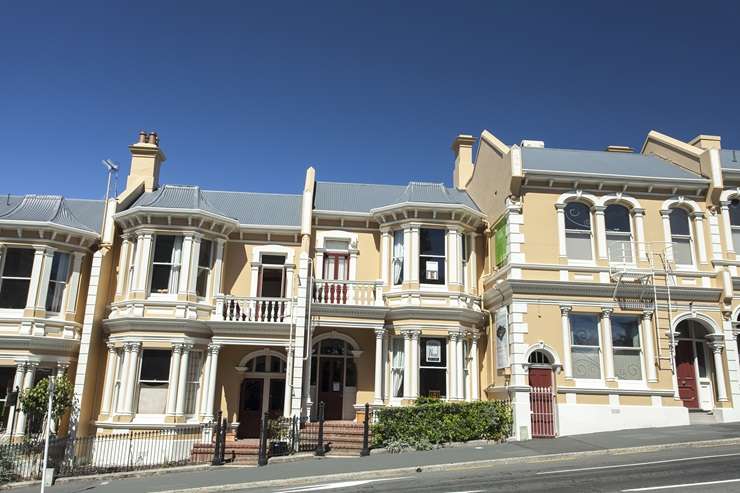
Character homes in central Dunedin. The city’s average property value was up by 1.2% in the last three months. Photo / Getty Images
Among Otago’s major districts, Queenstown-Lakes continued its march higher. Property values rose $49,000 over the quarter and $106,000 over the year to $2.217m, making it the country’s most expensive metro. Values there are now $871,000 higher than before Covid, driven not by $5m-plus sales of trophy homes, but by strong demand for homes in the $1.5m to $2m price bracket.
The halo effect has lifted house prices in neighbouring Central Otago, where the average property value has risen by $22,000 (+2.2%) to $1.045m.
Dunedin is also in growth mode, with values rising $8000 (+1.2%) in three months to the end of October and $35,000 (5.3%) over the year to $700,000, with affordability and a positive jobs market luring buyers from elsewhere in New Zealand.
Southland recorded the second-strongest annual increase among the regions, with values up $38,000 (6.7%) year-on-year to $602,000 and sitting just $1000 below their recent peak. The region’s biggest city, Invercargill, saw its average property value up $5000 (+0.9%) over the quarter to $585,000, but Gore homeowners saw the biggest lift of the region – an extra $9000 (+1.7%), taking the average property value to $536,000.
At the other end of the spectrum, Wellington continued to struggle. Regional values fell $11,000 (-1.3%) over the quarter and are now $324,000 below their March 2022 peak. The average property value in the region sits at $817,000, only 6.4% above pre-Covid levels.
The Wellington metro market paints an even starker picture. Values have dropped $433,000 (-32.3%) from their peak and are down $36,000 over the last year, leaving the average property value at $907,000. Unlike many other parts of the country, Wellington is now worth slightly less than it was immediately before the pandemic housing boom.
Gisborne was the weakest regional performer over the quarter, with average values dropping $17,000 (-2.6%) to $646,000. Hawke’s Bay was flat over the three months and down $16,000 on the year, while Taranaki and Manawatū-Whanganui also recorded quarterly declines.
Auckland’s housing market weakened further over the quarter. The region’s average property value fell $12,000 (-1%) to $1.232m and remains $347,000 below its January 2022 peak. Values are down $31,000 over the last year.
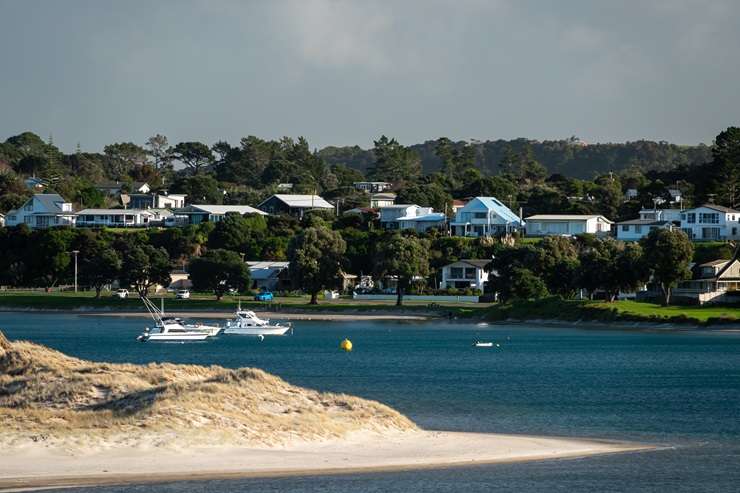
Mangawhai recorded the strongest house price growth of the last three months, with the suburb’s average property value up by 5% to $1.464m. Photo / Getty Images
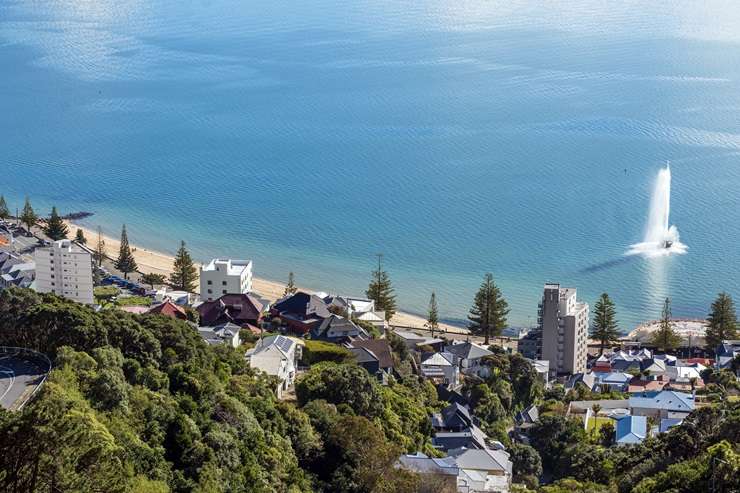
Houses in Oriental Bay, in Wellington. The average property value in the suburb is now $363,000 below its pre-Covid level in February 2020. Photo / Getty Images
The largest declines were concentrated in Auckland’s south and west. Waitākere was down $10,000 over the quarter and sits 25.5% below its peak, while Manukau has shed $348,000 from its high and Papakura remains down $270,000. Auckland City recorded a quarterly decline of $19,000, taking its average property value to $1.383m.
Christchurch continues to stand out among New Zealand’s major cities. Values rose slightly over the quarter and are up $19,000 (2.4%) year-on-year to $824,000. The city is now just $3000 shy of its peak value and has added $294,000 since the start of the pandemic.
The wider Canterbury region is also proving resilient. Values increased $2000 in the quarter and $19,000 over the year to $821,000, putting the region only $1000 below its all-time high.
At suburb level, the strongest performers were largely in the South Island, but the standout over the past three months was coastal Mangawhai in Northland. The suburb recorded the country’s biggest gain in both dollar and percentage terms, with its average property value rising 5% ($70,000) to $1.464m. That puts it just $10,000 shy of the post-Covid peak reached in early 2022.
At the other end of the spectrum, Porirua’s Cannons Creek and Waitangirua posted the steepest quarterly declines. Average property values in the two lower-priced suburbs fell 7.7% and 6.3% respectively over the three months.
The OneRoof analysis also points to a growing number of suburbs vulnerable to further price falls. The average property value in 44 suburbs is now below its pre-Covid level of February 2020, up from just nine six months ago. Thirty-nine of those suburbs, concentrated mainly in Wellington and Auckland, have recorded declines over the past three months, six months, one year, two years and five years.
In some suburbs, falling values reflect changes in housing stock, including an influx of more affordable new-builds, many of which have struggled to gain traction in the current market. However, the data also showed further weakness in several high-profile Wellington suburbs. In Oriental Bay, the average property value fell 4.2% ($85,000) over the quarter to $1.919m, leaving it $363,000 below its pre-Covid level. Roseneath recorded a 4.7% quarterly decline ($68,000), taking its average value to $1.367m, or $74,000 below where it stood before the pandemic.
At the same time, the number of “bulletproof” suburbs, those posting value gains over the past three months, six months, one year, two years and five years, has almost halved, dropping from 214 to just 90. All are located in the South Island.
Of those resilient markets, 34 reached new value highs by the end of October and appear well placed to capitalise on the spring and summer selling season. Christchurch’s Southshore and Invercargill’s Georgetown were among the strongest performers, with average property values in both suburbs rising by more than 3% over the past quarter.
- Click here to find properties for sale