Waikato’s economy continues to outperform the national average, underpinned by strong population growth, a young workforce, and major infrastructure investment.
These key fundamentals support occupier demand across various parts of the commercial property market.
The Colliers Research & Economics team has published its Waikato Regional Essentials report that looks at the main areas of the property market in Waikato and the economic drivers impacting the sector.
The report highlights that with economic and population growth set to continue, activity in the commercial property market is expected to gain momentum next year.
Start your property search
Provisional economic figures from Infometrics show annual GDP growth of 2.1 per cent in the June 2026 quarter, ahead of the 1.7 per cent recorded nationally, with Hamilton’s GDP reaching approximately $17.4 billion.
Over the past decade, Hamilton’s economy has grown at an average rate of 3.2 per cent per annum, outpacing the national average of 2.1 per cent.
Growth across the wider Waikato region has also been comparatively strong, with GDP rising 1.3 per cent in the year to March 2026, above the national rate.
Hamish Fitchett, National Director of Research & Economics at Colliers, says Hamilton also has a relatively young population that supports labour force growth and opportunities in employment-intensive sectors.
“According to Stats NZ, Waikato’s population reached 532,100 as of June 2026, around 10 per cent of New Zealand’s total population. Hamilton’s estimated resident population was approximately 193,000, up 1 per cent year-on-year,” Fitchett says.
“Hamilton has a relatively young population, with a median age of 34 years compared with 38.5 years nationally, and around 40 per cent of residents aged 15 to 39. The working-age population (aged 15 to 64) accounts for approximately 67 per cent of Hamilton’s residents, a higher share than nationally.”
The healthcare and social assistance sector is Waikato’s largest employer, accounting for 12.2 per cent of jobs, followed by manufacturing at 11.3 per cent, and construction at 10.3 per cent.
In Hamilton, the University of Waikato medical school, a development that is being project managed by Colliers, is expected to further strengthen the city’s health and education sectors.
Alan Pracy, Director at Colliers Hamilton, says Hamilton continues to strengthen its position as a nationally significant employment and services hub, supporting office demand and investment activity in the CBD.
“Conditions in the city’s office market have been stable this year with prime net face rents holding firm, but as total occupancy costs escalate through outgoings, tenants are becoming more selective, favouring modern or refurbished space that offers better efficiency,” Pracy says.
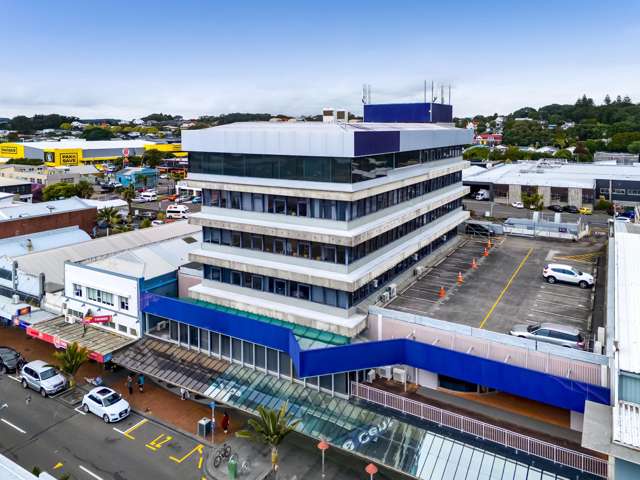
“As with elsewhere in the country, new office development is also increasingly reliant on tenant pre-commitments, as illustrated by the Fonterra-anchored redevelopment of 193 London Street.”
Across the wider Waikato region, industrial leasing conditions remain selective, with tenants and investors showing stronger interest in modern, well-located facilities with good connectivity.
Industrial development activity has strengthened in scale. Building consents for new factories, industrial, and storage buildings were steady at 102 in both 2025 and 2026, but total consented floor area rose from 104,567sq m to 144,870sq m, indicating that more large-scale projects are entering the pipeline.
Major infrastructure investment continues to reinforce Waikato’s role as a logistics hub. At the 490ha Ruakura Superhub, Stage 1 infrastructure and the 30ha inland port are complete and operational.
Tainui Group Holdings and Brookfield Asset Management have formed a joint venture to develop the remainder of Stage 1, with a completion value of more than $1 billion.
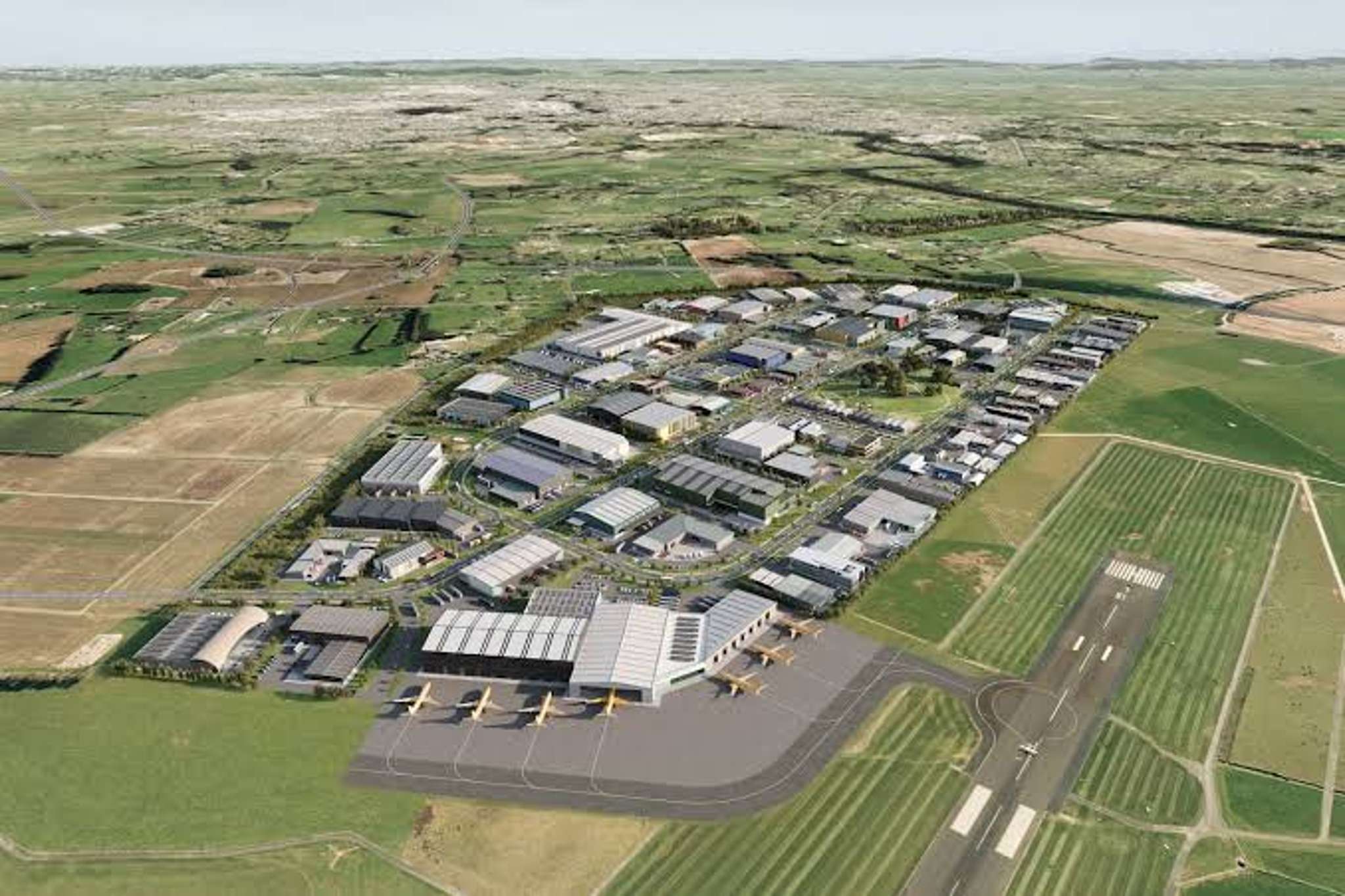
At Titanium Park, next to Hamilton Airport, development is now focused on the 100ha-plus Precinct North, where the first building was completed in May.
- Supplied by Colliers