A social media post urging landlords to hike rents now in anticipation of a possible land tax under a Government supported by The Opportunity Party has been labelled "highly misguided", with industry figures warning it could even land some landlords in legal trouble.
Assured Property founder and developer John Kenel sparked debate online after posting on Sunday: "With Qiulae Wong and the Opportunity Party now looking likely to get into Parliament and potentially holding the balance of power, it’s time to act."
Kenel pointed to The Opportunity Party's proposal for a 1.75% tax on the unimproved value of urban land, arguing it was a cost landlords would ultimately need to pass on to tenants.
"All private landlords across New Zealand should be putting rents up by at least this amount and doing it as soon as possible."
Start your property search
Based on the proposed tax, he calculated that a property with a land value of $500,000 could cost landlords an extra $168 a week.
"This isn’t theoretical. If this tax comes in, the cost doesn’t disappear. It lands on the owner, then on the tenant. Better to price it in now than get caught later," the post added.
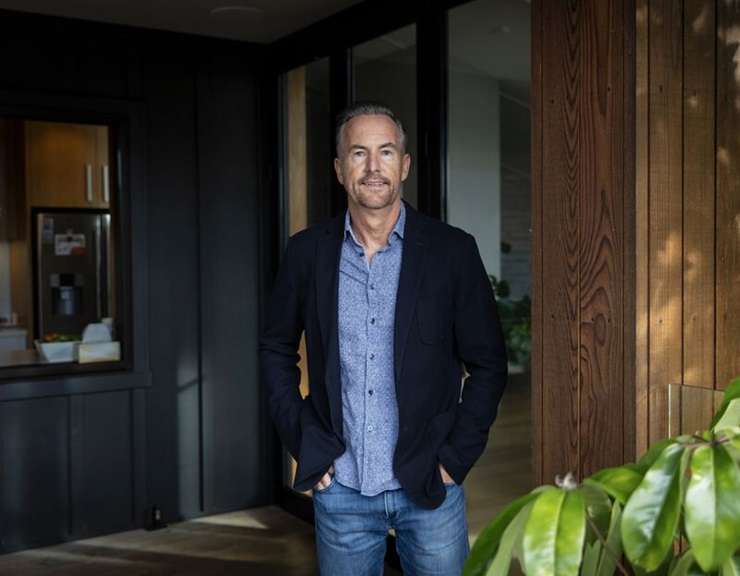
John Kenel: "All private landlords across New Zealand should be putting rents up ... and doing it as soon as possible." Photo / Supplied
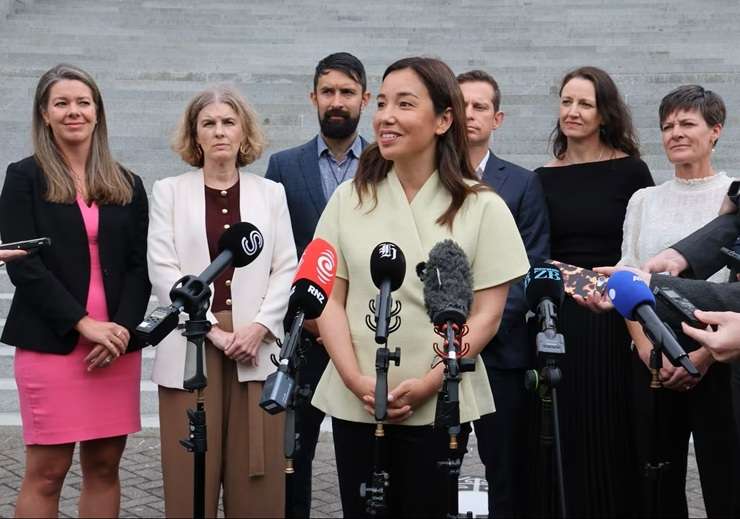
Opportunity Party leader Qiulae Wong, centre, speaks to media as she arrives at Parliament on Monday surrounded by the party's incoming MPs. Photo / Mark Mitchell
The comments quickly ignited debate, attracting almost 2000 responses.
However, based on preliminary election results, National, ACT and New Zealand First appear likely to be able to form a government without support of The Opportunity Party. The Opportunity Party has also said its land tax proposal is not one of its five bottom lines for coalition negotiations.
Before the election, Opportunity leader Qiulae Wong told Newstalk ZB's Heather du Plessis-Allan that reforming the tax system would be a gradual process rather than an immediate priority.
"I think it’s something that we do need buy in from other parties on and we need buy-in from the public."
Kenel told OneRoof he was "glad" the immediate likelihood of the tax being introduced had diminished but said it remained official party policy.
"People should understand what the numbers mean."
He conceded the wording of his post could have been better, particularly the suggestion landlords should raise rents immediately.
"The market sets what a landlord can realistically charge, not simply the costs on a spreadsheet. You can’t just add $168 a week and assume a tenant can or will pay it.
"My concern is what happens over time when you add substantial costs to providing rental housing. Some owners may try to recover costs, some may sell, and others may decide not to invest in new rentals. I think that deserves a proper debate because renters need homes too."
'Highly misguided'
Opes resident chief economist Ed McKnight said the post was detached from both the political reality and the rental market.
"In my mind, I was like, this is such a clickbait post because you are holding yourself out as a property investment expert. But what you are saying is not only wrong politically because it’s so unlikely the land tax is going to come through because, on the provisional results, the Opportunity Party’s support would not be needed for a government to be formed. And even if they did, they’ve released what their bottom lines are – they are available on their website – land tax reform is not one of those."
McKnight described it as a "controversial" post designed to grab attention.
"The fact that Opportunity is going to have six to eight seats in Parliament does not mean that it can get a land tax through and there’s no credible political commentator who is suggesting a land tax will come through."
Ray White group head of property management Zac Snelling was equally dismissive.

Opes resident chief economist Ed McKnight: "There’s no credible political commentator who is suggesting a land tax will come through." Photo / Fiona Goodall
"My first reaction was that it was opportunistic and ridiculous."
He said investors should wait for facts rather than react to hypothetical policy changes.
"I find it a little bit absurd too that there are claims like this being made off policy changes that may not even occur."
Snelling warned landlords who followed the advice could find themselves before the Tenancy Tribunal because rent increases are restricted to once every 12 months and must reflect market rates.
"If you’ve got the investor who blindly takes this advice and goes to issue a new rent increase, they are going to put themselves at some serious risk of trouble."
They also risk losing quality tenants in what remains a relatively flat rental market.
"I get there’s a lot of investors who may be sitting there going, 'How will this impact me?' My response to investors to this type of scaremongering is sit tight and act on facts. Don’t act off fear, don’t act off feeling."
Too early to react
Wolfe Property Coaching director and long-term investor Ilse Wolfe said it was far too early to make investment decisions based on such uncertainty.
"I would not advocate increasing rents now simply on speculation and from a values perspective. I think that’s completely awful.
"It’s such early days, and it could go in any direction right now. We have no clue, and he [Kenel] is probably putting a lot of emphasis on one specific point where it’s not top of mind."
Wolfe said the prospect of a land tax remained remote, particularly because neither Labour nor National had championed the idea. However, she believed any such tax would ultimately flow through to tenants, as other regulatory costs had done in the past.

Rental prices have risen by less than 1% in the 12 months to the end of August. Photo / Fiona Goodall
Her advice for investors was to focus on fundamentals.
Xpect Property managing director Andrew Crosby, a landlord and developer himself, agreed that any long-term cost imposed on rental property owners would eventually be reflected in rents.
"Whether landlords try and do it straight away, that depends on the market," he said, noting rents had not moved "a huge amount" in recent years.
Statistics support that view. In the 12 months to August 2026, the national median rent rose less than 1%, from $590 to $595 a week.
"It’s supply and demand. Can you raise the rent? Will your tenants move out and go to someone else who is cheaper? That’s economics 101, but if it’s a cost to all landlords, it gets passed on eventually. But will a lot of people do it straight away? Of course not. Will some people? Yes, if the market can sustain it."