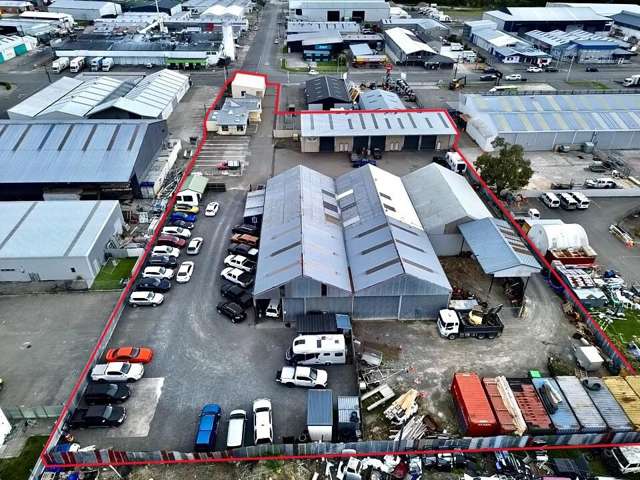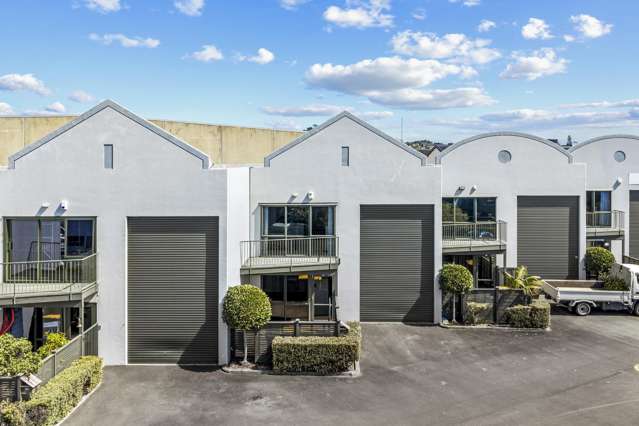
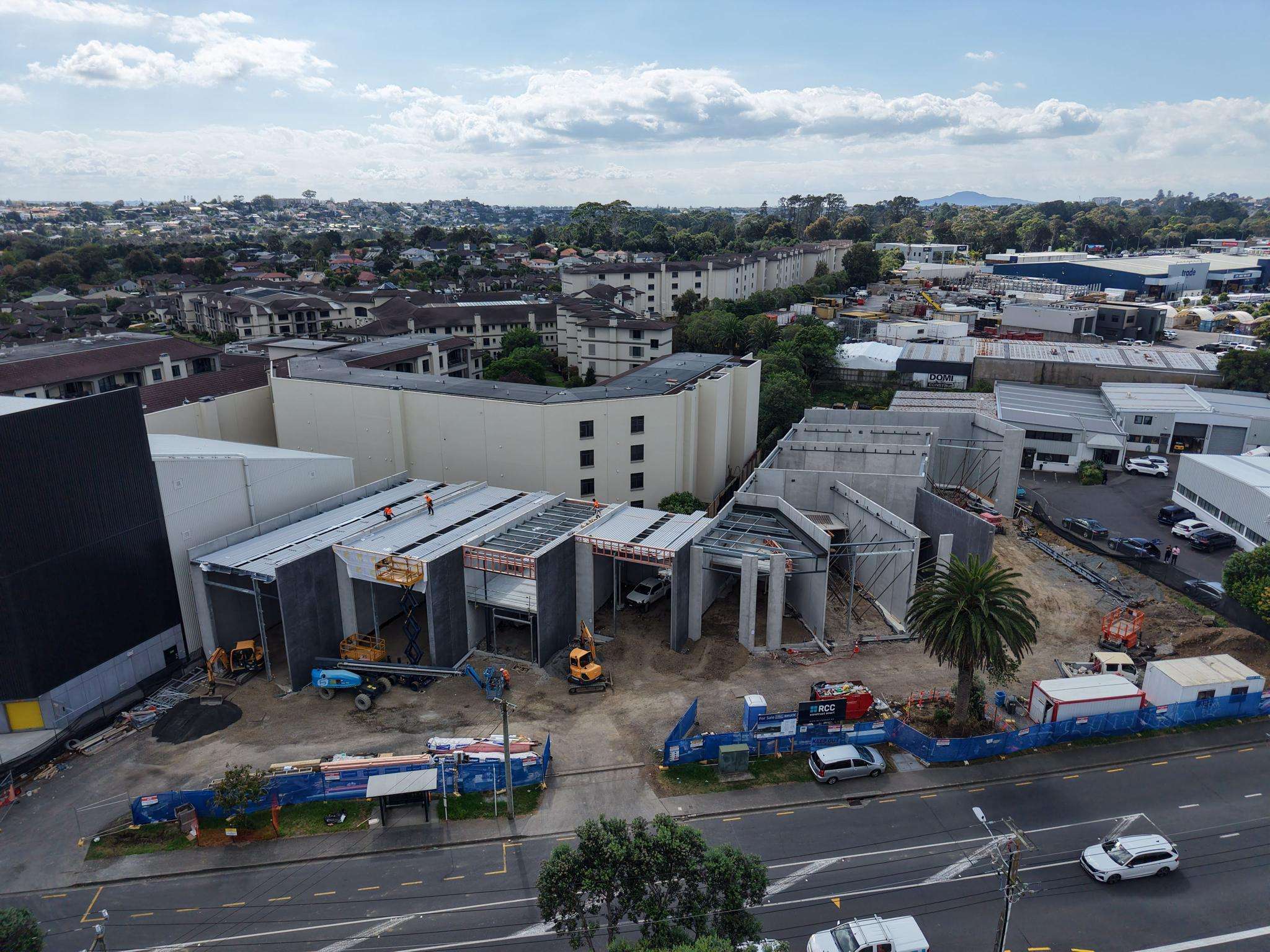
A new industrial development in one of Auckland’s most tightly held inner-ring precincts is being brought to market.
The offering presents investors and owner-occupiers with a rare opportunity to secure modern, right-sized space in a location where new supply has been effectively absent for more than two decades, Bayleys brokers say.
Bayleys South Auckland’s Matt Dell, together with colleagues Jake Skeen and James Valintine, is marketing ten newly constructed industrial units at 160 Marua Road, Mount Wellington, for sale by negotiation.
The Latitude 160 development comprises 10 units ranging from 112sqm to 364sqm (more or less) with titles expected in August/September 2026.
Start your property search
Dell says the offering highlights a structural imbalance within Auckland’s industrial market, where development has been dominated by larger-format logistics, leaving a persistent undersupply of smaller, functional units in central locations.
“In established precincts like Marua Road, there has been virtually no new unit development for more than 25 years,” he says.
“In that time demand has deepened – particularly from owner-occupiers, trade operators and smaller-scale investors seeking well-located, efficient space under 400sqm.”
Zoned Business – Light Industrial and designed for operational efficiency, the units incorporate 7.5 metre high-stud warehousing, modern office accommodation and integrated amenities, supported by on-site car parking and rear yard areas.
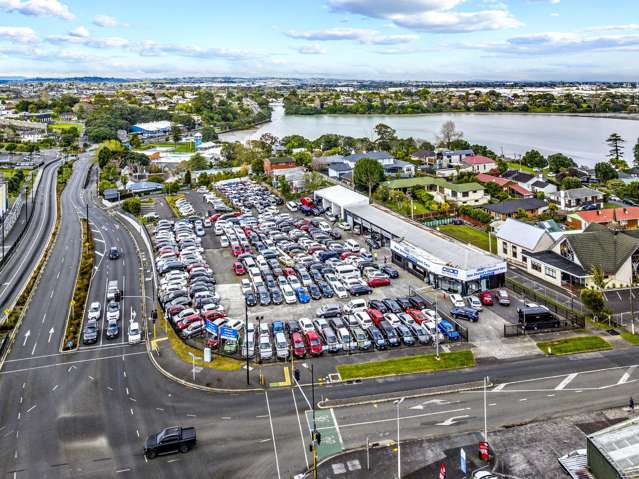
The development occupies a high-profile position with exposure to more than 8,000 vehicles per day, reinforcing its suitability for businesses requiring visibility alongside functionality.
Positioned within Auckland’s central industrial belt, the site benefits from immediate access to key arterial routes, including State Highway 1 and the Greenlane interchange, with connectivity to the CBD, Auckland Airport and surrounding commercial hubs.
Bayleys South Auckland’s Jake Skeen says this combination of access and scarcity is increasingly driving decision-making among both occupiers and investors.
“Industrial occupiers are becoming more location-sensitive, particularly those servicing urban populations where proximity directly impacts cost, delivery times and staffing,” he says.
“At the same time, investors recognise that assets in supply-constrained pockets tend to outperform over the long-term, simply because they are difficult to replicate.”
Purchasers may also benefit from the Government’s Investment Boost scheme incentive, introduced to support new commercial development, which allows accelerated deductions on qualifying new assets.
“That has a meaningful impact on after-tax returns and overall feasibility,” Skeen says.
“It’s particularly relevant for new-build assets, where buyers can combine modern construction with favourable tax treatment.”
Bayleys South Auckland’s James Valintine says interest in the development reflects a broader shift toward more targeted industrial projects, aligned with end-user demand rather than purely scaled outcomes.
“We’re seeing a rebalancing,” he says. “Large-format assets will always have their place, but there’s growing recognition that smaller, well-located units are equally critical to the functioning of the industrial ecosystem. These are often challenging to deliver in established areas.”
He says the combination of limited supply, functional design and a proven location positions the units within Latitude 160 as strategic acquisitions. “These are the types of assets that tend to be tightly held once delivered. Opportunities to secure new-build units in this kind of location are rare, and when they do come up, they’re quickly absorbed.”
- Supplied by Bayleys