A balustrade isn’t on the top of the priority list for many homes, but it can be an interior element that can transform into an architectural feature whether you are thinking of updating an existing or specifying for a new build.
There is a large range of hardware and material that you can choose from, with one of the most popular being a plastered wall paint finish with an internal attached rail in stainless or wood. This is a good option for a clean look and if you particularly want to conceal this area of the home.
A common mistake is when people paint their rail. Beware here as the coating does break down making scratches, ring marks and dirty hands more of a feature than the rail.

Start your property search
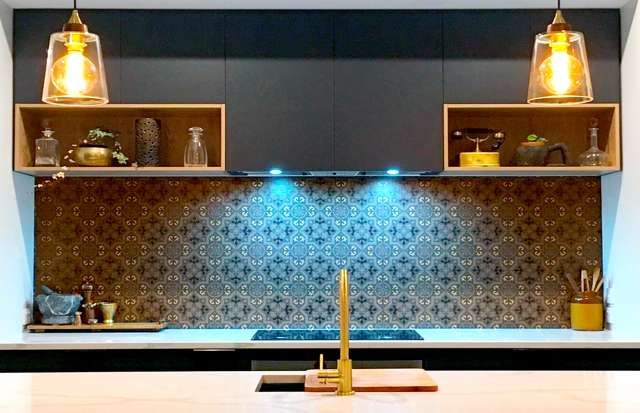
Laura Heynike: “With the use of accent stair lighting and artwork, your stairwell will transcend you from one space to another in style.” Photo / Supplied
Instead, just go for a powder-coated or marine stainless rail which are easy to wipe down. A GIB balustrade is a great way to layer into some ambient lighting as a guide up the stairwell as well as an acoustic performer.
Steel or wrought iron is a great way to tie in the industrial scheme in your home. Popular in the 2000s and prior design decades before, it’s a classic material that doesn’t date.
It’s the design that you choose that will make or break your style as your interior ages so be sure to think about the design features, motifs, tube shapes and orientation.
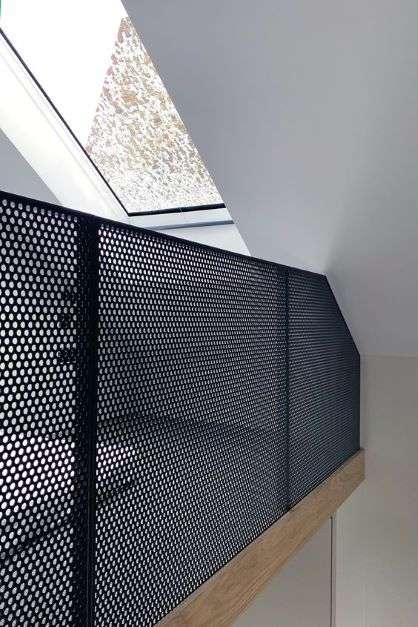
A mesh infill with a tidy steel top and bottom rail is being adopted in high-end or industrial residential interiors. Photo / Supplied
For a lighter look you can go for a threaded stainless wire in either suspension or within the top and bottom rails finished with a slimmer steel newel post. (The post at the beginning of the stairwell).
Or a personal favourite mesh infill with a tidy steel top and bottom rail. Typically used in commercial but we are seeing this overflow into high-end or industrial residential interiors.
For some high-end interiors, we are seeing a steel and glass inset combo.
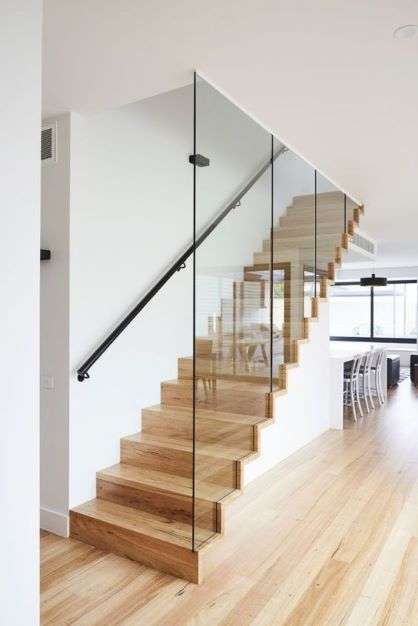
Using glass is a great way to make your space larger with a seamless look and maximum light. Photo / Supplied
For a contemporary balustrade style there is always the trusty glass option. Using glass is a great way to make your space larger by expanding the void moving any barrier giving you a seamless look with maximum light.
The glass can run full height to the ceiling, or angle down in line with your stairwell being frameless or an integrated hand rail.
Choosing your fixing hardware from dual pins to a channel and clip system will depend on your look. The pin is a bit more commercial looking but can look smart in a contemporary interior, especially if you customise the colour hardware to match in with other metal accents.
Glass doesn’t always have to be clear, you could look at smoke or rippled glass – a unique design feature as well as helping disguise fingerprints.
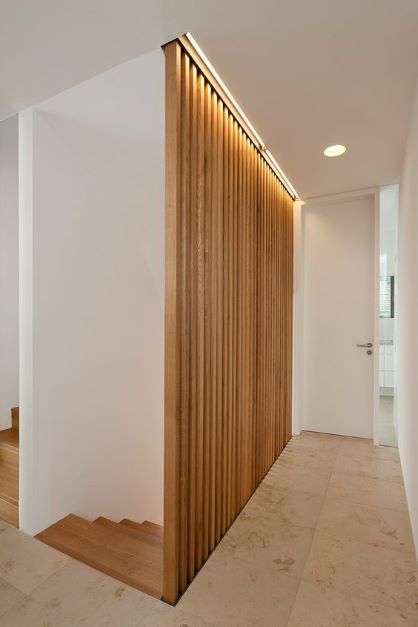
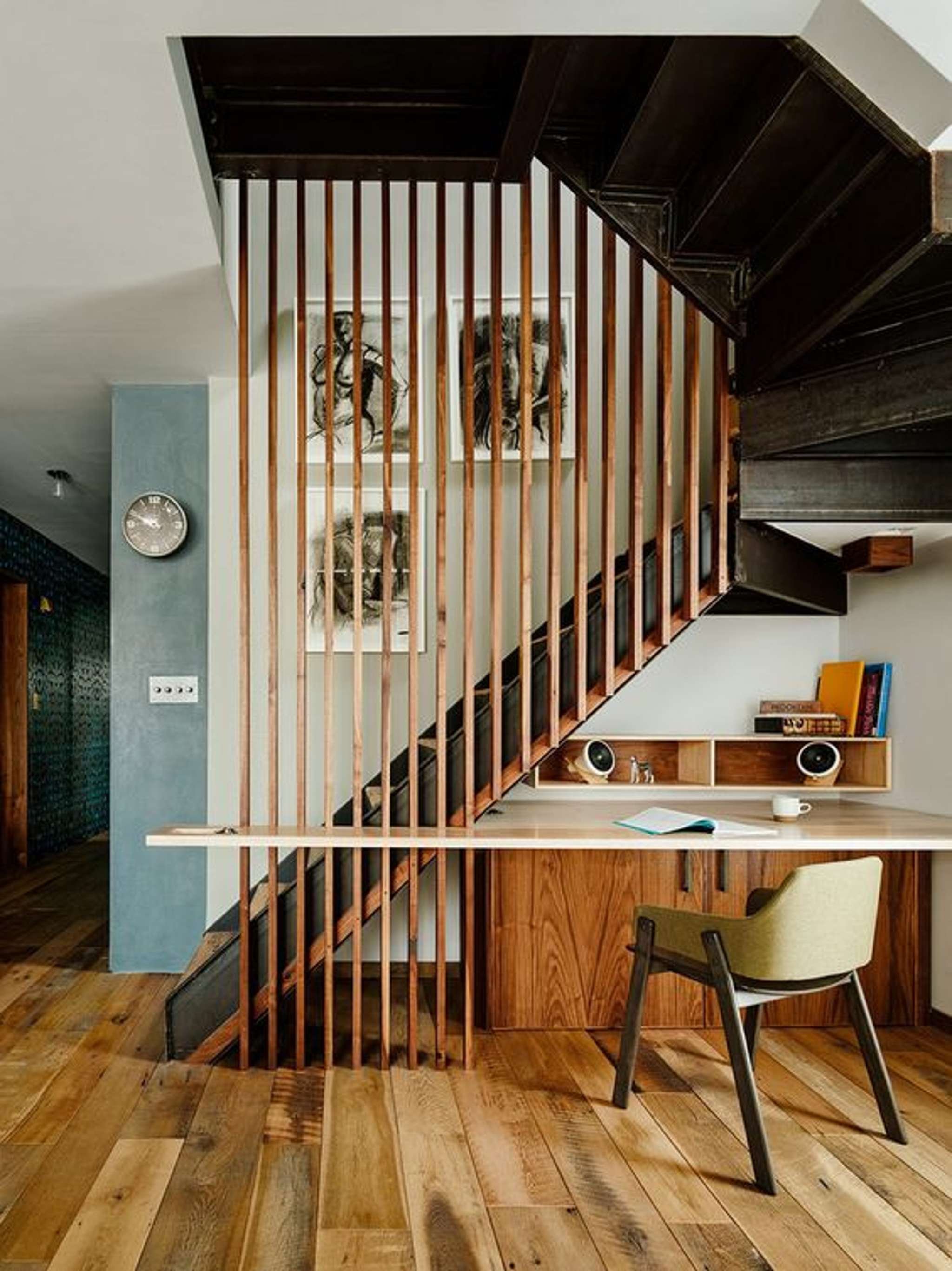
Slat battens going up the stairwell gives a contemporary twist on a wooden staircase balustrade design. Photo / Supplied
Lastly, going for timber with a beautifully crafted newel post will be the perfect addition for any heritage homes wanting to retain the original styling.
With a modernised dowel inset or a colonial moulding even just sanding back your original and re-staining can give your timber balustrade a new lease on life. You can also think about slat battens going up the stairwell for a contemporary twist on a wooden staircase balustrade design.
When updating your balustrade keep note of the architectural look of the rest of your home so the feature enhances the interior rather than an odd upgrade that connects two spaces. With the use of accent stair lighting, pendants and artwork, your stairwell will transcend you from one space to another in style.
- Laura Heynike is director of Pocketspace Interiors.