- Turmoil in the Middle East and economic uncertainty may lead to interest rate rises this year.
- Home loan costs are expected to increase, but major banks have already priced in likely rises.
- Experts advise not to panic, suggesting fixing mortgages for two years for security.
Turmoil in the Middle East, oil price hikes and economic uncertainty will almost certainly lead to further interest rate rises this year – but homeowners shouldn’t panic.
Start your property search
That’s the message from the housing market experts OneRoof spoke to after last week’s release of the Consumer Price Index data for the June quarter, which showed annual inflation at 4.1% – its highest point in two years.
The experts said home loan costs will almost certainly go up, but that rate rises would not be severe, noting that the major banks had already priced in likely increases in the Official Cash Rate into their fixed terms.
Andrew Chambers, CEO of mortgage company Tella, told OneRoof that the consensus in the industry was that rates would be back into the fives next year.
“Using the one-year fixed as a benchmark, we’d expect to see it rise by 0.5 percentage points in that time,” he said.
The OCR could go up by more than that, but Chambers was unsure that banks would pass on all of the rise, saying the market was still competitive.
Customers were already paying a premium on longer-term rates, he said, pointing to the one-percentage-point difference between one-year and three-year fixed terms.
“Also, long-term rates are still well below the mortgage test rates, so unless they go into the eights we don’t expect to see too much pain,” Chambers said.
Discover more:
- Tony Alexander: Gloomy housing market picks itself off the floor
- 'Wow factor': Historic home built by New Zealand rugby legend for sale
- Historic church building seized from cannabis grower now for sale
But the rate rises would have an impact. For example, the increases could add $290 to the monthly mortgage bill of a household with a loan of $700,000. That would mean less money for shopping or restaurants and cafes.
Brad Olsen, CEO of data analysts Infometrics, said the global economic outlook had changed significantly and rapidly. The two-year swap rate had risen by 34 basis points since the start of July.
But because banks had already priced much of that lift into their own rates, another hike in the OCR in September might not have as big an impact.
Olsen thought floating interest rates could hit 6.4% in the last quarter of this year, and that the one-year fixed rate would reach the low fives, peaking at 5.5% come 2028.
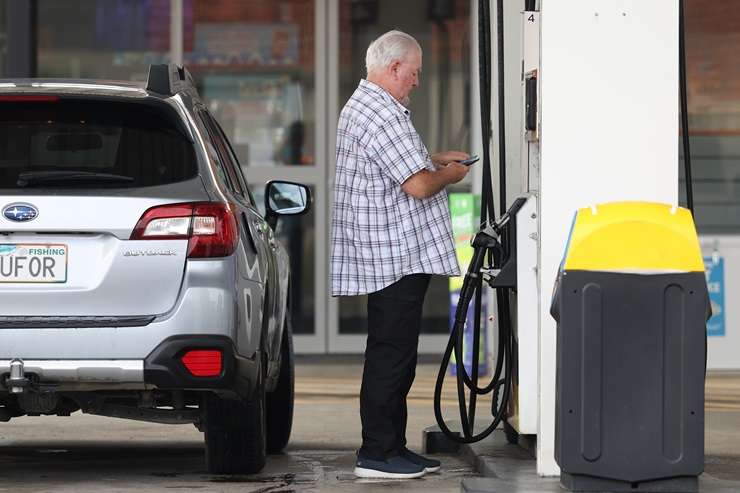
Petrol prices are expected to rise again as a result of renewed conflict in the Middle East. Photo / Getty Images
The Reserve Bank would want to get the OCR back to 3% by the end of this year or the start of next year, and then hit pause, he said.
People should work out their own best- and worst-case scenarios around mortgage fixes and job security, he said.
People who fixed for 2.2% five years ago during Covid turned out to be the smartest, he said, but at that time there were fears that the economy might crash and rates would drop even lower. “You only knew five years on if you’d done a good thing or not,” he said.
“I think people should be going through the motions of ‘do we have enough of a buffer to make this work if things go higher than we first anticipated?’.”
Even if people could handle the mortgage, other costs were high; the recent inflation data showed electricity prices were up 12% year-on-year, which was “pretty hefty”, Olsen said.
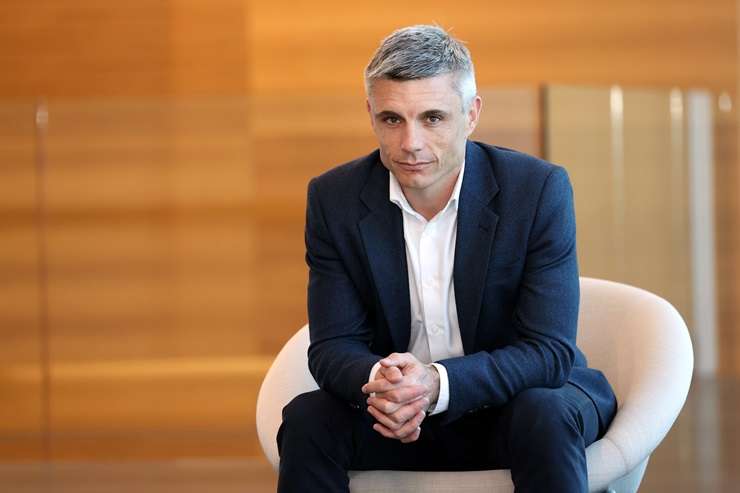
BNZ chief economist Mike Jones: "There are just so many balls in the air.” Photo / Fiona Goodall
“We are still seeing what has effectively been the worst oil shock in half a century.”
BNZ’s chief economist, Mike Jones, said fixed rates had “a little bit more to go but not a whole lot, and that’s because the Reserve Bank’s tightening cycle is already priced in”.
“What we will see, assuming the bank does continue to lift the OCR, are more increases in those shorter-term rates.”
BNZ believed that the six-month and one-year rates would be 50 points higher by the end of the year, putting them at 5.25% and 5.3%, and longer-term rates of two years and more would be between 5.5% and 5.9%.
Jones was loath to give a best- or worst-case scenario given all the uncertainty: “It’s almost like how long is a piece of string at the moment; there are just so many balls in the air.”
The unknowns were US President Donald Trump, the New Zealand election, the state of the domestic economy and the impact of El Niño on the primary sector.
Jeremy Andrews, director of Key Mortgages, is advising his clients to fix for two years. While the six-month rate was around 0.5 percentage points cheaper, at around 4.5%, the extra cost was a small price to pay for the security, he said.
“If you want to go even longer, like for three years, you have to pay another 0.3 percentage points for that extra year. That’s why we suggest two years as a good option.”
Fixing for five years could backfire if rates did fall in a year or two, he said.
His advice was not to panic – but not to dither either: “I think it’s only a matter of time before banks do increase those fixed rates again.”
The 4.99% two-year rate would not be around for long, he said.
He added that people should explore whether breaking their current term was a good option; in the majority of cases it worked in people’s favour to refix, he said.
- Click here to find properties for sale