
Kids are advising town planners as part of new urban planning effort.
It’s not often children have a hand in urban planning but that’s happening in Auckland’s Roskill South where local schoolkids are helping to develop a “play street”.
It’s all part of the Homes, Land, Community (HLC) effort to develop up to 20,000 new houses in projects across Auckland over the next 10 to 15 years, with large-scale urban developments in a number of suburbs – Hobsonville, Northcote, Mt Roskill, Mangere, Oranga and Tamaki among them.
That is itself part of a bigger picture – increasing the density of housing in Auckland to ease the accommodation squeeze but, as Hayley Fitchett, Manager, Masterplanning & Urban Design at HLC says, it’s also about correcting some of the planning mistakes of the past and ensuring density is accompanied by an inclusive new urban planning philosophy.
Start your property search
Just as the new houses will help revitalise of many of the city’s town centres, Fitchett and HLC are taking infinite care to approach the suburbs hosting the new developments with community very much in mind when it comes to quality, liveability, resilience and a feeling of neighbourhood.
Which is why schoolchildren from Roskill South are advising HLC placemakers and urban designers in designing a play street for their neighbourhood.
Instead of simply assuming what is best for the community, HLC has spent many hours, days and weeks consulting local residents about what qualities are missing from their neighbourhoods and elements they want to retain and enhance. They call it “co-creation.”
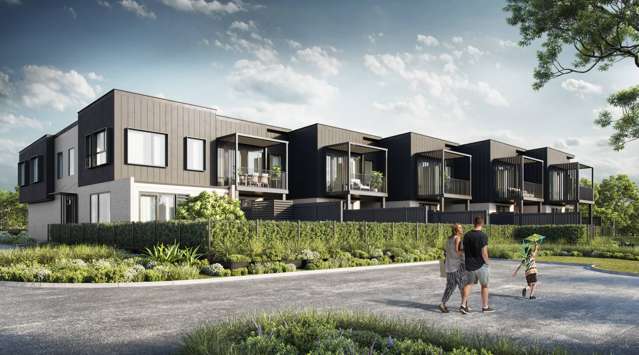
Mt Roskill, for example, will see about 10,000 new homes and 2400 KiwiBuild homes built over 10-15 years on land currently occupied by around 3000 state houses; they will be a mix of housing types.
A play street will be part of that development. It is a street aimed at children, connecting places they frequent (like schools and parks) but doing so in a way that makes it clear the street is also for leisure and community purposes.
Fitchett says there is one already built in Hobsonville Point (where up to 4000 new homes are to be completed by 2025): ”It’s a great place. It connects the primary school with a local park but it essentially recognises that streets are not just a way of moving from point A to point B by car. They also have a specific function in, as the Mt Roskill development is, a medium-density environment.

“So we are trying to create a sense of fun, something a bit whimsical in play streets. The Hobsonville one has brightly coloured bird boxes on fences, public art, hidden trails and alternative routes, stepping stones, things to jump off and more. So, yes, it’s a thoroughfare but it’s somewhere specially for kids so they can access key parts of the community safely, with things like wider footpaths, but where they can also have fun.”
So, in the spirit of community co-creation, the Mt Roskill schoolkids are sitting with placemakers and urban designers as they design the play street there.
“In all the neighbourhoods we are involved with, we have done a lot – a lot – of listening,” says Fitchett. “We are talking to people all the time, asking them about what is missing from their area, where they’d like it to be in 5-10-15 years or more and what is there special that they want to keep and strengthen.”
That approach stems from HLC determination not to repeat some of the mistakes of the past and to make the new developments attractive, community-based and future-proofed. Auckland’s spread in past growth spurts have seen the city spread out further and further until more lateral expansion is unfeasible.
“This is the first time we have not continued to spread outwards in big waves of growth like the North Shore in the 1950s and around Howick in the 1990s,” says Fitchett. “In times past, mum stayed at home while dad drove off to work in a factory or the city and the kids ran around the suburb.
“But we don’t live like that any more. Now our communities are super-diverse and we are working with people in existing suburbs, plus the manawhenua, to ensure they are at the centre of what we are doing.
“We are revisiting those suburbs to help change things like congestion, to bring a sense of community and resilience into the neighbourhood by building things like active nodes, where people can walk and cycle.
“it’s also all about that sense of neighbourhood, not just being safe walking round it at night but also able to go to someone else’s door to borrow a cup of sugar – because you already know the people in that neighbourhood.
“We are delivering the promise of the Unitary Plan and will make sure it is done well,” she says. “Yes, there will be more density in the housing – but it will be done in a way where kids can run around barefoot, where people feel a part of where they live, not just a resident, where it is familiar and welcoming and evocative of Auckland.”
- This content was created in partnership with the Urban Development Group