Building inspectors are warning of a new leaky home scandal coming down the pipeline. As the country attempts to solve its housing crisis, many have noticed an increase in low-quality and non-compliant work. The OneRoof reporting team investigates.
Jeff Fahrensohn pulls at some tape on a building site somewhere in Auckland.
“Yeah,” says Auckland Council’s chief building inspector. “It’s been put there to hide things that are not right with the framing. That’s just blatant concealment.”
Fahrensohn posts the video to LinkedIn – there are other videos, too – and reports this building project has a hump in the floor, as well as low-quality welding and other non-compliant work.
Start your property search
“So we issued a notice to fix on this and it’s going to take them quite some time and a lot of deconstruction to remediate a lot of these issues.”
In another post, he says a Licensed Building Practitioner (LBP) has left the owner with an expensive job to remediate, and in another, “this qualified builder’s cladding is coming off”.
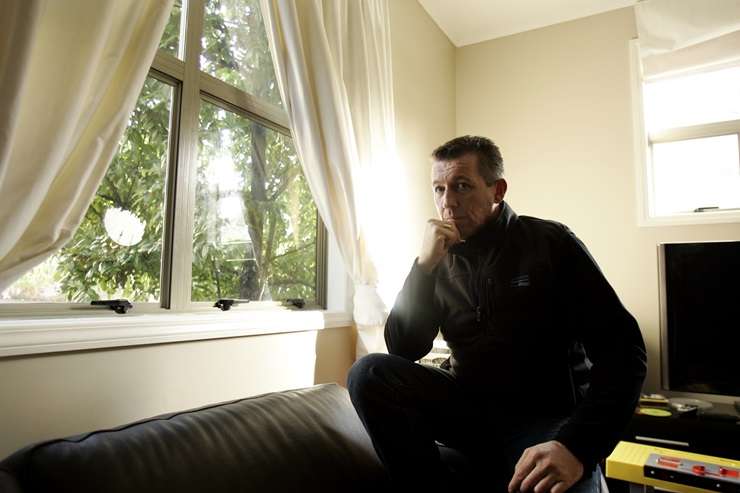
Campaigner John Gray in 2008. He has been fighting for victims of shoddy construction for almost two decades. Photo / Janna Dixon
Complaints about LBPs take time to investigate and compile, Fahrensohn posted on LinkedIn: “We’ve had to employ someone full-time to do these.”
The Licensed Building Practitioner Scheme was launched in 2007 in response to New Zealand’s leaky building crisis, “to encourage competent building practitioners to build homes right the first time,” a Ministry of Business, Innovation and Employment (MBIE) spokesperson told OneRoof.
But Fahrensohn’s videos are of new builds, not of historic leaky building cases. The Government, meanwhile, has embarked on a big shake-up of regulations and building consents.
Building and Construction Minister Chris Penk told OneRoof the ambitious programme of reforms was to make it easier and more affordable to build, but that changes underway included reviewing penalties and accountability for bad builders.
Among announcements so far is the exemption of so-called granny flats from requiring a building consent, although those dwellings can be up to 70sqm, the size of a small house.
The Government is also moving towards self-certification schemes for “trusted professionals” to be able to sign off their own work.
Discover more:
- McDonald's buys $9m landmark church to turn into restaurant
- Former Black Caps star Lou Vincent selling his bach for over $1.15m
- Surprising cost of an Auckland home - if prices were affordable
Some are alarmed, however, saying defective buildings are still being built today with more misery to come for owners, on top of a massive amount of financial and emotional misery which is still ongoing from the leaky homes crisis.
John Gray, a pilot who owned a leaky house and who co-set up advocacy organisation Hobanz in 2007, says radical change is needed but worries the Government’s reforms will leave the same old problems, like a lack of consequences for builders and expensive and emotional battles for owners.
Gray believes the current penalties for LBPs equate to being slapped with a wet bus ticket, and that the Companies Act gives builders and developers the ability to walk away from personal liability by winding up one company while carrying on under another, leaving councils, and therefore ratepayers, as the last man standing in the tier of those responsible for defective buildings.
Gray wants changes to the Building Act, which in his view does not have adequate civil and criminal liability teeth, saying the focus has to be on the consumer because defective buildings ruin lives.
This year alone, the New Zealand Herald has reported on big building fails, including apartments in Kingsland where owners were given a choice between a minimum $36.6 million bill to fix or $82.9m to demolish and rebuild; and owners of The Ridge apartments in St Marys Bay won court approval to sell the land beneath their “wrecked homes” and walk away.
Leaky buildings first became a thing in New Zealand in the 1980s and 1990s when different types of cladding began to arrive from overseas, and a move to use untreated timber resulted in rotting buildings.
More than three decades later, over a third of residential new builds in greater Auckland failed their final inspection in the year to May 1, for a variety of reasons, from cavity wrap (25.6%), to cladding (22.1%), to framing (27%), to foundations (15.2%) and drainage (14.5%).

Jagoda Jezowska was an owner of one of the defective apartments in The Ridge on Hargreaves Street, in Auckland. Photo / Jason Oxenham

Owners faced a multimillion-dollar repair bill at Kingsland Apartments, in Auckland. Photo / Supplied
When OneRoof spoke to Fahrensohn, he said he posted the videos not as a witch hunt but as learnings for the industry and, along with his manager Ian McCormick, stressed that although there are concerns the videos do not represent the majority of builders.
Nigel Benton, Auckland Master Builders president, agreed that the majority of builders were good, noting that the Auckland branch had a warrant of fitness programme, which included random checks on members. The results around 99% of members were up to scratch, he said.
The organisation also carried out regular upskilling. “We keep on everything all the time, and our stats are generally showing that most people are pretty good, so it’s not everyone,” he told OneRoof.
Benton said whether it was a used car or a new or used house, people should check before they made a purchase, adding that there were usually reasons for cheaper prices. “You get what you pay for in a lot of these cases.”
He pointed out that the council inspectors saw the worst and were looking for issues, adding that cowboys came out of the woodwork during the boom. “You see the same ones coming up all the time.”
DEFECTIVE buildings have long tentacles. In a suburb near the central city, an apartment block built about 13 years ago is biting the owners financially and emotionally.
Life for owners in the apartment block has been tears, sleepless nights, report after report, lawyers and the blame game.
One couple told OneRoof their complex is not “leaky” but structurally unsound. They said they had felt reassured when they bought because the build was near new and made of steel and concrete.
At first, they put little things that went wrong down to the teething issues of a new building, but the issues kept coming.
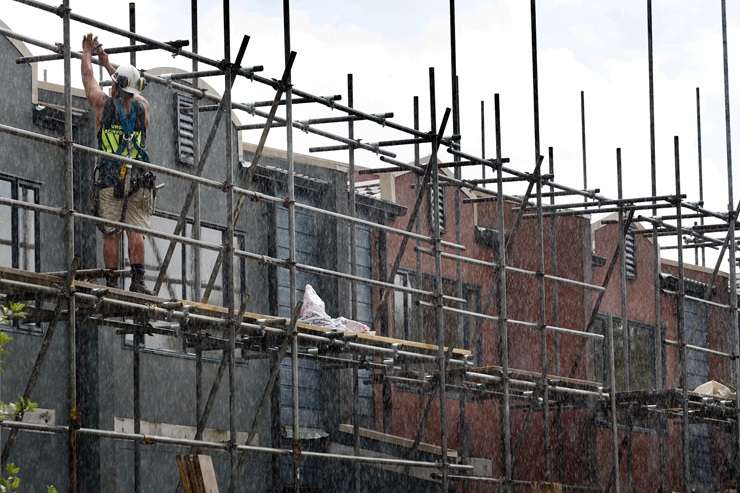
The leaky buildings crisis has cost New Zealand billions and left a trail of misery. Photo / Brett Phibbs
When the body corp decided to get someone in for a closer look “a book” of defects came back: “It was frightening how many things were wrong – lots of structural stuff.”
And so it began. Reports found cladding issues, structural issues, and also seismic issues that were so bad “it’s a wonder it didn’t fall down with the trains going past.
“To figure out what was wrong with the building, we had to bang holes in the walls and drill into the concrete structure.”
The couple says that the owners discovered the complex had a dangerous fire hazard only after an examination of disintegrating water pipes found they did not have the passive fire collars needed to stop fire from spreading.
Owners in the complex sought a report on who was responsible for the defective build. The couple OneRoof spoke to blamed the builder, contractors and council, saying the builder walked away. “They start a company to do the development, they do it, sell it off, take the money out, wind the company up, and there’s no way that owners can have recourse because the company that did the development no longer exists.”
The couple said that owners at the complex had lost life-changing amounts of money; and some have suffered depression and illness from the constant stress and feelings of helplessness.
“They’ve spent all their savings on it. Sold cars, sold assets, spent all their inheritances and stuff. Just scraping around for every last dollar they have to put into it.”
The couple said a court case had not gone ahead and that a Non-Disclosure Agreement (NDA) limited what the owners could say. Gray says NDA agreements are common in cases like this and are a reason many defective building cases slip under the radar.
The building of defective homes seems to peak when there is a peak in housing construction, he says. One such peak was in the late 1990s, but Gray says that because the National Government of the day removed apprenticeship funding, there were a lot of unqualified builders around.

Minister Chris Penk: "These reforms will help us crack down on cowboy builders and poor practice." Photo / NZME
The last three years saw another building flurry, and Gray says Auckland Council’s inspection fail rate is disturbing. One case he has been involved in was a new house that failed 22 inspections, yet people were looking at buying it.
When asked how this is happening, Gray replied: “Because these builders continue to get away with it.”
Gray says there has been a “ridiculous” acceptance of failure, and when he calls for radical action, he means “significant” consequences for builders who get it wrong or who are negligent.
In Canada, which had its own leaky condo crisis, there was radical action, he said. “They make everyone licensed, so if you’re a development company, you are licensed. You have senior persons within that organization who are licensed.
“If you have a construction company, the company is licensed. You have senior persons in charge of that company who are licensed, so if they build something that fails, then those people lose their licence, and they can’t start up another company.”
Consequences mean people lift their game, he said.
ALSO UNDER REVIEW is the complicated area of liability. New Zealand operates under a system of joint and several liability, which means that loss or fault is shared between those responsible. But once, for example, builders or developers have gone bust, or disappeared, councils are often the last ones left when it comes to liability.
Penk told OneRoof he was considering a system of proportionate liability, where councils would only be liable for their share of the total loss.
The current rule, of joint and several liability, acted as a handbrake on the building system by encouraging overly risk-averse behaviour from Building Consent Authorities, often leaving ratepayers to cover losses, he said.
“I am concerned that the current system does not incentivise people to manage their own risk, resulting in unnecessary delays and inefficiencies.”
The Companies Act is also under review. Commerce and Consumer Affairs Minister Scott Simpson told OneRoof he expected to introduce legislation in the coming months and that reforms would crack down on poor and illegal business practices.
“One such practice is ‘phoenixing’. This is when businesses shift their assets out of the company, then wind up and leave behind debts – only for the business to emerge elsewhere under a different name to continue trading. This is clearly wrong.
“The reforms will introduce director identification numbers, which will make it easier to track directors across all the different companies, both past and present, that they are associated with.”
Simpson said he was also working with the Minister of Revenue to improve information sharing between relevant agencies, which would help those agencies to quickly identify poor practices, sanctioned directors, and make it easier for people and companies to do their due diligence.

Economist Benje Patterson says defective building claim settlements have "arguably imperilled the entire council” in Queenstown. Photo / Supplied
THE LIABILITY issue is massive.
Benje Patterson, an independent economist from Queenstown, claims that defective building claim settlements have been of such a magnitude that “it has arguably imperilled the entire council”.
Infrastructure funding has been clipped by the amount paid out, and Patterson is concerned about Government measures like self-certification, saying “cowboys” could slip through the cracks or corners cut.
Gray calls for a suite of changes across the board, including giving consumers a stronger ability to take either civil or criminal action against Licensed Building Practitioners as well as designers and engineers, and others responsible for any failures, which he believes will help to make “sure they never do it again”.
Criminal liability was important, he said, because sometimes mistakes were not mistakes: “Someone makes a deliberate decision to substitute timber where it should be steel, for example. That’s not a whoopsie.”
He believes all builders should be required to have mandatory professional indemnity insurance, with an overarching insurance-backed warranty for any build, including renovations and alterations.
Benton said mandatory insurance would be great if it worked, but questioned the cost, saying it could add “a hell of a lot” to a building, which the consumer would pay.
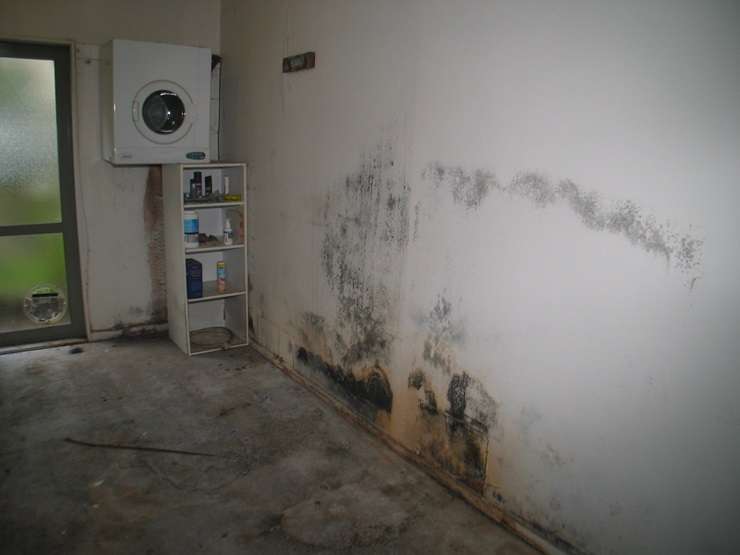
Damage from the leaky buildings scandal. Houses were plagued with mould and rotten wood. Photo / NZME
“You know, the cost of houses is going to go through the roof if that’s the case because the cost of insuring a builder or something is going to be immense, isn’t it, so they’re just going to make sure they charge more for everything. That’s the only way you can do it - or the ones that aren’t are going to be the ones that you don’t want to use because they’ll be the ones that go out of business and you won’t have any guarantees.”
ONE OF the issues council inspectors face is having to inspect and reinspect building sites, over and over again.
Fahrensohn told OneRoof some of sites in his LinkedIn videos required deconstruction but all were either rectified or in the process of being rectified: “Rest assured, we’re not going to be issuing any sort of final certification or passes until that work has been completed to a really good compliance standard.”
Part of the building inspector’s job was to provide educational input, but some builders did try to pull the wool over the inspector’s eyes, Fahrensohn said.
“They do cut corners for costs that we know and we have the owners interest at heart when we’re doing our jobs, and it can be a little bit, well, I wouldn’t say demoralising, but it is shocking sometimes when you see some of the stuff that people will go to try and hide things.”
Only a “very small percentage” of builders did that, however. McCormick said the industry had a continuum of competency with some of the “best builders you could find anywhere” and others that needed more supervision and checking.
But many sites lacked a robust quality assurance system with inspectors having to shoulder quality control, which builders should be doing themselves.
“We’re doing about 200,000 building inspections a year and I think a couple of years ago we were up to 220,000, which is an awful lot of inspections to be doing especially when a large percentage of them are actually recheck inspections as a result of an earlier failed inspection.”
Penk’s response to OneRoof indicates many issues are being looked at, such as around accountability and penalties.
“We are strengthening accountability for poor workmanship by improving the Licensed Building Practitioner complaints and disciplinary processes, updating the public register to show suspensions, and introducing codes of ethics for licensed electrical workers, plumbers, gasfitters, and drainlayers. These changes will take effect in 2026,” he said.
He also said any changes around liability rules would be supported by structures which strengthened liability and risk allocation while protecting building owners when things went wrong: “I expect to have more to say on this later in the year.”
Penk did not believe current penalties for practitioners were strong enough, saying while most traders were skilled and trustworthy the industry had made it clear high-profile cases of poor workmanship could tar the good with the bad.
“Both builders and homeowners want to know there are effective checks in place to prevent shoddy work, and clear pathways for action when things go wrong.
“The changes for licensed building practitioners I’ve previously outlined will increase accountability across the system and strengthen public confidence in the sector.”
These changes were only the “first phase” with officials looking at further ways to lift practitioner accountability, including reviewing whether penalty levels were fit for purpose: “These reforms will help us crack down on cowboy builders and poor practice.”
Responding to concerns around the introduction of self-certification for some builders, Penk said strong entry requirements would be put in place, and there would be ongoing monitoring.
“Applicants will be subject to a fit and proper person test, which will assist factors such as professional conduct and financial history.
“Individuals responsible for work that has led to upheld complaints, or companies with a record of poor financial performance, will not be eligible to enter – nor will they be able to re-enter under a new company name.”
Not everyone has faith in effective change. Back in 2002, building survey company Prendos, which had blown the whistle on leaky buildings, was accused of exaggeration about the problem and the cost of repairs.
One of two brother directors, Phil O’Sullivan, now semi-retired, recalls cutting into buildings and being shocked at the rot he was seeing. Prendos tried to raise the alarm in the early days but few listened and over the years claimed that successive governments and officials have been “hopeless”, O’Sullivan told OneRoof.
He fears granny flats – Penk expects up to 13,000 more will be built over the next decade – will simply be slums of the future, saying people will not build them properly.
“It just won’t happen. You’re going to end up with people building hovels in their backyards and no one’s going to be responsible for it.”
In O’Sullivan’s view, politicians should make decisions around things like the Building Code, then back off and leave the operational side to experts, as he believes that politicians “don’t actually know what they are doing”.
He thinks the Government should set up an operational authority, populated by people from the industry – engineers, architects, builders – but not CEOs, and not people selected by politicians.
“You want people who can identify issues quickly and say, ‘okay, how do we fix it? The key to our industry is making sure we understand the defects and then rectifying them - that is the key to the whole thing and that is the thing we’re not doing.”
- Click here to find properties for sale