
The KiwiSaver First Home Withdrawal, and First Home Loan schemes can boost your deposit and make it easier for you to buy your first home.
Schemes that can contribute toward your deposit
Buying a first home isn’t easy. KiwiSaver and other government schemes can help. The earlier you learn about them, the better prepared you can be to use them.
The First Home Withdrawal scheme can boost your deposit, providing you have been saving into KiwiSaver for at least three years and preferably five or more. The First Home Loan scheme makes it possible to buy with a 5% deposit in some cases.
Start your property search
The KiwiSaver rules allow first-home buyers, or those in a similar position, to withdraw all but $1000 from their KiwiSaver to buy a first home. You may also qualify for a First Home Loan which makes it possible to buy with a 5% deposit.
Using your KiwiSaver
As a member, you can contribute 3%, 4%, 6%, 8% or 10% of your before‑tax pay to a provider and fund of your choice. From April 1, 2026, the default minimum contribution rate is scheduled to rise to 3.5%, and to 4% from April 1, 2028, although transitional options may apply.
Your employer should contribute 3% as well unless you have a total remuneration clause in your employment contract. You can also make regular or one-off voluntary contributions to KiwiSaver. If you’re unemployed or self-employed, you can make voluntary contributions.
The Government contributes 25 cents for every $1 you save each year up to $1042.86. That means up to $260.72 of free money, providing you don’t earn more than $180,000, which then compounds and grows over time, boosting your deposit. The annual cut-off date for KiwiSaver contributions is June 30.
Your savings and employer/government contributions are invested by your fund provider and grow over time. Typically, the return is higher than you’d get in a term deposit, and you pay less tax than you would on a standard savings account, meaning your money grows faster.
Because KiwiSaver is locked in, it’s a great way to stop you from dipping into savings whenever you’re tempted. Your savings and contributions from your employer and the government can only be accessed for first-home withdrawal, and other very specific circumstances such as financial hardship, leaving the country permanently, and serious illness.
KiwiSaver First Home Withdrawal scheme
The First Home Withdrawal scheme enables first-home buyers and others in a similar financial position to withdraw their savings.
As well as an existing home, the First Home Withdrawal can be used to buy a new build, land you intend to build on, or to build a home on multiple-owned Māori land that you have the right to occupy.
To be eligible for the First Home Withdrawal, the criteria include:
• You need to have been a KiwiSaver member for three years,
• You can’t have made a withdrawal to buy a home or land previously,
• You must be a first-home buyer or in a similar position and intend to live in the home or land you buy, and
• The home needs to be in New Zealand.
What can you withdraw from your KiwiSaver?
If you’re eligible to make a KiwiSaver withdrawal towards your first home purchase, then you’ll be able to withdraw the following providing you leave behind $1000 in your KiwiSaver savings account:
• KiwiSaver contributions you’ve made personally,
• KiwiSaver contributions your employer has made,
• Any fee subsidies you’ve received,
• Government contributions to your KiwiSaver account, and
• The growth you’ve earned on your KiwiSaver funds.
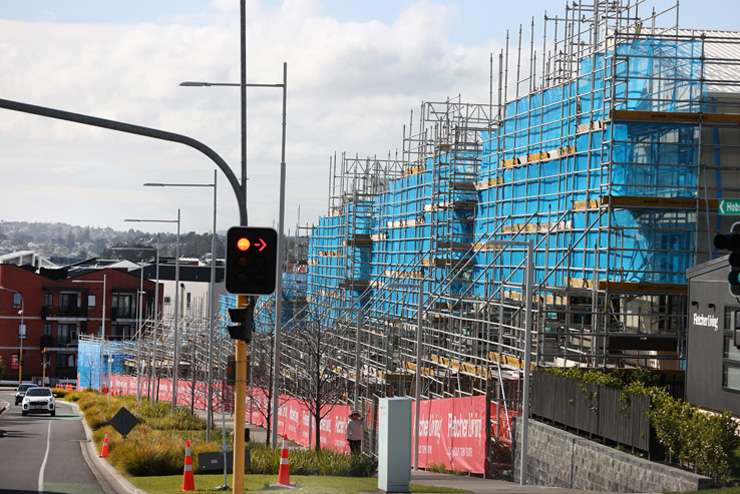
Buying a new build property could mean the difference between a 20% and 10% deposit requirement. Photo / Fiona Goodall
Applying for a First Home Withdrawal
Before you apply with your scheme provider for a KiwiSaver First Home Withdrawal, you will need the following ready to go:
• Certified photo ID,
• Certified proof of address,
• Your solicitor’s trust account details, and
• A copy of the sale and purchase agreement for your property.
Your mortgage adviser (broker) or mobile mortgage manager will confirm the amount that you need to withdraw. Once you have applied, your scheme provider will liaise with your lawyer. The money is paid by the provider into your lawyer’s trust account.
The KiwiSaver First Home Withdrawal and First Home Loan rules change from time to time. Always double check Kāinga Ora’s website for the latest information and make sure your lawyer reviews all documentation before you sign it.
Additional options for first-home buyers
There are a number of other schemes for financing part of the purchase price or providing more affordable homes. They include:
•First Home Loan: The Kāinga Ora First Home Loan scheme helps eligible buyers purchase a home with just a 5% deposit. Kāinga Ora doesn’t provide the loan itself. Instead, it guarantees part of the loan so participating banks can lend more than their usual limits. There are income limits and, in some regions, house price caps may apply. A mortgage insurance premium of 1.2% applies, which can be paid upfront or added to the loan.
• Kāinga Whenua Loan Scheme. The Kāinga Whenua Loan Scheme, run by Kāinga Ora and Kiwibank, helps Māori build, buy, renovate, or relocate homes on multiple-owned Māori land. If you’re eligible for a KiwiSaver first-home withdrawal, you can use those funds toward a Kāinga Whenua property, though part of your withdrawal may need to be reserved for later construction stages.
-------
>> Next steps: The OneRoof first-home buyer’s guide part 5 - How to find the right property