Hobsonville Point is now a well-established example of density done well, but back in 2014, Auckland was still grappling with the idea of living closer together. HLC, the urban development company behind Hobsonville Point, ran an experiment to see if there was a market for smaller homes. Not just slightly smaller homes, but much smaller.
“The debate was starting to occur around housing affordability and we knew the thing we could influence the most that would change the cost of a house was how big it was,” says Mark Fraser, General Manager Development – Auckland Regeneration for HLC.
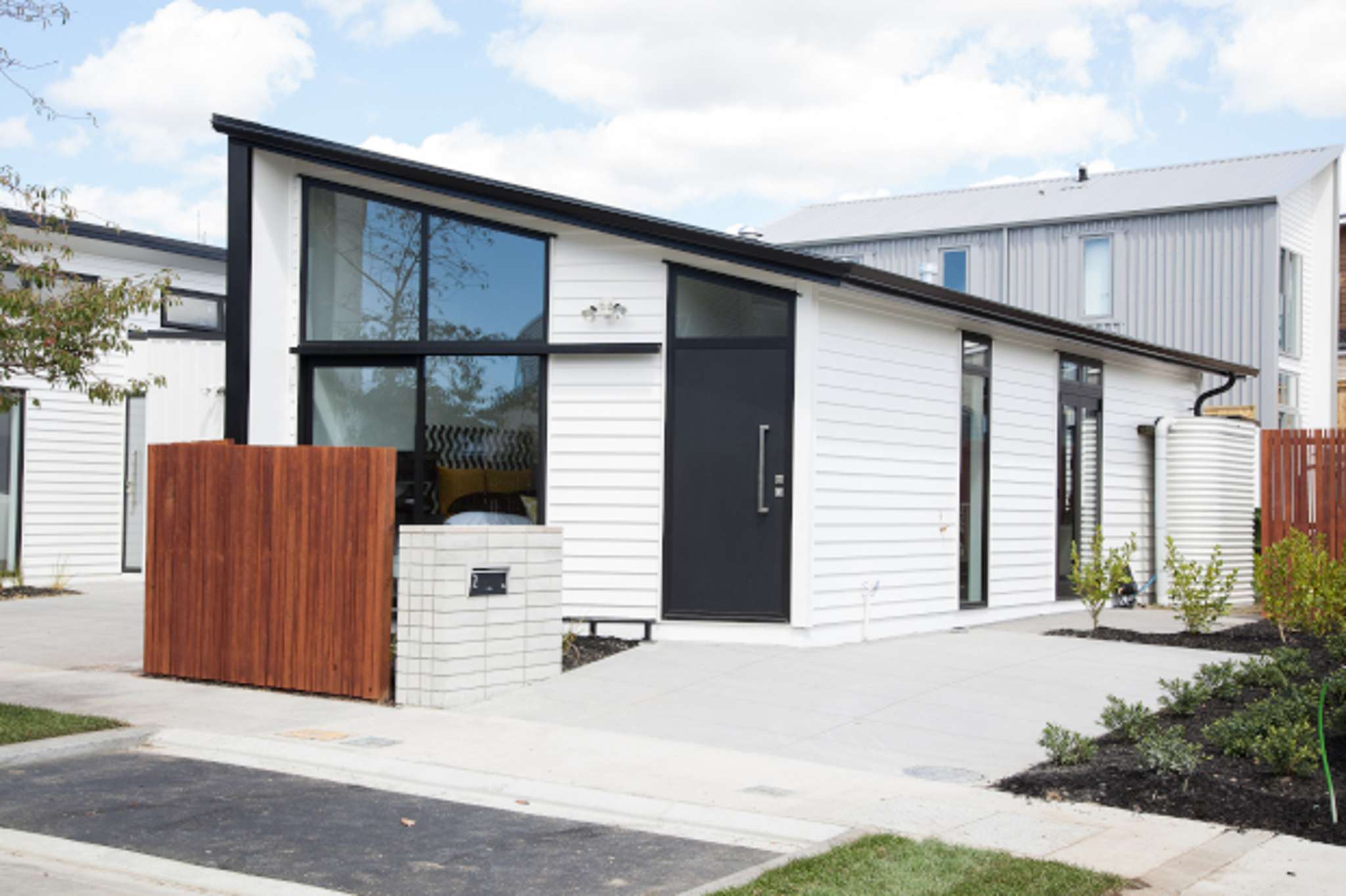
The experiment was called The Small Home Test Lab, and sought to answer the question: To what extent can good design compensate for the lack of physical space? And, importantly: How small is too small?
Start your property search
HLC decided to build three architect-designed small houses at Hobsonville Point – a 40m2 one-bedroom, 87m2 two-bedroom, and 89m2 three-bedroom home.
The sections ranged from just 111m2 to 184m2 and they included private backyards. Most importantly, they were priced within Hobsonville Point’s affordability cap of $485,000 – well below Auckland’s median at the time.
In 2014, the average house size in New Zealand was a little over 200m2 and a quarter acre (1011m2) section was firmly part of the “Kiwi Dream”. To launch the Small Home Test Lab, HLC went to the market and asked Aucklanders if size is still as important as living in a well-designed, well-built house in a good neighbourhood.
Thousands of people toured the homes and more than 70% of them said they could see themselves living in one. “What we learned was that good design does compensate for less room,” Fraser says. “We also learned that there is a market for smaller houses. It’s not for everybody, but it doesn’t have to be.”
All three houses sold and HLC has continued to apply the learnings from the Small Home Test Lab to the ongoing delivery of quality, affordable housing at Hobsonville Point and other major developments around Auckland.
The findings have informed the design and construction of terraces, apartments, walk-ups, and standalone housing options. “We proved for ourselves that good design is worthwhile and, actually, small houses are attractive,” Fraser says.
HLC also invited local council and building industry representatives from around New Zealand to visit the homes, to understand how it might comply with council regulations and established building practices.
The experiment gave HLC’s builder partners the confidence to design smaller dwellings into their housing schemes, including homes that appeal to the growing number and one- and two-person households in Auckland.
“When we first started Hobsonville Point in 2011, the idea of building a two-bedroom house was considered ludicrous,'' Fraser says. “The influence of the Small Home Test Lab continues as we now know there is a market for a range of typologies and price points.”
Fraser says he believes smaller houses are the way of the future. “People are letting go of that old suburban quarter acre section ideal. It is definitely changing.
“We are seeing people are much happier to accept smaller footprint dwellings and smaller land size.”
- Content supplied by the Urban Development Group