- New Zealand’s housing market has returned near its pre-Covid trajectory after a dramatic boom and correction.
- Cheap credit and lockdown spending pushed prices sharply higher, then interest-rate rises triggered major declines.
- First-home buyers now lead activity, while investors remain subdued and Australia faces similar pressures.
If Covid had never happened, house prices would be pretty much where they are now, but the road would have been smoother, experts say.
Start your property search
As it was, the roller coaster ride of stir-crazy lockdowns, record-low interest rates and the pressure of FOMO (fear of missing out) combined to send prices sky high.
What goes up must come down, and after the frenzy, prices slumped, especially in our biggest cities of Auckland and Wellington.
If the ride seemed dramatic, that’s because it was. Projections from OneRoof data partner Valocity reveal just how unsustainable the housing market had become, showing where prices could have landed if Covid-era growth rates had continued unchecked.
The nationwide average property value would be sitting at $1.57 million, rather than the current $955,000. While Queenstown-Lakes would still be the country’s most expensive housing market, property values in Wellington Region would be higher than in Auckland Region, with homeowners in the capital over $1m better off, rather than $300,000 worse off, and buying a property in Gisborne would require a budget of $1.6m rather than the current average of $666,000.
Instead, said Cotality chief economist Kelvin Davidson, the market corrected, with prices declining to the point that the Covid-era has effectively been unwound, at least in New Zealand.
Where New Zealand prices dropped after the late 2021 peak, following interest rate hikes and other measures to clamp down on rising prices and inflation, Australia’s market continued at pace and has only recently been curtailed by measures, such as a newly introduced restriction of negative gearing on residential investment property.
Now investors in Australia are backing away while first-home buyers are having time in the sun, a trend seen much earlier in New Zealand.
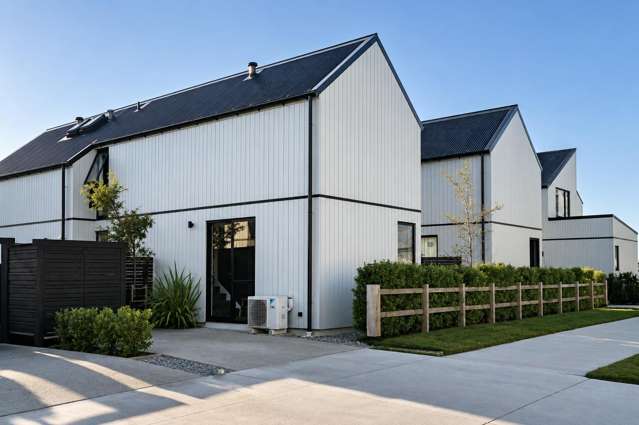
Davidson and others said in New Zealand Covid accelerated some trends, such as the building of townhouses and terrace houses, but overall the housing market is back to where it would have been five years ago.
“Yes, it’s taken a massive jump up and a big jump down and then a long flat period, but we’ve kind of adjusted back to where we should have been,” said Davidson.
Cotality’s recent affordability report also showed measures like house prices to incomes, and mortgage payments as a share of income, were back to a normal level.

First-home buyers have benefitted from the drop in prices since the Covid boom, and have been the most active buyer group this year. Photo / Fiona Goodall

Cotality chief economist Kelvin Davidson: “I think we will still see house price growth, but it might just be a little bit lower.” Photo / Peter Meecham
“It has all sort of adjusted, and this is all counterfactual – we are never going to know what would have happened without Covid.”
People often ask Davidson when New Zealand will get back to the peak prices seen in 2021, and he tells them it could be another three or four years, or longer – but without Covid there would not have been such a peak in the first place.
“I mean, interest rates wouldn’t have collapsed, and they probably wouldn’t have had to go as high again in the other direction.
“Inflation probably would have been smoother. The economic path would have been smoother. Mortgage rates got down to 2% – that would not have happened, and they might not have needed to go back up to 7%.”
Government and Reserve Bank measures may or may not have still happened, such as changes to LVRs and the bright-line test, and Labour’s phasing out of interest deductibility, which damped investors but which was reinstated by the current Coalition Government.
The cheap credit around Covid probably accelerated the building boom, especially of Auckland’s townhouse market, with developers and investors jumping on the wave of money to be made in property.
Discover more:
- Million-dollar shake-up: The suburbs knocked out of NZ’s $1m club
- Auckland’s house price rail map: What homes cost around every station
- 'If Wellington dies, we die': How historic town is handling the slump
Mums and dads staying home in lockdowns wondered what to do with their money, so turned to property, but Davidson said a big part of Auckland’s building boom was already in train because of the intensification provided by the Auckland Unitary Plan, which pre-dated Covid.
“I suspect maybe that townhouse boom would not have been as big without Covid, but the planning rules predated that so we probably still would have seen a lot of construction of townhouses.”
One change now in place that could see a Covid-style runaway market contained in the future is the introduction of debt-to-income ratios. Davidson said probably gone is the idea that house prices will double every 10 years, although he said prices will still rise in the long run.
“You’re still going to have things like general inflation, wage growth, construction costs going up, population rising, so I think we will still see house price growth, but it might just be a little bit lower.”
Valocity senior research analyst Wayne Shum said that before Covid, the economy was weaker and interest rates were already low.
At the beginning of 2020, the one-year mortgage rate was 3.5%: “Even today you couldn’t imagine your mortgage rate being three-point something.”
Because of the low interest rate, the housing market did see some pick-up, but it took off after Covid rather than moving at a more gradual pace; Shum also said prices are likely back to where they would have been.

Valocity senior research analyst Wayne Shum: “Even today you couldn’t imagine your mortgage rate being three-point something.” Photo / Fiona Goodall
“If you draw a straight line on how the market has tracked in the last 10 years, you do kind of cut out the bubble on top, and it’s back to where it was supposed to be.
“Obviously, different factors would have played out differently. We may not have seen the surge of investment activities by mums and dads, and subsequently we would not have seen the bust of that sector.”
A lot of those types of investor buyers, and perhaps small developers, would not have seen the same value appreciation of their own homes and therefore would not have had the equity to be able to buy a rental, he says.
“Because suddenly overnight people’s houses went from $780,000 to $900,000, an extra $150,000 in capital. What did they do with that extra $150,000? They went and bought a rental because of the surge in value, but had they not seen a surge in value, they wouldn’t have had that extra $150,000 lying around, so they couldn’t have gone and bought a rental in the first place.”
Before Covid, headlines focused on first-home buyers struggling to break into the market, whereas now they are the most active buying group. Shum said this is not because there are more of them but rather they are more visible because other groups, such as investors, have pulled back.
Independent economist Tony Alexander agreed that without Covid the housing market would have seen greater stability.
The sharp decline in prices was only called a slump because of the “ridiculous” increase in prices in 2020/2021.
“If it wasn’t for that, then it would just be, not so much a quiet period, but everything would have been smoother.
“We wouldn’t have had all those people flooding into housing and investment with all that loose money sloshing around over that period of time.

Kiwibank chief economist Jarrod Kerr says Kiwis came out of Covid lockdowns “like caged animals”. Photo / Supplied
“We wouldn’t have had the big changes in lending rules for the investors, minimum deposits, et cetera, so it would have been a more stable environment.”
Housing was not on people’s minds as much as it has been in the past and was thus less of an election issue.
“It’s not in the minds, I think, of many people because the price movements are pretty unexciting in most areas around the country.”
Jarrod Kerr, chief economist for Kiwibank, said Kiwis came out of Covid lockdowns “like caged animals” and spent a fortune on their homes: “You could not find a pool towards the end of Covid – we’d sold out of pools throughout the whole country.”
Others wanted to upgrade to larger homes, and this demand threw gasoline on the fire of the Reserve Bank’s 0.25% OCR and the banks’ 2% mortgage rates – the lowest in history.
House prices rocketed to the extent that the Reserve Bank and politicians decided that could not continue and took measures to rein it in.
Investors were “hunted” and have still not returned fully to the market, but have been replaced by first-home buyer activity.
“For first-home buyers to be doing more than investors it just shows you how conspicuously absent investors are and it doesn’t look like it’s going to turn this side of the election.”
While housing was only marginally more affordable than before Covid, having active first-home buyers was a great sign, and Kerr pointed out the Kiwi dream of owning a home had not been dented.
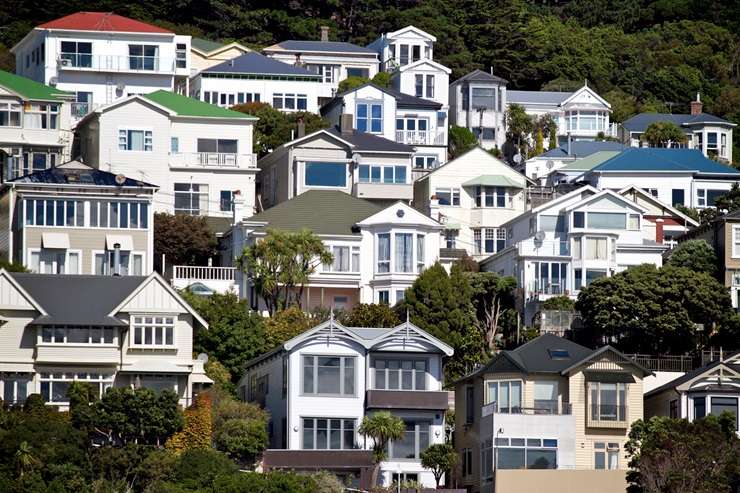
Wellington could have been a $2m city if house prices continued to grow at Covid levels. Photo / Getty Images
Around 66% of people own compared to a third who rent, and an upside of Covid was a rebalancing of the housing supply; before Covid the talk was about under-supply, and now it was about over-supply.
“I remember it was back in 2018/2019 we guesstimated the shortage was as massive as 100,000.
“Due to population growth easing and more supply coming onto the market, we seem to have unlocked a lot of supply in the last couple of years. I think the market is better balanced.”
That’s not the case across the Tasman. Kerr said before Covid New Zealand was more concerned about inflation and introduced measures, but Australia let the market run and was only now reining in what is seen as an unaffordable market.
New structural changes around restricting negative gearing for rentals, where net rental losses can be deducted against wage income, would make a big impact, Kerr said.
Where New Zealand had interest deductibility removed, restricting negative gearing in Australia was a big move as negative gearing was seen virtually as a sport across the Tasman. “It’s fun when you’re over there, and you’re talking to your colleagues; it’s all about ‘how much can you write off your investment property?’ and it’s a big part of their investment psyche.
“Now that’s changed, and it is causing the downturn in their housing market.”
Davidson said New Zealand’s market reached a breaking point much sooner than Australia’s, but they were different markets and Australia’s listings had until very recently remained tight: “There’s nothing much to buy.”
Part of New Zealand’s supply response had been intensification, Davidson said, but Australia was arguably much further along that path anyway so had less to gain from intensification.
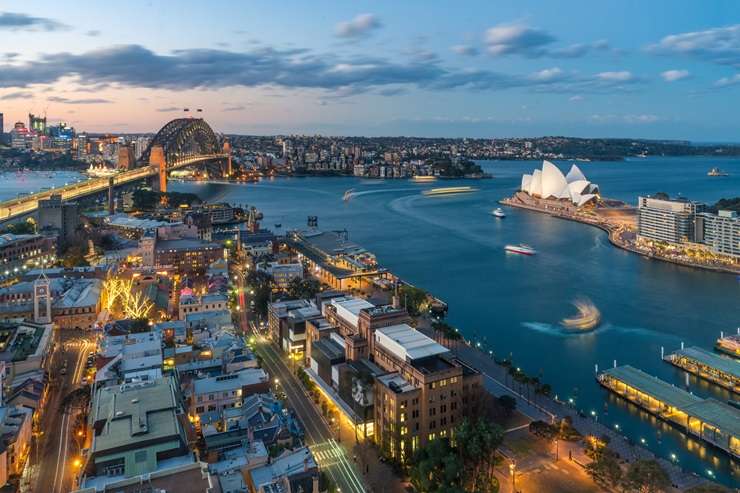
Australia’s house prices are only now coming off the boil. Photo / Getty Images
In New Zealand, Kerr said Wellington is the most downbeat market and the most visibly impacted by the Government’s public service cuts, and Ben Castle, CEO for Tommy's Real Estate, said Covid was drastic for the Wellington market. “Had we not had Covid, we would be in a better position.”
Castle said without Covid there would have been consistent growth, and the median would be around the $1m mark, rather than today’s $725,000.
People who borrowed huge amounts to buy property at peak were now selling at a loss, but there are positives as well, he said.
The city had an opportunity to grow, so while some are losing out, others took the cheaper interest rates to develop their own homes, or investment or commercial portfolios.
Castle thinks the negative narrative around Wellington is overcooked.
“Wellington went up the highest, as well, remember, so it does come down the furthest.
“But it’s a Government town. We’ve had job losses which have an impact on the private sector as well, hospitality and retail, but outside of that there are still people coming to Wellington.
“We’re seeing numbers increase in property transactions around multi-offers; we’re seeing tertiary education numbers increasing.”
Auckland developer and consultant Andrew Crosby, managing director of Xpect Property, recalls 2018 being tough but said 2019 felt like it was improving. He was optimistic for 2020, but then Covid arrived. “It was like ‘bang, the world’s going to fall off, shut down, who knows what’s going to happen’.”
People thought the market would crash, but the Government pumped money into the economy, interest rates were slashed, and people had nothing else to do except buy houses. “That’s the reality. Couldn’t go anywhere. Couldn’t go overseas, couldn’t go on holiday.”
And suddenly, properties in Auckland under the Unitary Plan became developable – prices for a two-bedroom unit rose by $100,000 in six months and “it was away to the races. That continued throughout the entire 2021, and then it stopped in January of 2022.”
A lot of mum and dad developers, and small developers, got started during that period, he said.
“The good ones never did pay through the odds, but a lot of people did and, of course, we think it’s going to be sunny all the time so land prices – I haven’t got the data, but I imagine they just skyrocketed.”
A “shitty” $500,000 house on a section in Papakura suddenly cost over $1m, destined to be pulled down to make way for townhouses or terraces. If that made sense at the time, it no longer does, Crosby said.
“What wouldn’t have happened if Covid didn’t hit? We would not have got the extreme spike in development activity. We would not have got the same extreme spike in house sales. We would probably have maintained a lot of the immigration that was happening.”
Crosby believes history will repeat and there will be further price spikes, saying “there always is”.
“This is hundreds and hundreds of years of data all around the world. Unless New Zealand does a Japan and population starts going backwards dramatically, which I don’t think it can, the market always repeats.”
For the next spike, he thinks immigration will be the key. “When that little immigration thing starts trending up, you will see a change. It’s all immigration linked. It’s net people, net bodies,” he said.
“It’s all about people’s sentiment, and when that changes, it’s all go.”
- Click here to find properties for sale