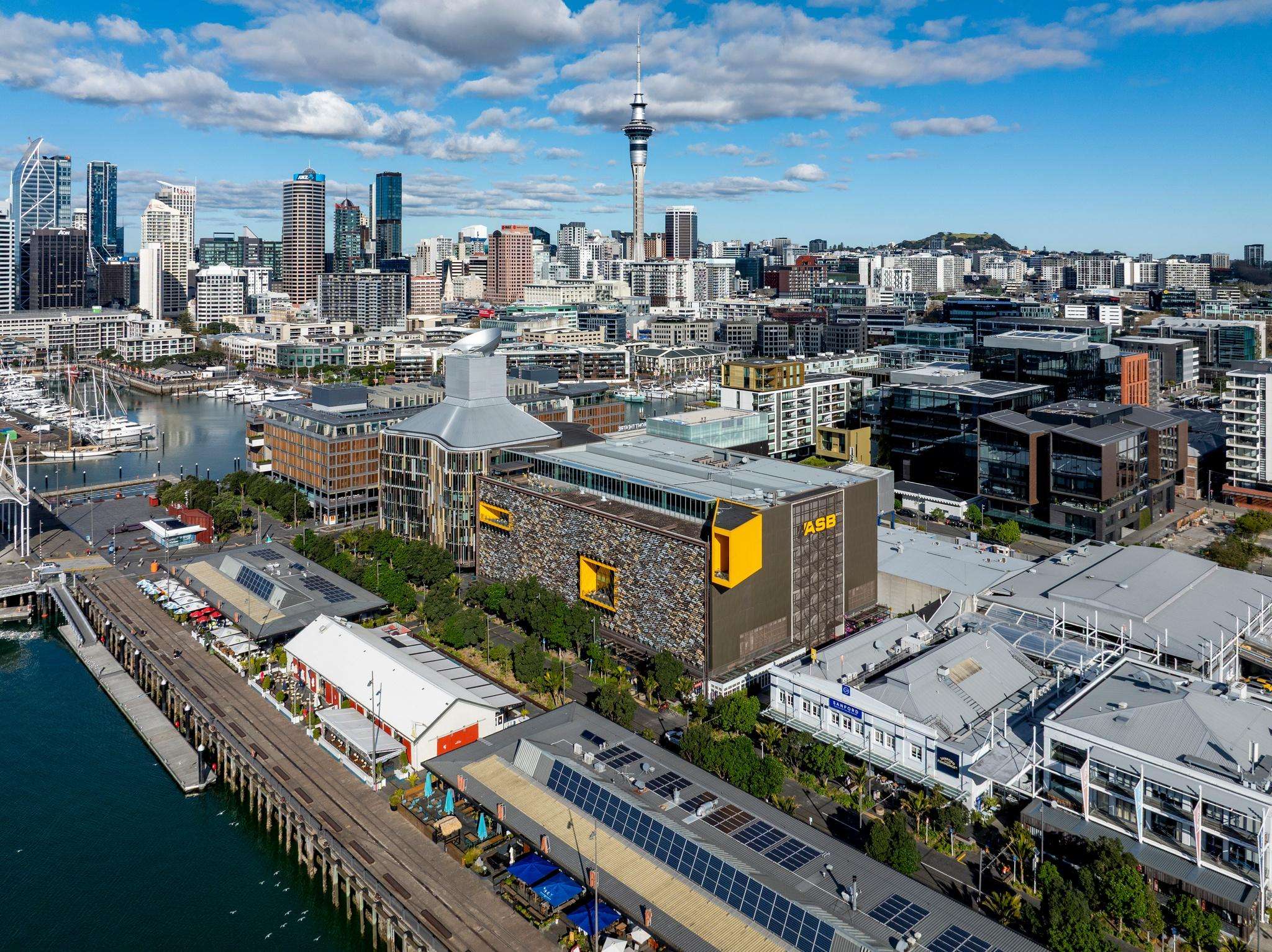
The long-running disconnect between white-collar employment growth and office space demand is starting to close, with CBRE Research analysis showing the structural impacts of hybrid working appear to have largely played out across New Zealand’s main centres.
CBRE’s New Zealand Real Estate Market Outlook 2026 states that the historically close relationship between office-based employment growth and office space demand weakened over the past decade, a trend that began before the Covid pandemic and accelerated after it.
However, the market is now moving into a more traditional phase of the cycle as occupier strategies stabilise and office utilisation lifts.
Over the past three years, CBRE’s New Zealand Office Occupier surveys show most organisations have settled on their workspace strategies, with more focus on getting people back into the office rather than further reductions in leased space.
Start your property search
Zoltan Moricz, head of research at CBRE New Zealand, said the office sector is entering a materially different phase of the cycle.
“For much of the past decade, employment growth has not translated into office space demand in the way it historically did, as hybrid working and consolidation strategies reshaped occupier behaviour.
"Our research now indicates that this structural shift has largely run its course. Workspace strategies have stabilised, office utilisation has lifted, and in the next cycle we expect employment growth to convert more readily into net absorption of office space than it has in recent years.”
Moricz said that while the adoption of AI presents a new medium-term source of potential disruption for white-collar employment growth, the near-term outlook is improving.
“As economic conditions strengthen, the closing gap between jobs growth and space demand is a key factor underpinning our more positive outlook for office markets through 2026 and 2027.”
Leasing activity is already reflecting the shift. After a prolonged period of economic uncertainty and delayed decision-making through 2024 and early 2025, occupier engagement strengthened in the second half of last year and has continued into 2026.
Moricz cites CBRE’s recent office survey results, which show that in the second half of 2025, 12 of the 15 largest CBD office space take-ups resulted in a net occupancy gain, with seven involving a pure expansion without relocation.
This helped lift H2 2025 net absorption of office space to above 18,000sqm, which is the strongest half-yearly performance in the last decade since H2 2015.
Campbell Pritchard, head of office leasing at CBRE New Zealand, said the leasing environment is improving as strategies settle and confidence lifts.
“Across the main centres, we’re seeing a noticeable shift in occupier behaviour. Leasing activity picked up in the second half of 2025 and that momentum has continued into early 2026.
"Organisations are more decisive, engagement levels are higher and the focus has moved from contraction to planning for stability or growth.”
Hybrid working is still a feature of the market, but it is no longer driving widespread footprint reduction, he said.
“Occupiers are instead prioritising quality, location and sustainability, and are more willing to commit when the right space becomes available.
"As economic conditions improve, we expect this to translate into stronger leasing volumes and a more competitive market environment through 2026.”
Sustainability is also becoming a bigger factor in occupier demand.
CBRE Research says about 70% of the space occupied by the 100 largest prime Auckland office occupiers sits in buildings with at least a 4-Star NABERS or Green Star rating. That leaves a meaningful volume of non-sustainable prime space which is still occupied by organisations with net zero, carbon neutrality or emissions-reduction aspirations.
This mismatch points to future demand for higher-performing buildings as lease expiries roll over and strategies tighten. It also creates a sharper dividing line between buildings that can meet occupier sustainability requirements and those that cannot.
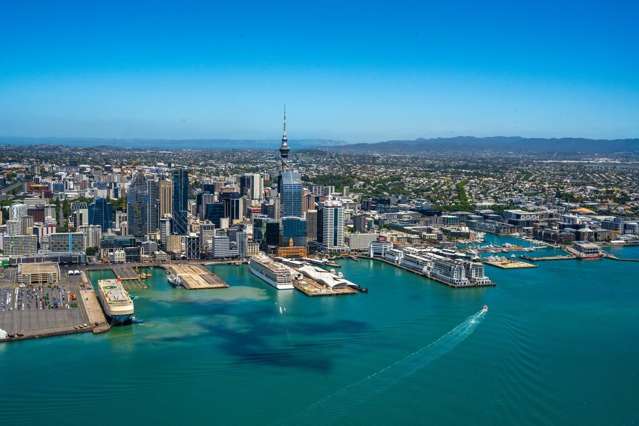
Supply conditions continue to vary by city. Auckland’s pipeline is moderating sharply following several years of elevated completions. While prime CBD office stock increased significantly between 2020 and 2025, CBRE expects future additions to be more restrained through to the end of the decade.
Wellington is nearing the peak of its refurbishment and strengthening cycle, with a material volume of new and upgraded space due for delivery in 2026 and 2027, but limited supply beyond that.
Christchurch’s supply cycle remains active in the near term, reflecting stronger occupier demand and improving vacancy levels, with the pipeline tapering beyond 2027.
- Supplied by CBRE