- First-home buyers can use KiwiSaver, gifted money, or parental equity for a deposit.
- Kāinga Ora’s First Home Loan scheme allows 100% gifted deposits without genuine savings.
- Using parental property as collateral can enable borrowing up to 100% of the purchase price.
Is there such a thing as a zero-cash buyer these days?
Start your property search
Saving a deposit to buy a house can be a daunting prospect, but can you buy a property without any cash?
GV Mortgages director and financial advisor Gareth Veale says first-home buyers can scrape together a deposit without any cash of their own, but there are some caveats.
One way involves a deposit being made up from KiwiSaver, gifted money, or equity from property belonging to parents.
Limits on high loan-to-value ratios (LVR) – a measure of how much a bank lends against mortgaged property compared to the value of that property – have been in place since October 2013. Generally, an owner-occupier needs 20% while an investor needs 30%.

GV Mortgages director Gareth Veale: "Someone with no deposit, no cash savings or no money in KiwiSaver is probably not bankable anyway." Photo / Supplied
But there were also options at 10% for first-home buyers, especially around new builds, while houses bought through the government’s First Home Loan scheme required only 5%.
“When you’ve got a deposit or equity less than 20%, your deposit has to be made up partly by genuine savings,” Veale says, adding that KiwiSaver was counted toward genuine savings for the 5%.
Under Kāinga Ora’s First Home Loan scheme, “you actually don’t need any genuine savings – 100% of it could be a gifted deposit”, Veale says.
Discover more:
- How much money has your suburb made? The housing market's biggest winners and losers of 2025
- NZ's most stylish real estate agents: How they get their look, what they spend on clothes
- Mortgage-free hot spots revealed: The suburbs with the most disposable income
“But what I would just say is that someone with no deposit, no cash savings or no money in KiwiSaver is probably not bankable anyway, and wouldn’t really meet the criteria for a number of other reasons.”
For example, a single buyer without any children would not be eligible if their income exceeded $95,000 a year (for a couple, the income cap is $150,000).
Veale says he’s seen the scheme work for migrant New Zealanders who have become residents through their occupation and been in solid employment for more than a year. While they didn’t have a deposit, they were able to secure a gift from a family member to make up the 5%.
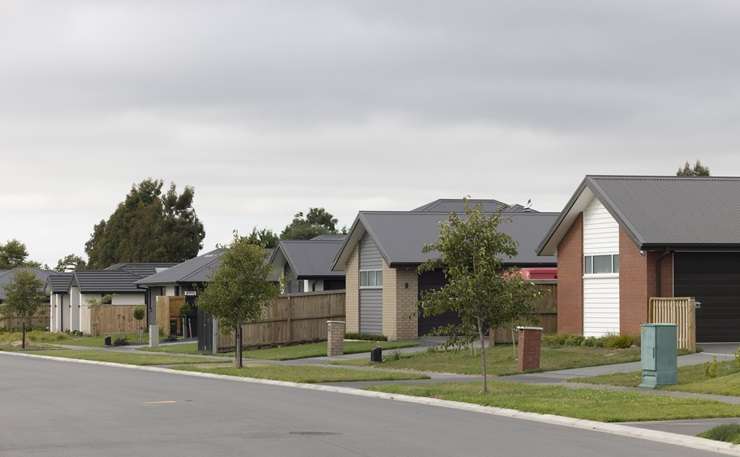
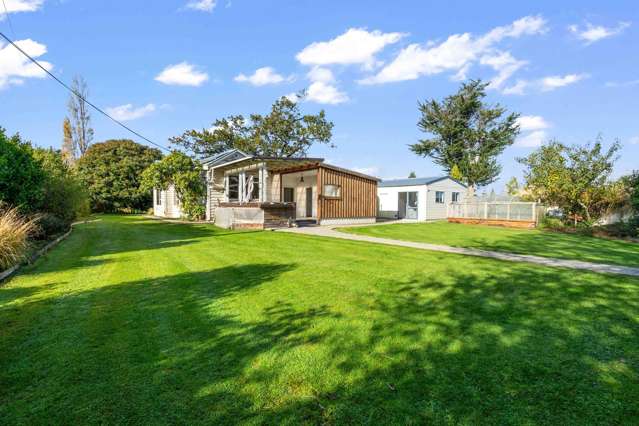
Christchurch has more options for low-deposit buyers. Photo / Peter Meecham
The income cap affects where people can afford to buy because it limits how much they can borrow, Veale says.
For example, in Auckland, a couple would struggle to borrow more than $750,000 due to the criteria, which “doesn’t really get you much”. In Christchurch, where Veale is based, there are more options for cheaper properties.
Using a parent or family member’s home as collateral was the other way to buy a first home without cash, and in theory, the buyer should be able to borrow up to 100% of the purchase price if there was enough equity.
But Veale says it would be easier for parents to raise a loan and hand over a deposit than it would be to guarantee a loan. With parents on side, and a couple of KiwiSaver accounts, it was feasible to get up to a 10% deposit for first-home buyers.
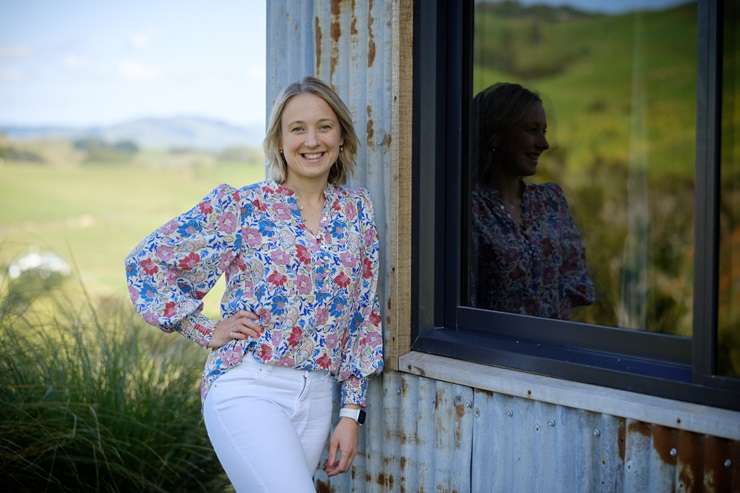
My Mortgage advisor Claire Williamson says buyers should be aware that banks look at risk factors when it comes to lending money. Photo / Supplied
“Say you’ve been in KiwiSaver for five years in an okay job, you might have $30,000, $40,000 each in KiwiSaver and a little bit of a top-up or some savings from family and all of a sudden you’ve got $100,000, and that’s 10% of $1 million.”
My Mortgage advisor Claire Williamson, who is based in Cambridge, says she had a client who bought their first home, a two-bedroom property in Te Awamutu, with just $20,000, which was the 5% deposit they needed through the First Home Loan scheme.
While first-home buyers are prioritised for lower-deposit lending, she says it is much easier for someone who already owns a property to buy a second one without any cash, as long as they have a strong equity position.
They could borrow up to 80% of the value for a new build or 70% for an existing property, for investment. “Let’s say you live in a property worth $1m, and the maximum you can borrow against that is 80%, so $800,000.
“But let’s say you only owe $500,000. We call it usable equity, so the usable equity in that case is $300,000.”
The usable equity became the “deposit”, meaning no cash was needed.
“So that becomes a 30% deposit of another million-dollar property, which could be a rental property.”
Williamson says it is important to note the equation does not include “serviceability” – the homeowner’s ability to pay both mortgages.
Williamson says banks look at risk factors when it comes to lending money, and generally a standard house on a standard section, in reasonable condition in a regional town or city, was “probably the top property that a bank wants to lend on”, other than a new build.
That’s because if anything went wrong, the property would be easy for the bank to sell to recover the loan.
The pitfalls of buying with a very low deposit included the quality of the house, the need to have a higher income and stronger financial position overall with less debt, and the potential for banks to charge a higher fixed interest rate.
Meanwhile, most banks offered a certain percentage of the total amount of the mortgage as a “cash-back” incentive to entice home loan customers.
The cash could then be used to pay for legal and other fees associated with buying a property, reducing the amount of cash a buyer needed.
- Click here to find properties for sale